The cooperation agreement outlines a joint effort between PGBank and the Tax Department to provide business households and individual businesses with access to banking financial solutions, electronic payments, e-invoices, and digital business management tools. Additionally, both entities will intensify efforts to promote, guide, and support taxpayers in complying with new tax regulations, e-invoicing requirements, and non-cash payment methods.
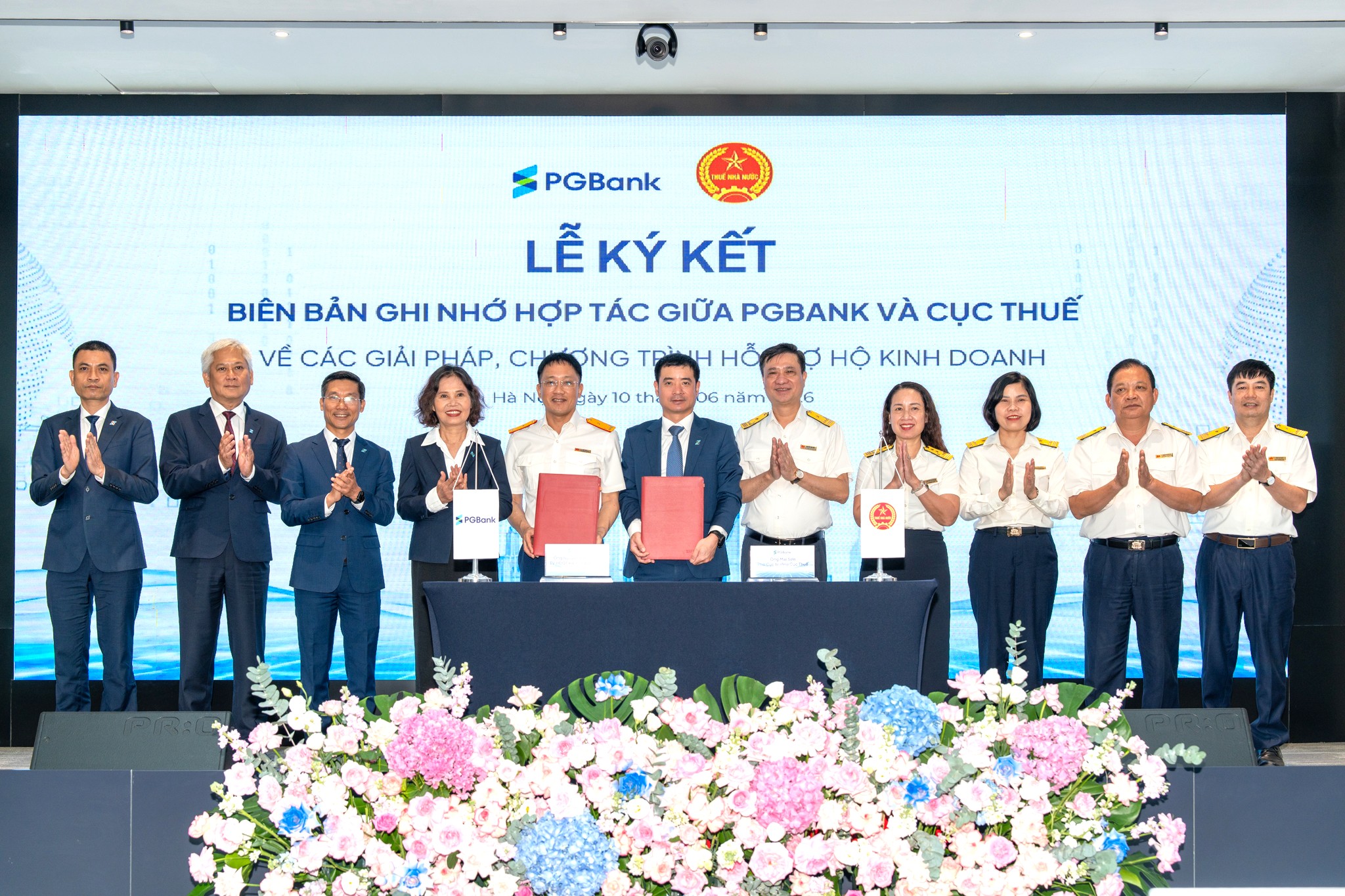 |
The signing ceremony of the Memorandum of Understanding for cooperation on implementing solutions and programs to support business households, individual businesses, and taxpayers nationwide between PGBank and the Tax Department. Photo: PGBank |
The signing ceremony of the Memorandum of Understanding for cooperation on implementing solutions and programs to support business households, individual businesses, and taxpayers nationwide between PGBank and the Tax Department. Photo: PGBank
Within the framework of this collaboration, the Tax Department will work with local tax authorities to facilitate PGBank's nationwide support program for business households. Both parties will also coordinate in disseminating policies, conducting training, and addressing issues related to the implementation of e-invoices, non-cash payments, and other digital transformation solutions for business households.
Speaking at the ceremony, Mai Son, Deputy Director of the Tax Department, commended PGBank's proactive approach in connecting and mobilizing social resources to build an ecosystem of solutions for business households. He stated, "With the strong connection, sharing, and partnership between PGBank and the Tax Department, I believe this cooperation program will contribute to promoting digital transformation for business households, supporting private economic development, and realizing the economic development policies of the Party and the State."
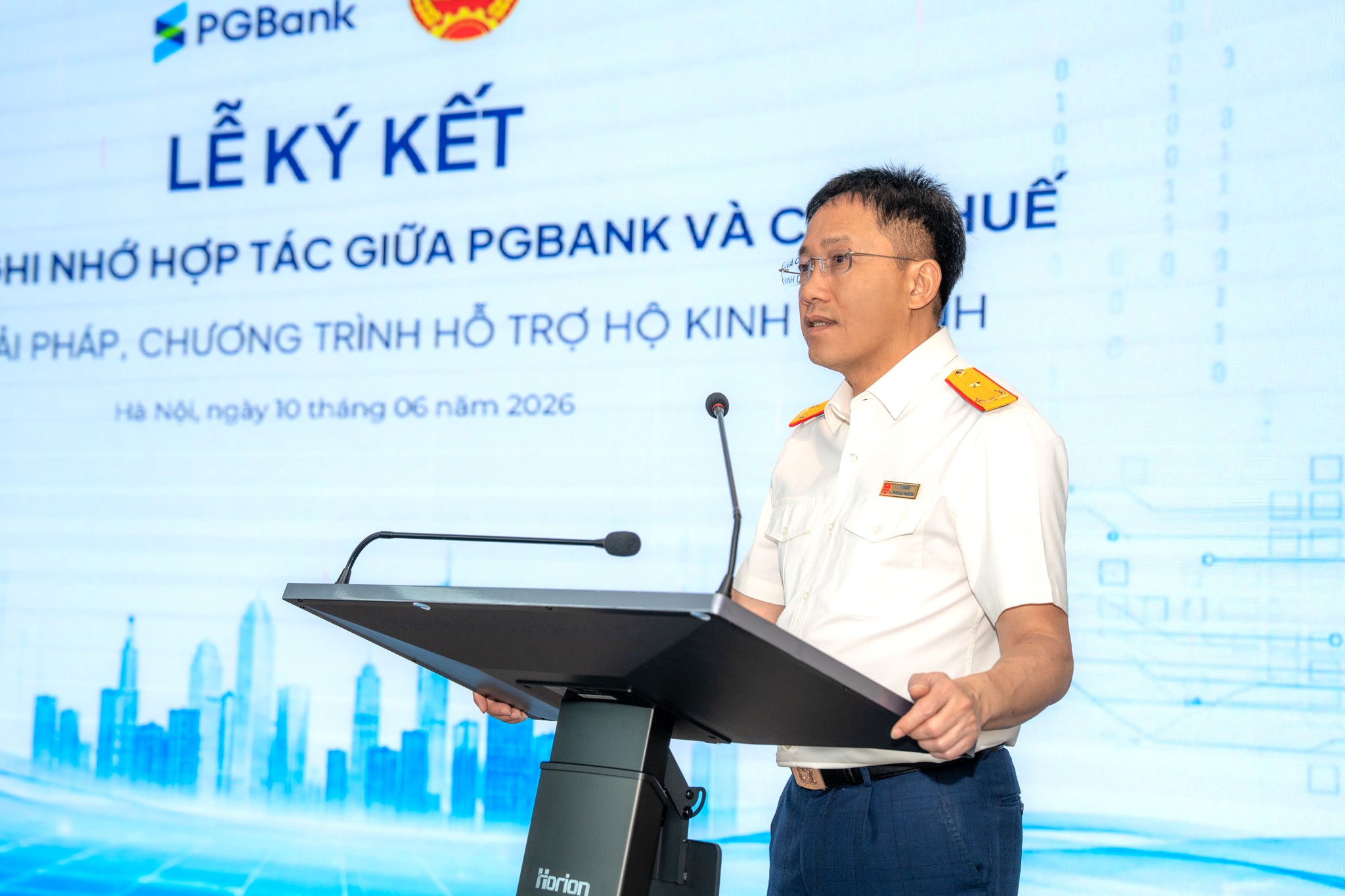 |
Mai Son, Deputy Director of the Tax Department, speaking at the ceremony. Photo: PGBank |
Mai Son, Deputy Director of the Tax Department, speaking at the ceremony. Photo: PGBank
A PGBank representative noted that this cooperation with the Tax Department aligns with the bank's retail banking development strategy. It also underscores PGBank's commitment to supporting the business household community throughout their digital transformation journey.
Nguyen Van Huong, General Director of PGBank, shared, "Beyond providing financial solutions, PGBank aspires to be a reliable partner for business households across their entire digitization journey, from sales management, payments, and fulfilling tax obligations to accessing capital and expanding production and business activities."
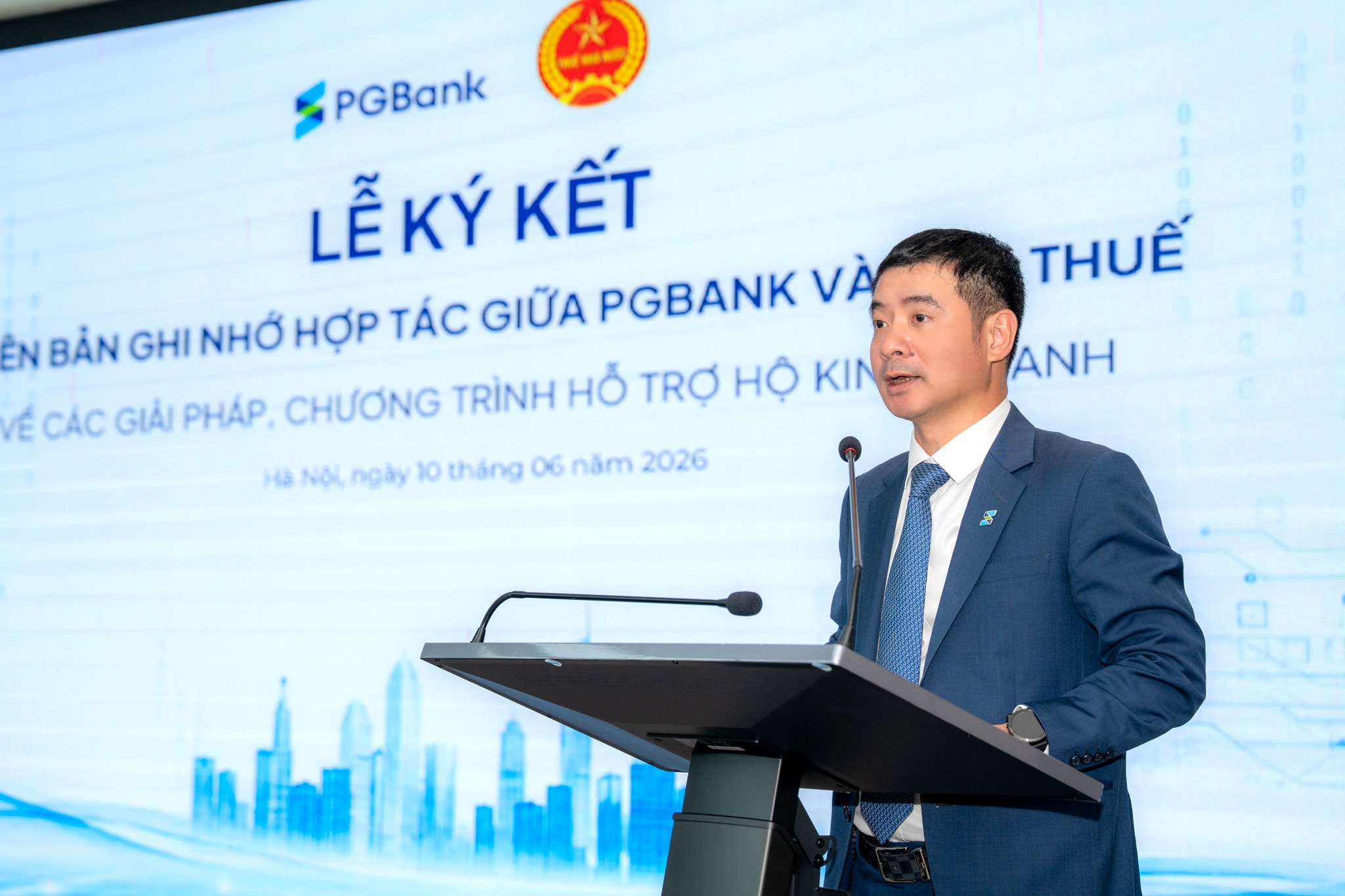 |
Nguyen Van Huong, Board Member and General Director of PGBank, speaking at the ceremony. Photo: PGBank |
Nguyen Van Huong, Board Member and General Director of PGBank, speaking at the ceremony. Photo: PGBank
As part of the cooperation program, PGBank also introduced its "Business Household Account" solution package, specifically designed for business households and individual businesses. This comprehensive solution integrates various utilities, including dedicated payment accounts, transaction notification speakers, sales management software, e-invoices, digital signatures, and modern payment support tools.
According to the bank's representative, this solution helps customers standardize business operations, separate cash flows, manage revenue, and enhance operational transparency.
PGBank is also offering several promotional programs for customers opening new business household accounts. These incentives include cashback up to 600,000 VND, preferred account numbers, online deposit interest bonuses, and support for technology solutions to aid business operations.
This cooperation program is timely, as the Tax Department is actively promoting digital transformation, encouraging the adoption of e-invoices, and fostering non-cash payments. Statistics from the regulatory agency indicate that business households constitute a significant economic force, contributing substantially to economic growth and job creation. However, many households are still transitioning from traditional management methods to digital business models, leading to an increasing demand for financial solutions, electronic payments, e-invoices, and modern management tools.
In this context, the collaboration between tax authorities and financial institutions is expected to help taxpayers gain easier access to digital tools. It will also enhance the efficient implementation of regulations concerning e-invoices, electronic payments, and tax obligations.
Minh Ngoc