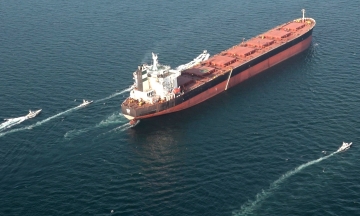
Since early august, dozens of ships have queued for passage through the Panama Canal. Some have been stranded for over one week, while others have been anchored for a month.
The Panama Canal is a narrow artificial waterway, approximately 80 km long, cutting through Panama (Central America) and connecting the Atlantic and Pacific oceans. This route saves vessels time and fuel by shortening travel distance compared to navigating around Cape Horn (Chile). It facilitates 5% of global maritime trade, with 70% of goods moving to or from the US.
Last week, logistics company Flexport reportedly paid 4 million USD to secure priority passage for a ship carrying 30 containers of goods. A company representative stated that congestion on the Pacific side is at its worst since may, a period when the shipping industry faced strain due to developments related to the Strait of Hormuz.
According to CNN and The Guardian, while Hormuz tensions stemmed from Middle East conflict, the congestion at the Panama Canal is due to super El Nino. The Panama Canal moves vessels across the isthmus using a lock system: water-filled chambers capable of raising or lowering vessels like steps. The water for operation is sourced from the artificial Gatun Lake, near Colon City, Panama. Super El Nino has caused rainfall in this region to drop by 34% compared to historical averages, leading to significantly lower lake levels.
In response to this situation, on 20/8, the Panama Canal Authority adjusted operations with two main measures:
- First, the draft limit (the distance from the bottom of the vessel to the waterline) was reduced from 50 feet to 48 feet starting in september, with further reductions anticipated. Lower draft limits force vessels to reduce their cargo weight.
- Second, the daily number of vessels transiting the canal was tightened, gradually decreasing from 36 vessels to 32 starting 15/9.
Some shipping companies have already begun to feel the ripple effect. On 12/8, MSC announced that draft limitations reduced vessel capacity, forcing them to increase Panama Canal surcharges to offset costs. The new surcharge applies to shipments from Southeast Asia, China, Korea, and Japan to the US East Coast and Gulf Region.
Meanwhile, analysts are concerned that reducing the number of vessels transiting the canal will exacerbate current delays and drive up transit fees. During the most recent El Nino event in 2023-2024, record low lake levels forced the number of vessels permitted through the canal to decrease from 36 to 24 per day.
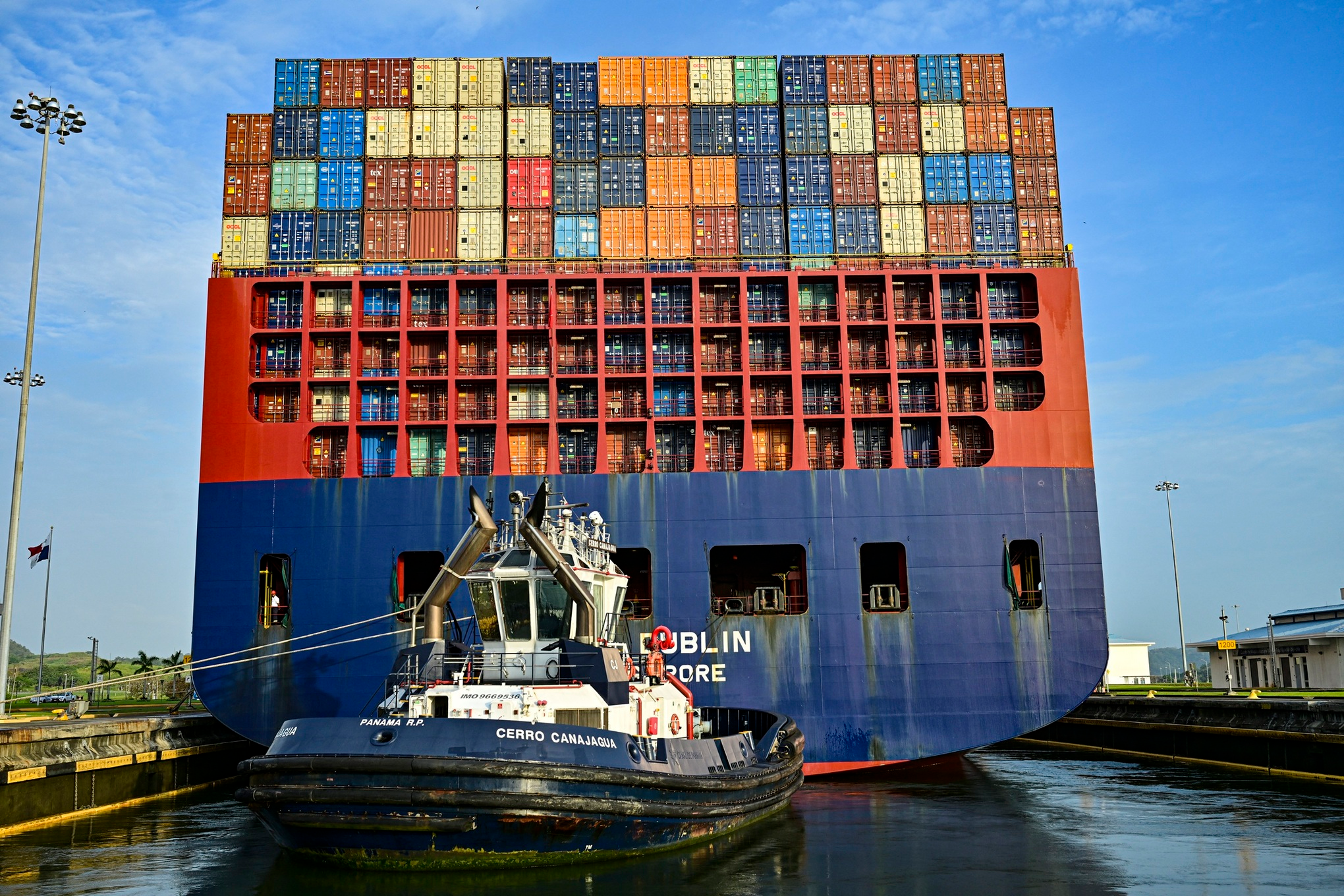 |
Cargo ship transiting the Panama Canal in Panama City, 21/2/2025. Photo: AFP
Henry Ziemer, a research fellow for the Americas program at the Center for Strategic and International Studies (CSIS), stated that the current reduction in vessel traffic is not as severe as previous El Nino events, but "still carries the risk of worsening".
Additionally, shipping costs are under extra pressure from the auction mechanism for transit slots, which has become increasingly expensive. The Panama Canal operates on a reservation system where vessels register for a passage slot, similar to how passengers book airline tickets. For cases without prior reservations, the authority typically auctions 3-5 slots each day.
Amid tensions in the Strait of Hormuz due to Middle East conflict, demand for passage through the Panama Canal has surged, pushing the average auction price from 100,000 USD to approximately 380,000 USD. In may, Ilya Espino de Marotta, Deputy Administrator of the Panama Canal Authority, noted that one auction slot was secured for 4 million USD.
Analysts indicate that all these increased costs will impact retail goods prices, directly affecting consumers' wallets, especially for time-sensitive goods.
Ziemer noted that the risk of economic disruption could affect consumer goods like mobile phones, computers, and agricultural products more significantly. For US exports, energy products will be affected. For example, US oil and gas products exported to Asia could face challenges, making it difficult for nations trying to replace depleted oil sources from the Middle East. These countries may face soaring energy prices amid dual supply pressures.
Bao Bao (according to CNN, The Guardian)