Vietnamese businesses are confronting significant challenges in complying with the European Union's packaging and packaging waste regulations (PPWR), which became effective in August. These regulations introduce numerous criteria that are difficult for domestic enterprises to meet, particularly concerning the integration of recycled materials.
The PPWR, a comprehensive 120-page document, establishes rules for managing the entire lifecycle of all packaging types, including plastic, wood, paper, and glass, from every source. The EU's new regulation aims to prevent and minimize the negative environmental and health impacts of packaging waste.
A major hurdle for Vietnamese businesses is the recycled content target within the PPWR. Nguyen Thi, a lecturer at Hanoi University of Natural Resources and Environment, stated that the EU mandates PET bottles and other plastic packaging must contain a minimum of 30% recycled plastic by 2030, increasing to 65% by 2040. Thi emphasized that these high recycled content requirements apply to food-grade packaging, which demands much stricter standards than other packaging types.
The Vietnam Association of Seafood Exporters and Producers (VASEP) has also highlighted this new EU green barrier. For the seafood industry, the policy impacts all packaging commonly used in exports, such as nylon bags, plastic trays, boxes, carton boxes, plastic pallets, and films.
Domestically, current policies on recycled content in packaging exhibit significant gaps. Vietnam currently does not mandate recycled content in packaging and lacks specific food-grade standards for recycled packaging. Furthermore, the national inspection infrastructure is not yet ready to meet the new requirements. For instance, Vietnamese businesses can only verify recycled content for PE (nylon bags) for eco-labeling purposes, while inspection capabilities for PET plastic and other packaging materials are still underdeveloped.
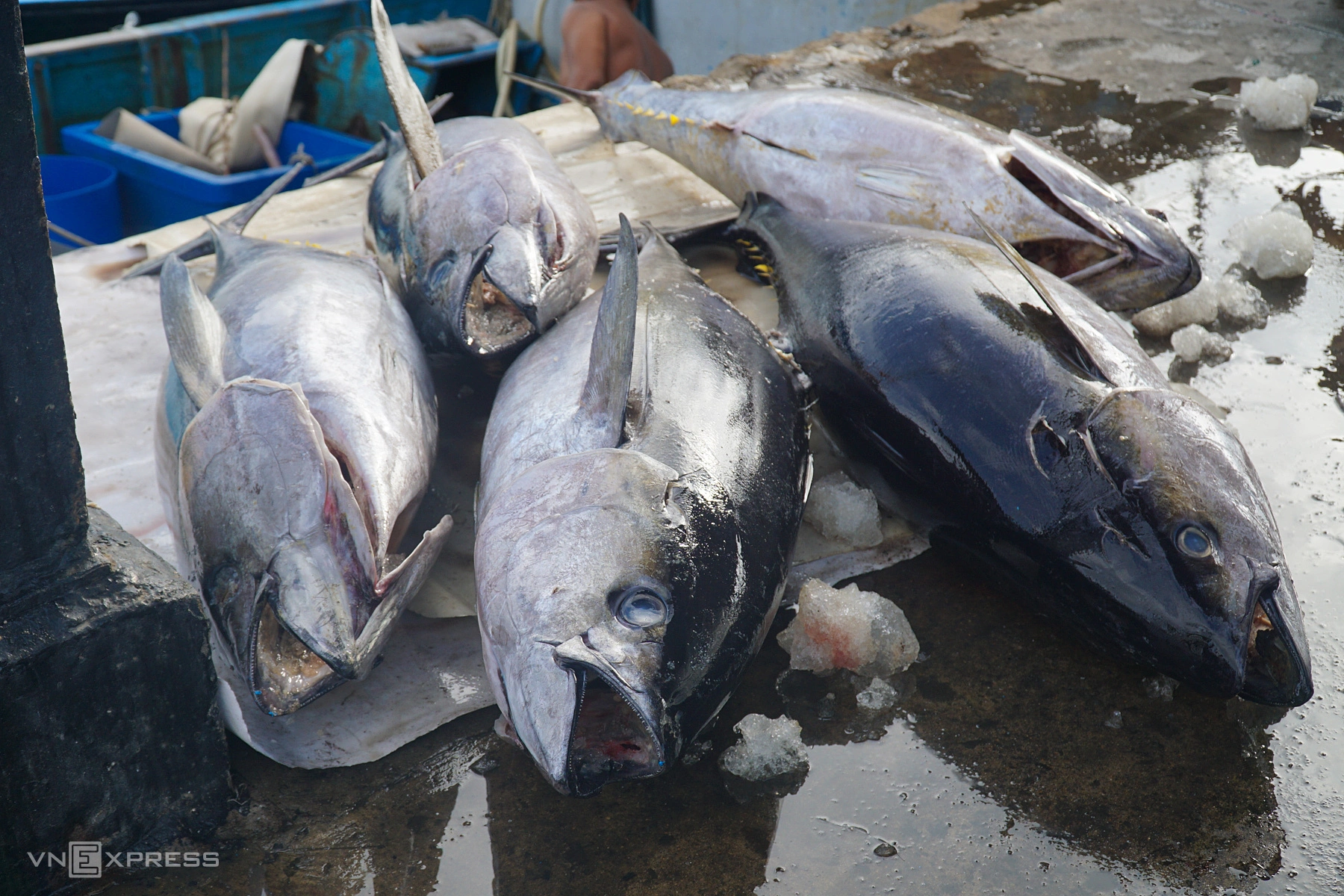 |
An ocean tuna fishing boat docks at Hon Ro port, Nha Trang, early 2023. Photo: Bui Toan |
The recycling process is further hampered by limitations in collection and sorting infrastructure, which heavily relies on informal collectors. The involvement of this informal sector and multiple collection stages often compromises the quality of scrap materials. Tran Duc, Head of External Affairs at Suntory PepsiCo Vietnam, noted that PET plastic bottles, for example, often have a "contamination" rate ranging from 40% to 70% depending on the batch. This low quality of scrap material poses a barrier to achieving food-grade or bottle-to-bottle recycling, and material loss during processing also makes recycled plastic products more expensive than virgin plastic.
To meet the strict new standards and ensure continued exports to the European market, Nguyen Thi recommended that policymakers enhance domestic sorting and collection capabilities. Additionally, food-grade standards for recycled PET (rPET) plastic need to be swiftly finalized. A VASEP representative advised seafood businesses to monitor upcoming EU guidelines, expected before 12/8, and to review their entire factory packaging systems, preparing documentation to demonstrate compliance with the new regulations.
Analysts believe the PPWR will have a profound impact on Vietnamese businesses. They recommend that the Ministry of Industry and Trade and the Vietnam Chamber of Commerce and Industry (VCCI) establish a dedicated unit to support businesses on this issue, similar to the support unit for the EU's Carbon Border Adjustment Mechanism (CBAM).
Thuy Truong