Apple has chosen Alibaba and Baidu to provide AI technology in China. Ford is turning to CATL for battery technology. Volkswagen is collaborating with Xpeng to develop smart electric vehicles in China. Meanwhile, Stellantis is increasing its partnership with Leapmotor in electric vehicle manufacturing and joint purchasing.
Analysts note a major shift is underway, as Chinese businesses emerge as irreplaceable technology links for global corporations.
"Five years ago, Beijing was primarily where global corporations came to sell goods. Now, in some sectors, it is where they come to tap into capabilities," Kitty Fok, Director of IDC China, told CNBC.
This development occurs even as Washington intensifies efforts to curb Chinese technology. Since blacklisting Huawei in 2019, the US has imposed numerous restrictions on advanced chips and chip manufacturing equipment. It has also tightened some investments in China's semiconductor, quantum technology, and AI sectors. Concurrently, the US has imposed technology sanctions on many companies, including contract chipmaker Semiconductor Manufacturing International Corporation (SMIC).
However, China is increasingly building a formidable position across many technology industries. Soumen Mandal, an analyst at Counterpoint Research, stated that in 2025, automakers like BYD, Changan, and Chery are expected to account for nearly 63% of the global electric vehicle market. Concurrently, battery manufacturers CATL, BYD, CALB, and Gotion are projected to hold about 70% of the market share.
According to Mandal, cost advantages, supply chain scale, and innovation speed are key factors compelling global corporations to maintain relationships with Chinese enterprises.
"The technological prominence of the world's second-largest economy is shifting from low-cost manufacturing to scale, supply chain depth, and innovation speed," he said. Global corporations also maintain a balance between geopolitical risks and practical commercial realities.
This shift is particularly evident in the electric vehicle battery sector. CATL has become deeply integrated into the global automotive industry. Ford is collaborating with CATL to utilize its lithium ferrous phosphate (LFP) battery technology at a battery plant in Michigan.
Fok believes this trend is difficult to reverse. "In the electric vehicle battery sector, the structural shift is complete. Changing suppliers is not a decision that can be made in one quarter. This process requires many years of design, testing, and recertification," she explained.
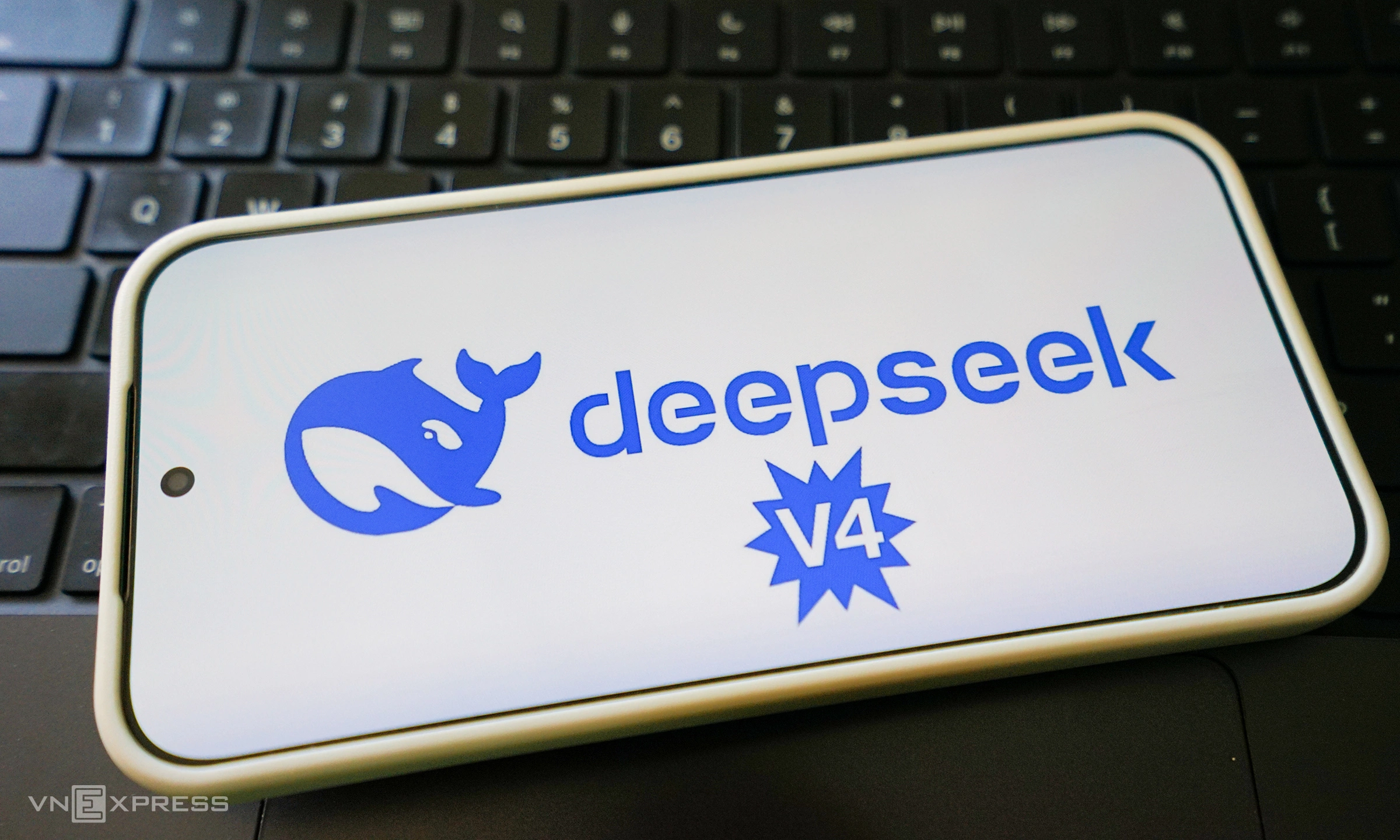 |
The DeepSeek V4 logo on a smartphone. Photo: Bao Lam |
Despite this, for some businesses, collaborating with Chinese tech firms remains primarily about competing in the Chinese market. Fok explained that due to restrictions on foreign providers, multinational corporations requiring AI services or cloud infrastructure for their operations in China must work with local suppliers. An example is Apple's partnership with Alibaba and Baidu.
Lian Jye Su, an analyst at Omdia, noted that access to the Chinese market remains a primary driver for many such collaborations. This is especially true as global automakers turn to Chinese suppliers for software, AI, and other systems to sell vehicles in the country.
However, that is not the only motivation. Su indicated that a "slow but steady structural shift" is occurring in the supply chains of sectors like batteries, electric vehicles, energy storage, and applied AI.
Chinese AI models challenge the notion that customers primarily seek Chinese technology for its low cost. An IDC survey conducted early this year with European businesses showed that security and compliance capabilities, along with superior performance, were the top two reasons for using Chinese AI, not cost.
Unlike US companies such as Anthropic and OpenAI, Chinese companies like Alibaba and DeepSeek focus on open-source models, making them more accessible to developers globally. Su assessed that Chinese AI is advancing even as Washington restricts Beijing in some areas, such as semiconductors.
"US restrictions have become a catalyst for innovation and performance in China," Su said. He added that Chinese suppliers maintain their competitiveness in AI, batteries, and automotive software.
Nevertheless, geopolitical issues will continue to influence how and where Chinese technology is used. Su predicts that Chinese technology will face its greatest challenges in semiconductors, cybersecurity services, and defense.
Mandal expects Chinese technology to be more widely applied in fields such as electric vehicles, batteries, robotics, drones, AI, and semiconductors. This creates "a fragmented, but more pragmatic, global technology ecosystem."
Ha Thu (according to Reuters, CNBC)