This information was announced by Immigration, Refugees and Citizenship Canada (IRCC) on 26/11, as part of the 2026–2028 Immigration Levels Plan.
Accordingly, of the total study permits for next year, 253,000 are for existing students requiring renewal. The remaining 155,000 are for new students, a 50% reduction from this year. The total number of permits will decrease by 16% compared to 2024, the first year Canada implemented the cap.
According to IRCC, this measure is an effective tool to curb the growth rate of Canada's temporary resident population. The total number of study permits decreased from over one million in 1/2024 to approximately 725,000 in 9/2024.
IRCC affirms its focus on attracting top talent. Master's and doctoral students at recognized public institutions will not need a provincial or territorial attestation letter (PAL/TAL) with their study permit application. For undergraduate programs, most new international students must still submit this letter.
The projected number of study permits to be issued in 2026 is as follows:
| Student Group | 2026 Allocation (persons) |
| Master's and doctoral students at recognized public institutions (PAL/TAL exempt). | 49,000 |
| Preschool and K-12 students (PAL/TAL exempt). | 115,000 |
| Other PAL/TAL exempt groups (renewing students not changing institutions, military school students, exchange or special scholarship recipients, etc.). | 64,000 |
| Applicants requiring PAL/TAL submission (new undergraduate students, students changing institutions, students changing study levels). | 180,000 |
| Total | 408,000 |
Of this total, 180,000 permits for PAL/TAL-required applicants will be allocated to provinces and territories based on population; more populous regions will receive higher quotas.
Experts on The PIE News, an international education specialist publication, suggest the new policy may not lead to significant changes. In reality, institutions already have fewer international students than the government's cap. The number of study permits this year saw a sharp decline due to lengthy application processing times and a low approval rate. Currently, the approval rate for study permit applications is 34%.
Most Canadian institutions rely on new international students for enrollment and financial stability. Experts worry that if this trend continues, it will exacerbate financial pressures on institutions, hindering Canada's long-term goal of attracting talent.
Experts urge IRCC to increase the approval rate for new permits and streamline the processing procedures, enabling students to apply with confidence again.
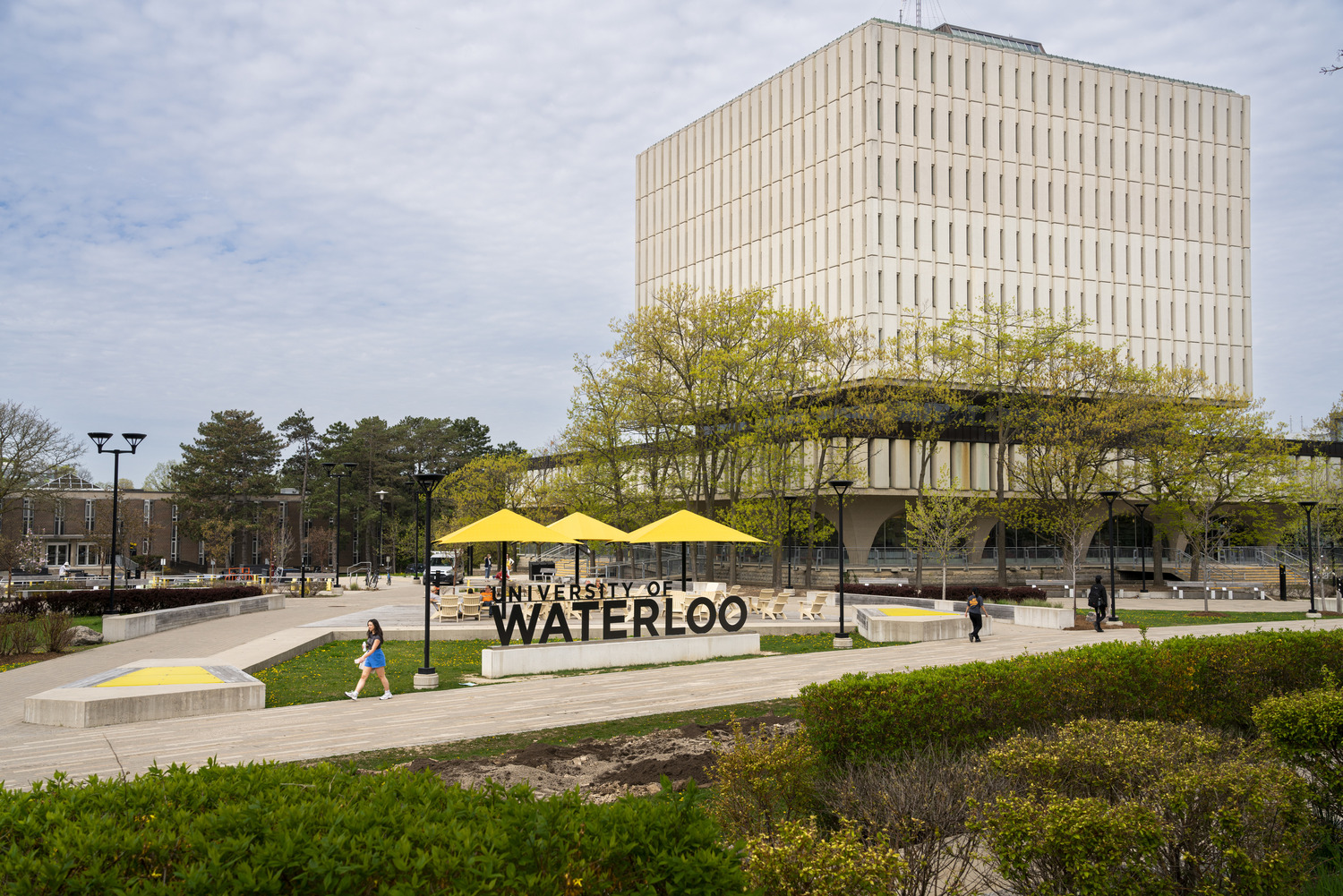 |
University of Waterloo campus, Canada. Photo: University of Waterloo Fanpage |
According to the Open Doors report by the Institute of International Education (IIE) in the US, Canada currently hosts the second-highest number of international students globally, with approximately 800,000 individuals in the 2024-2025 academic year.
Khanh Linh