Known as one of the "Seven Sons of National Defense" for its contributions to defense research and technology, Harbin Institute of Technology (HIT) is implementing a new program to cultivate engineers. This initiative removes the requirement for doctoral candidates to publish scientific papers to graduate.
In September, Wei Lianfeng became the university's first doctoral student to successfully defend and earn a degree based solely on practical results. Wei is a key member of the management team at the China Institute of Nuclear Energy, specializing in materials engineering.
His graduation project focused on developing vacuum laser welding processes, alongside designing and manufacturing related equipment. To assess the practical application of his work, HIT invited several industry experts to join the evaluation committee.
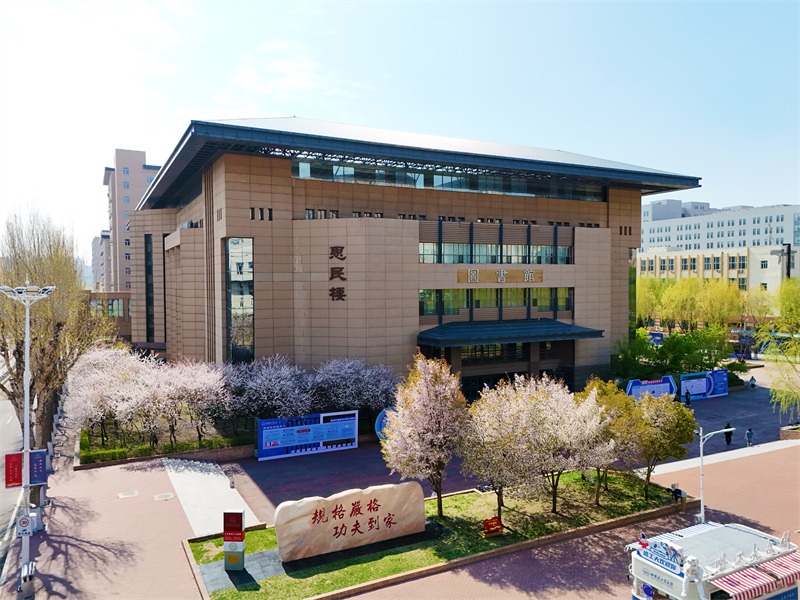 |
A building on the campus of Harbin Institute of Technology, China. *Photo: Harbin Institute of Technology Fanpage*
According to the Times Higher Education (THE) 2026 university rankings, HIT is currently among the top 131 globally. It is one of the first higher education institutions to participate in China's reform initiative for master's and doctoral training. The nationwide pilot program, launched in 2022, allows students to collaborate directly with leading enterprises and national laboratories to develop new equipment and design next-generation systems.
From 2024, students are permitted to replace their graduation dissertations with engineering designs. These designs must focus on 18 strategically important areas such as electronics and information technology, semiconductors, or quantum computing.
This initiative is backed by the Ministry of Education and eight other agencies, aiming to foster top engineers amidst the technological competition between China and the US. Experts believe that purely theoretical knowledge, such as scientific papers in prestigious journals or dissertations hundreds of pages long, will not be sufficient to overcome the US's technological advantage.
Zong Yingying, Executive Vice Dean of HIT's Graduate School, deems this policy reasonable. The reason is that many technical problems are not easily presented in a dissertation format or are unsuitable for publication. This is particularly true for certain "bottleneck" issues, which are so specialized and technical that the only way to solve them is by working directly with the technology.
HIT has implemented training programs in partnership with over 60 leading enterprises and national laboratories, attracting nearly 3,000 doctoral candidates.
According to Xinhua News Agency, since its launch, the initiative has enrolled over 20,000 engineering students across 60 universities and more than 100 enterprises nationwide.
Among the first cohort of graduates, 67 individuals applied for degrees based on practical contributions such as product designs, concept proposals, and situational analysis reports.
Khanh Linh (According to SCMP, China Science Daily)