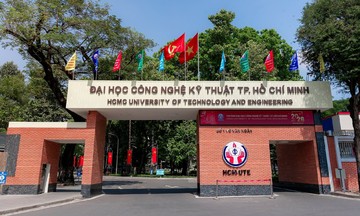
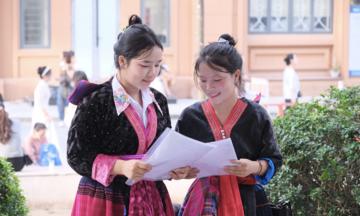
During the ceremony celebrating 50 years of Ho Chi Minh City's education sector on the morning of 20/11, Pham Ngoc Thuong, Deputy Minister of Education and Training, noted that while the education system of the Democratic Republic of Vietnam was established in September 1945, Ho Chi Minh City's system was formally integrated only in 1975.
Despite starting as a major city with numerous difficulties, from facilities to staff and curriculum, the city's education sector quickly rose to become one of the country's intellectual leaders. This was thanks to its resilience, intelligence, and pioneering spirit. Ho Chi Minh City has also been the birthplace of many innovative educational models that have since spread to other localities.
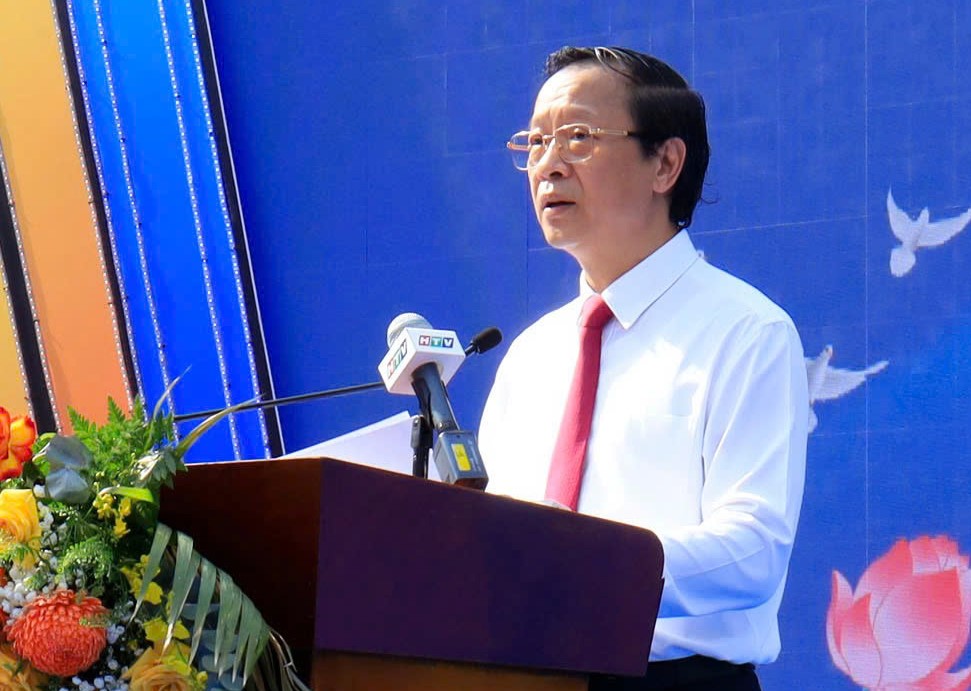 |
Students at Bui Van Moi Primary School, Phuoc Long Ward, 9/2025. *Photo: Quynh Tran* |
According to the Deputy Minister, Ho Chi Minh City's first major achievement was its pioneering efforts in the literacy eradication movement and the development of a learning society. Within just 21 months (7/1975-3/1977), the city eradicated illiteracy for over 93,400 people, most of whom were of working age. Ho Chi Minh City was the first locality to complete primary education universalization in 1995, achieving literacy eradication standards a year later. In 2024, UNESCO recognized Ho Chi Minh City as a member of the global network of learning cities.
Second, Ho Chi Minh City's education sector has pioneered innovation, daring to think and act in human resource training. The Deputy Minister highlighted several models pioneered by Ho Chi Minh City, such as: integrated English programs, high-quality programs, advanced schools, and international integration.
The city is one of the earliest and most systematically prepared localities for gradually making English a second language in schools.
Third, the city prioritizes comprehensive development in ethics, intellect, physique, and aesthetics. Vibrant physical training movements aim for each high school graduate to know how to play at least one sport or musical instrument. For 10 consecutive years, Ho Chi Minh City's student sports delegation has topped the Phu Dong Sports Festivals.
Fourth, given its large area and population, Ho Chi Minh City has effectively socialized education, easing the burden on public schools. By the 2024-2025 academic year, the city had 1,365 non-public general education schools, accounting for 38% of the entire system. For preschools, this rate reaches 89%.
Finally, aligned with the city's compassionate image, the education sector has implemented many professional support programs, teacher training, and sharing of successful models with neighboring provinces.
Thuong noted that these achievements have enabled Ho Chi Minh City to develop comprehensively in both quality and quantity, from mass education to specialized education, and from "teaching knowledge to nurturing character."
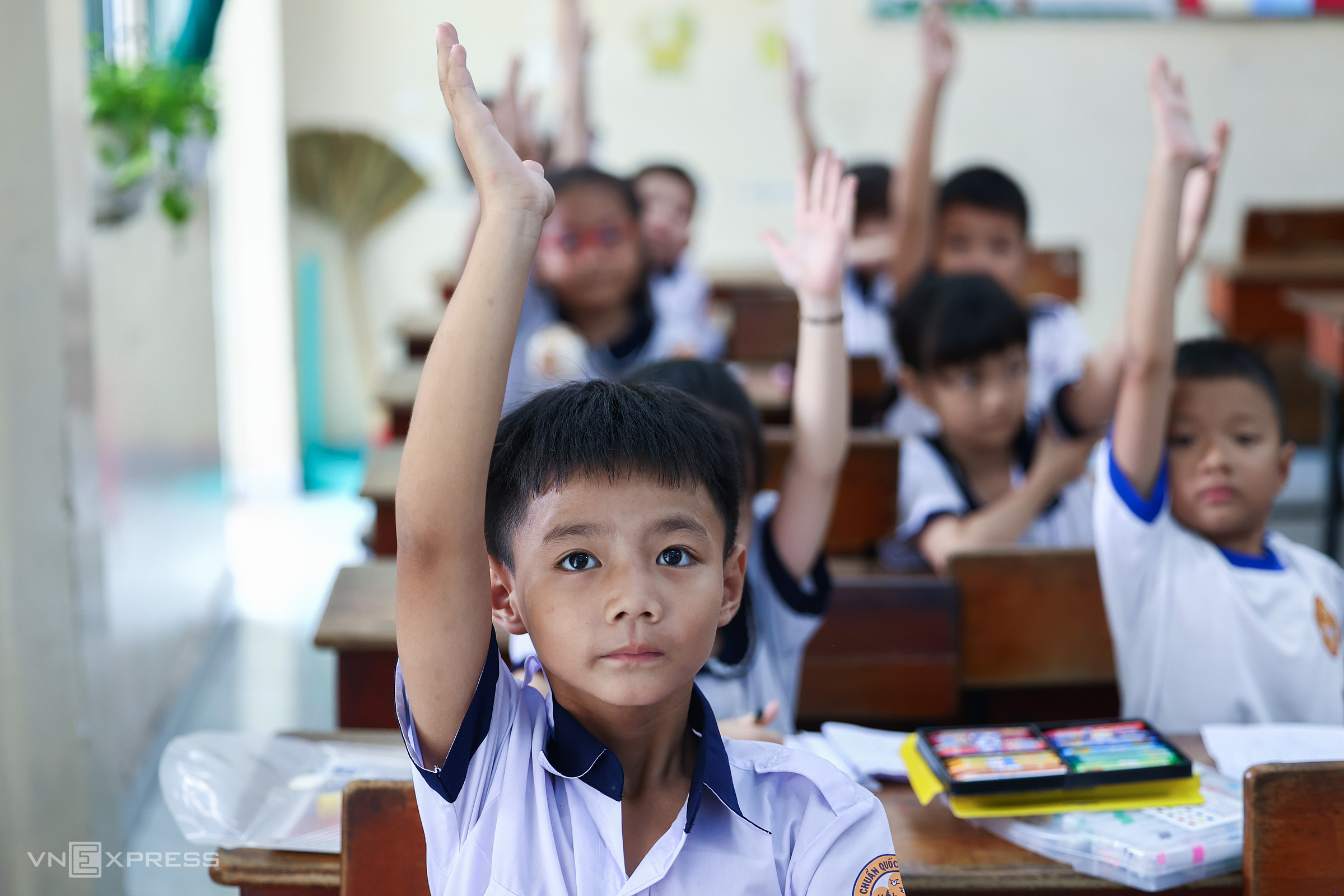 |
Nguyen Van Duoc, Chairman of the Ho Chi Minh City People's Committee, acknowledged that the achievements of the city's education sector are due to the contributions of many generations of educators from across the country. Many set aside their personal happiness, endured wartime bombs and bullets, and left comfortable urban lives to teach in impoverished rural areas and underserved outskirts.
"Ho Chi Minh City is always proud of its teaching staff, who are not only professionally skilled but also rich in character, dynamic, and creative", Duoc said.
The city needs an education system that imparts knowledge and fosters global aspirations, but, more importantly, addresses ethics. Nurturing individuals must begin with character, followed by knowledge and skills. The city chairman urged the education sector to innovate comprehensively to build a teaching staff strong in both expertise and ethics; to deeply focus on character education, lifestyle, and skills; and to create a happy learning environment for teachers and students.
Ho Chi Minh City currently has the largest education sector in the country, with approximately 2.6 million students and preschoolers across over 3,500 schools.
Le Nguyen