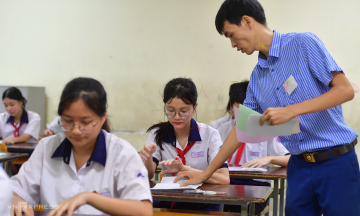
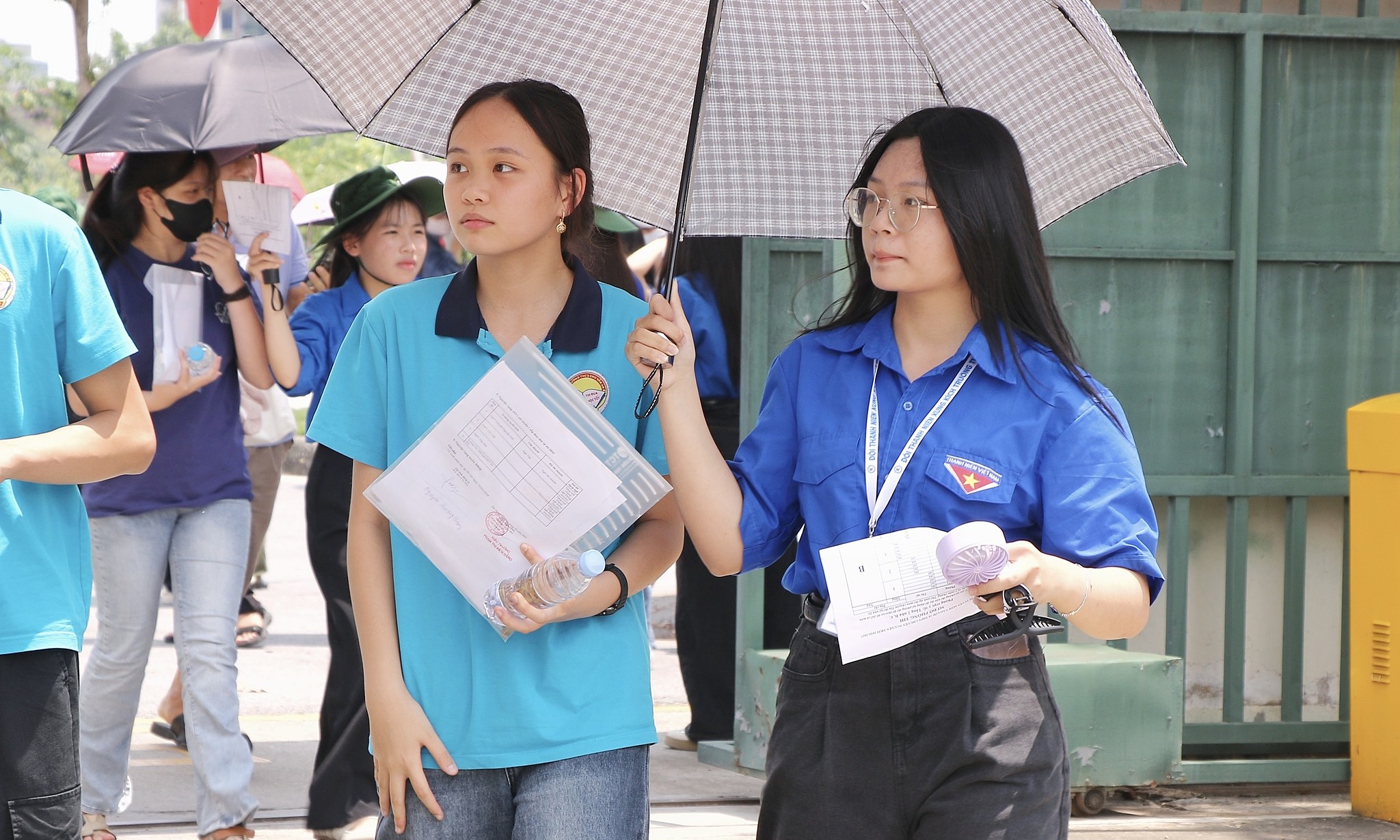
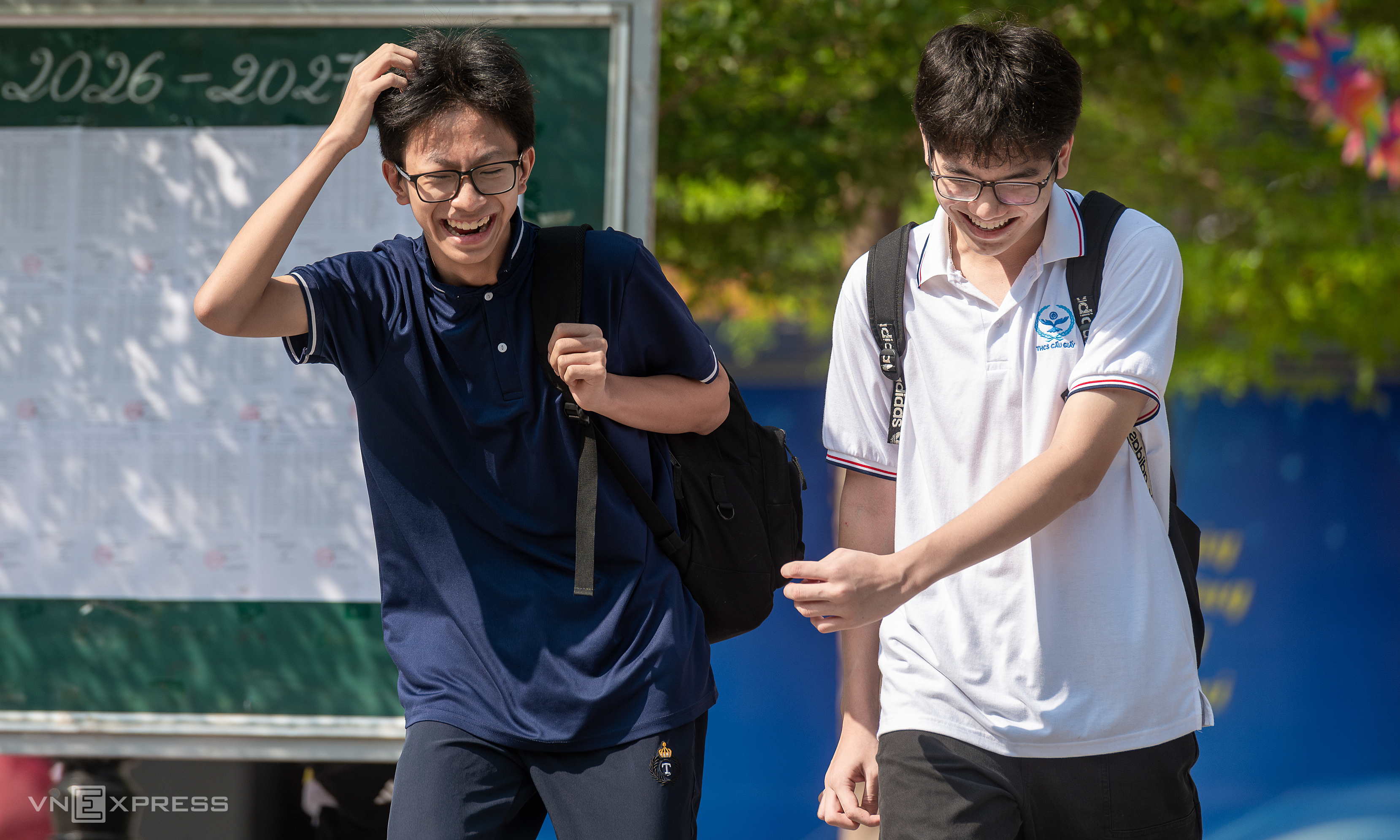
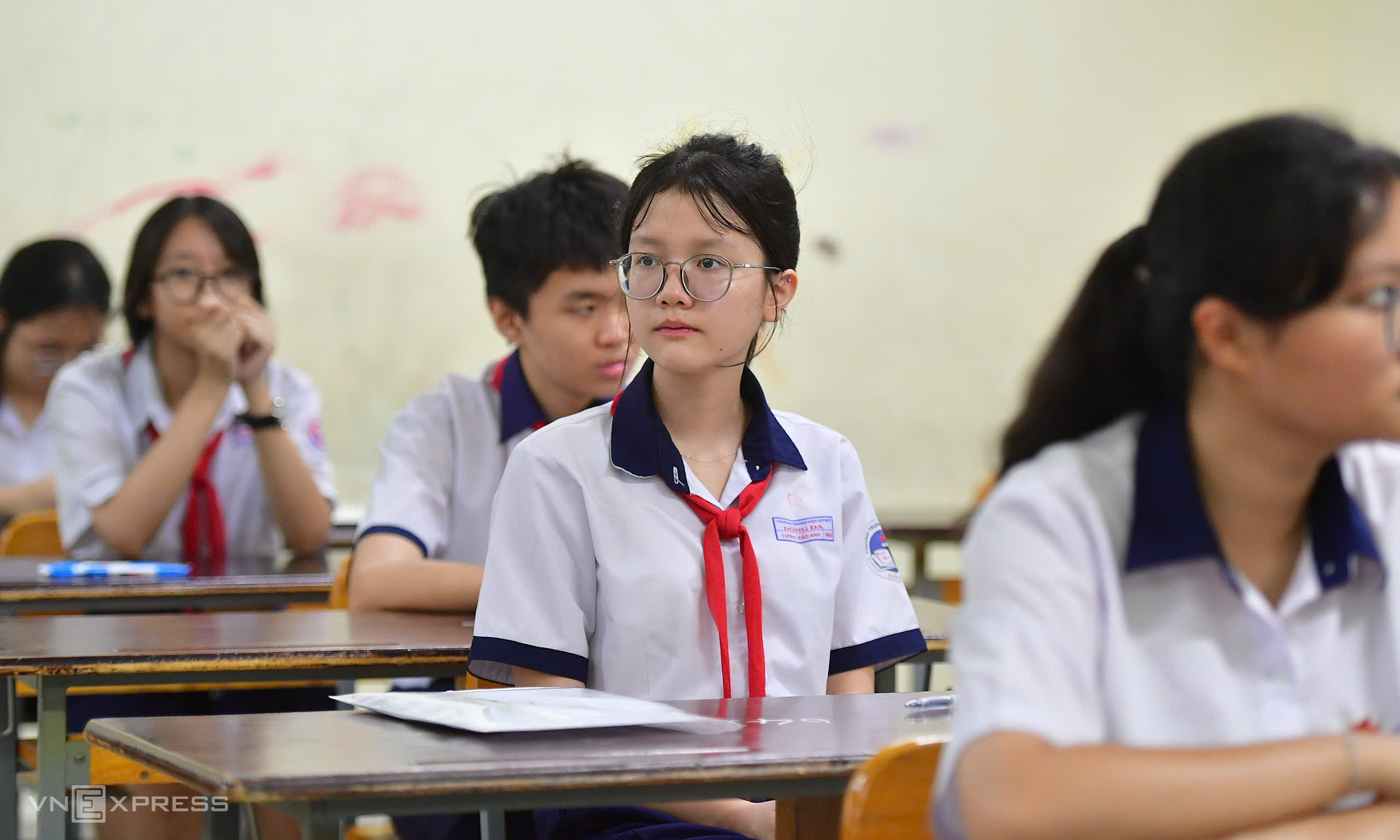
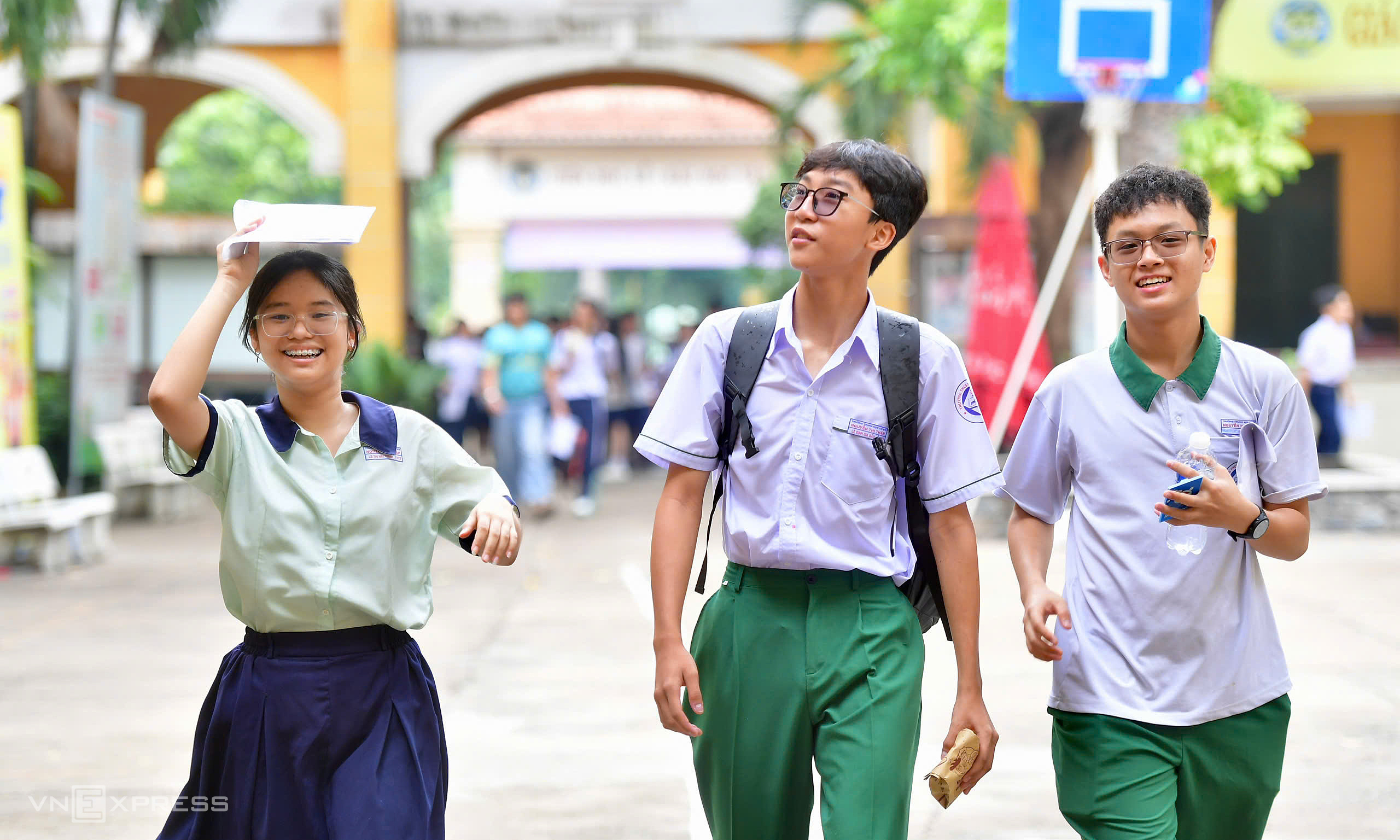
After the English exam on 1/6, many students at Truong Vuong High School and Vo Truong Toan Secondary School in Sai Gon Ward expressed confidence in achieving scores of 9 or 10, considering the test "manageable".
Exam paper and suggested answers for the English subject (for reference)
Contrary to this optimism, English teachers predict that the average score will likely remain around 7-8, making a "flood of perfect scores" unlikely.
"The test might seem easy at first glance, but students can easily lose points if they are overconfident or careless," said Bui Thuy Duong, an English teacher at Tran Van On Secondary School.
Duong noted that the test comprised 28 multiple-choice questions, accounting for 70% of the content, consistent with the structure announced at the beginning of the school year. The questions focused on applying language in real-life situations, discouraging rote memorization. Many questions covered technology, sports, and everyday communication – topics familiar to students.
Tran Thi Thanh Hoa, a teacher at Quang Trung Secondary School, stated that the grammar, pronunciation, stress, prepositions, and vocabulary points in the test were all basic content. Students had thoroughly reviewed these topics and could easily complete them.
Duong and Hoa assessed that the first 16 multiple-choice questions were at the recognition and comprehension levels, allowing students, even those with average academic ability, to secure full marks.
The difficulty increased from question 17. The reading comprehension sections, which required selecting appropriate words to fill in blanks (questions 17-22) and identifying true/false statements (questions 23-26), were not overly difficult but demanded students possess strong reading skills and grasp the text's flow to choose correct words and meanings. The section on word formation and sentence rewriting (questions 29-40) presented a higher level of difficulty, aiming to distinguish high-achieving students.
Pham Thi Xuan Oanh, head of the English department at Le Van Tam Secondary School, shared a similar view, noting that many students, in their haste, often made errors in the word formation section because it required careful analysis of whether a noun, verb, or adverb was needed. Specifically, question 40, which asked to change the noun "practicality" to the adjective "practical", was particularly challenging, solvable only by very proficient students.
Hoa believes that whether students can achieve a score of 9 or higher depends on the final three sentence rewriting questions and two true/false questions (24, 25). These five questions are where students are most prone to errors or misjudgment.
"The test's difficulty was slightly adjusted to suit the first cohort of students after the merger, but it still contained many highly challenging questions designed for differentiation," Oanh said.
All three teachers observed that with careful effort, students in the TP HCM area could easily score 7-8, while those in the other two areas might typically achieve 6-7. The number of exam papers scoring 9 or 10 may increase, but not significantly.
Last year, before the merger, approximately 31.5% of English exam papers from students in the TP HCM area scored below average. The common score range for students was around 5,75-8,25 points. Among over 76,000 students, only 488 achieved a perfect score.
Following the first day of exams with literature and English, students will continue with mathematics on the morning of 2/6, for 120 minutes. In the afternoon, students aspiring to specialized classes will take an additional corresponding specialized subject exam, lasting 150 minutes.
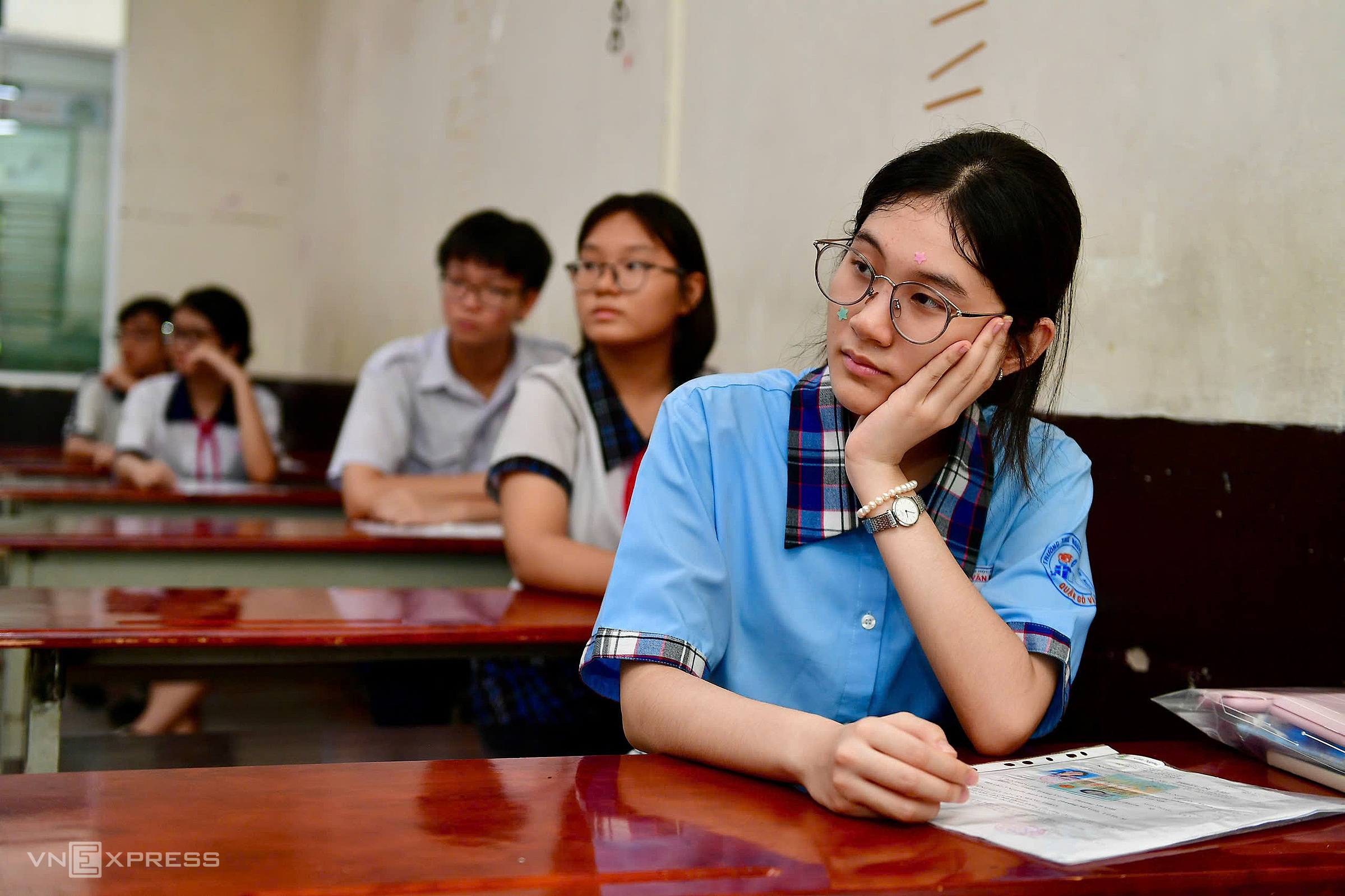 |
Students taking the 10th grade entrance exam in TP HCM at Truong Vuong High School, on 31/5. Photo: Thanh Tung |
Le Nguyen