The Ministry of Education and Training announced on 26/11 that it will add a pre-A1 level to the existing six levels. This expansion aims to encompass the full spectrum of foreign language proficiency, from initial exposure to advanced usage. The move addresses the growing demand for foreign language education among preschool and primary school children, aligning with the policy to establish English as a second language in schools for the 2025-2035 period, with a vision extending to 2045.
According to the Ministry, the updated framework will also create a favorable legal foundation for schools to enhance international cooperation and integration. It ensures consistency between domestic teaching practices and the assessment standards of international testing organizations, particularly for English.
The proposed new foreign language proficiency framework for Vietnam is as follows:
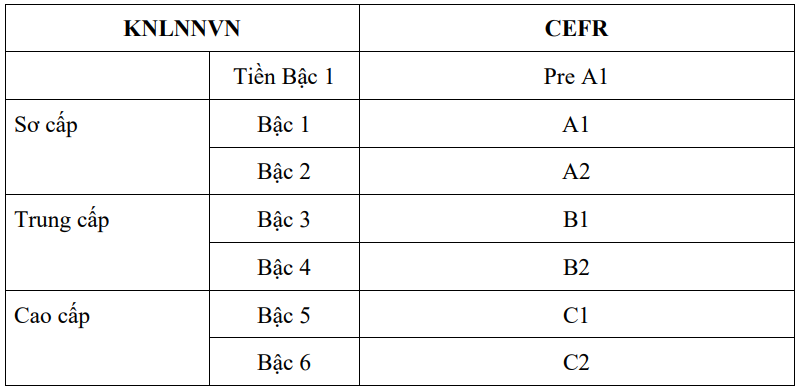 |
This framework draws on the Common European Framework of Reference (CEFR) and various English proficiency frameworks from other countries, integrated with the actual conditions of foreign language teaching, learning, and use in Vietnam.
The previous framework, issued in 2014, divided foreign language proficiency into three levels: elementary, intermediate, and advanced. These were further categorized into six tiers, from level 1 to 6, corresponding to A1 through C2 in the CEFR.
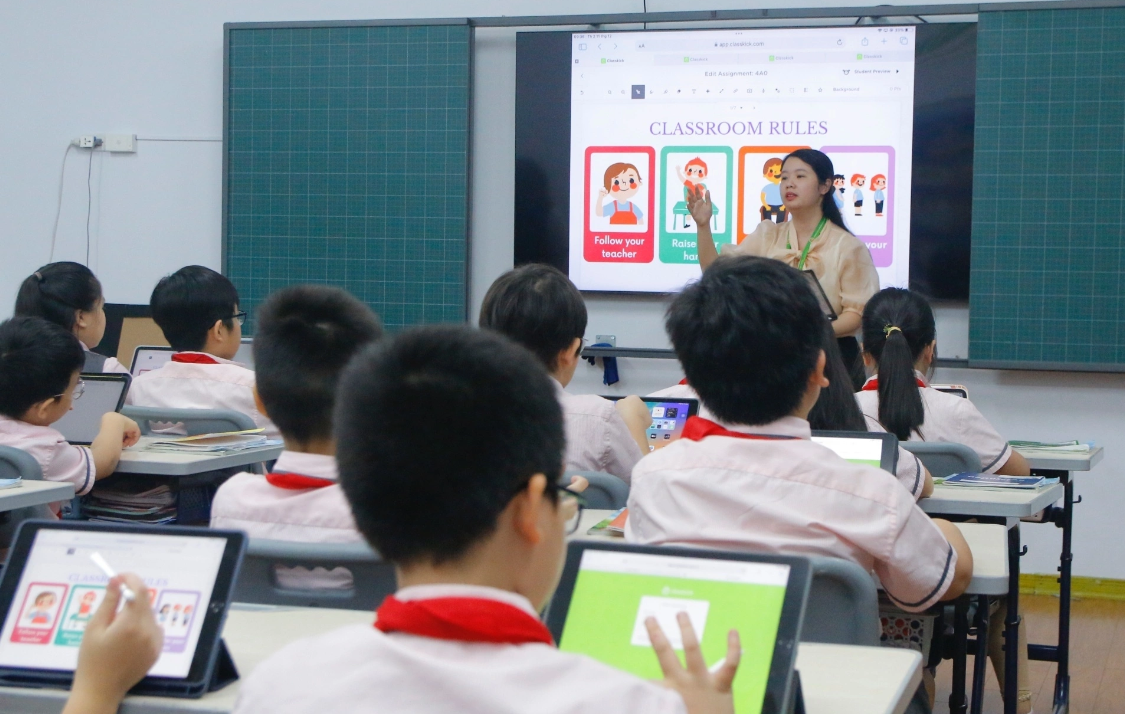 |
A science class taught in English for primary school students in Hanoi, 12/2023. Photo: Thanh Hang
Additionally, the framework will feature more specific and comprehensive competency descriptions for each skill: listening, speaking, reading, and writing. This provides a precise reference for administrators, curriculum development specialists, material creators, teachers, and learners.
For instance, the current framework's description of "speaking interaction" specifies six levels for participating in conversations, transacting goods and services, and conducting or responding to interviews.
The new proposal for "speaking interaction" includes: understanding interlocutors, conversations, informal discussions (with friends), formal discussions (meetings), goal-oriented cooperation (e.g., discussing a document, organizing an event), transacting goods and services, information exchange, conducting and responding to interviews, telecommunications communication, and online communication.
View the proposed foreign language competency descriptions by level.
The Ministry of Education and Training has initiated a public consultation on the draft foreign language proficiency framework for Vietnam, which is expected to take effect from 1/1/2027.
Duong Tam