According to a late October report by Harvard's Undergraduate Education Committee, 60% of all grades received by students were A's (4,0/4,0), nearly triple the rate from 20 years ago. Meanwhile, the average time students spent on out-of-class study remained almost unchanged, at 6,3 h per week last year, compared to 6,08 h in 2006.
Most faculty expressed concern about the disparity between grades and the quality of student work. However, this phenomenon is common not only at Harvard but also throughout US higher education, including at leading institutions such as Princeton University and Cornell University.
In its report, Harvard University stated it is considering adding an A+ grade tier and including average course grades on student transcripts to provide employers with a comparative scale.
The committee also proposed that faculty return to traditional teaching and assessment methods. Amanda Claybaugh, the committee chair, predicted that methods like in-class exams and oral recitations would return. These approaches help students focus and prepare consciously, while allowing professors to assess student comprehension.
Currently, students can earn grades based on discussions, presentations, and other methods.
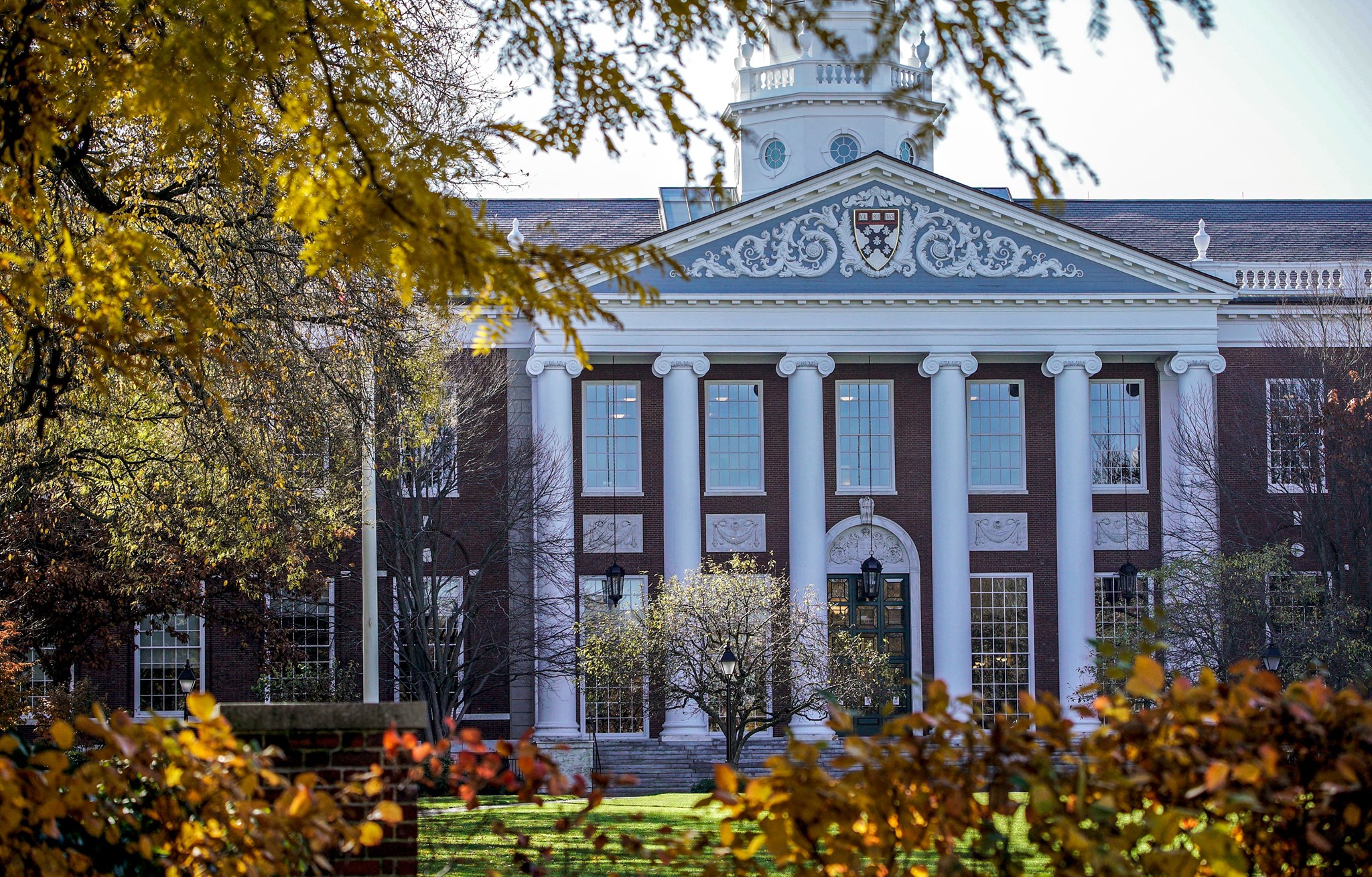 |
A building on the campus of Harvard University, US. Photo: Harvard Business School Fanpage |
However, many professors are skeptical of this solution, especially given universities' financial difficulties. Tightening grading standards could lead to a sharp decline in enrollment. Peter Burkholder, a professor of history at Fairleigh Dickinson University, believes that if a tuition-dependent school makes grading harder, students will simply choose not to enroll. Currently, seven out of 10 US universities accept 85% of applicants, with some even admitting all. Students are the ones who hold the power of choice.
Non-tenured faculty are particularly sensitive to this pressure. At many institutions, student course evaluations are the sole measure of teaching effectiveness. Some faculty members shared that they often feel compelled to give high grades to receive good evaluations.
Nevertheless, many support changing current grading practices, advocating for assessing students based on their mastery of standards, using pass/fail scales, or providing narrative feedback instead of letter grades. This approach would help students better understand what it means to master a skill and how to improve.
Megan Frary, a materials science lecturer at Boise State University, allows students to revise assignments after receiving detailed feedback. "They earn points by demonstrating that they are learning from that feedback. I believe in developing students' skills, so I let them redo it," she said.
However, the implementation remains a challenge. According to Viji Sathy, interim director of the Center for Faculty Development at the University of North Carolina-Chapel Hill, if a reading comprehension test is so easy that it fails to distinguish whether students understand the material, or if the system allows too many retakes, it will be ineffective.
These alternative methods can also become overwhelming, consuming time and effort that should be dedicated to teaching and learning, noted Alain Plante, a professor at the University of Pennsylvania.
While professors seek ways to curb grade inflation, many students at Harvard object, feeling it is unfair to their efforts. Other opinions suggest that students admitted to the university are inherently excellent, so receiving many A's is natural.
Khanh Linh (The Chronicle of Higher Education, The Harvard Crimson, WSJ)