On 31/7, Dr. Nguyen Minh Tien, Deputy Director of Children's Hospital TP HCM, reported that the 17 kg boy, from Tay Ninh, had a continuous fever for three days, accompanied by abdominal pain and vomiting, but no diarrhea. His family self-medicated the child, including 325 mg paracetamol administered approximately every three hours. The total paracetamol dose he received was approximately 210 mg/kg.
Upon admission to Children's Hospital TP HCM, the child was lethargic, drowsy, and had decreased blood oxygen saturation. His skin and eye conjunctiva were jaundiced. Tests showed liver enzymes increased more than 50-70 times the normal level, along with coagulopathy and elevated blood ammonia.
Doctors diagnosed the child with paracetamol poisoning, acute liver failure, and suspected sepsis. He was placed on a ventilator, received supportive treatment, and was given liver detoxifying medication. Due to severe liver failure, the child underwent three rounds of plasma exchange combined with continuous hemodialysis.
Plasma exchange is a technique that removes blood from the body, separates the patient's plasma, and replaces it with new plasma, helping to remove abnormal substances from the blood and improve coagulopathy. After more than two weeks of treatment, his condition gradually improved, and liver function tests returned to normal. The child was weaned off the ventilator and was able to breathe ambient air independently.
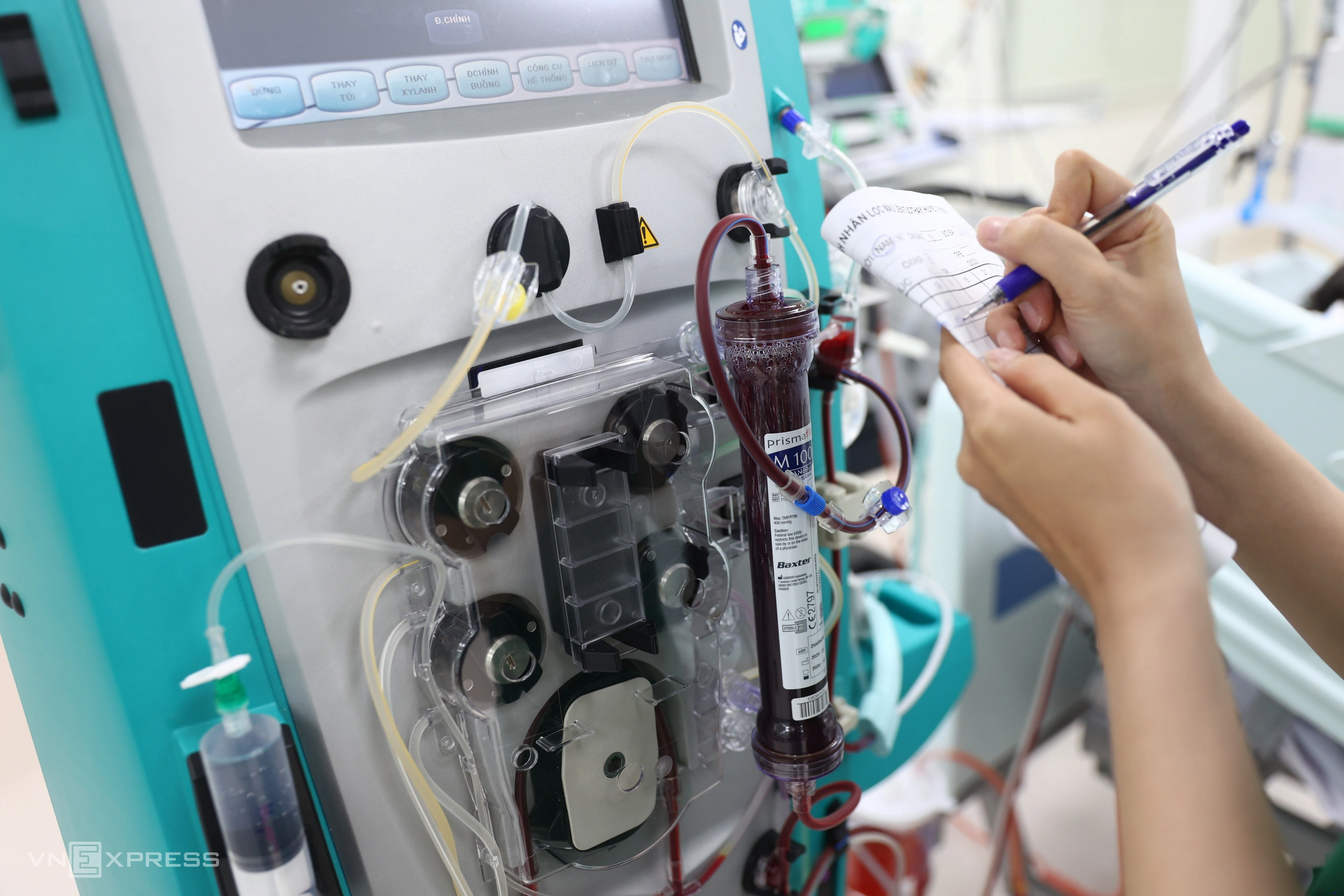 |
Hemodialysis for the patient. *Quynh Tran* |
According to Dr. Tien, paracetamol is a fever-reducing medication commonly used for children, but it must be administered at the correct dose and interval. Overdosing or administering it too frequently in a short period can lead to poisoning, liver damage, and acute liver failure.
For children, the paracetamol dose is typically calculated based on weight, approximately 10-15 mg/kg per dose, repeated every 4-6 hours if needed. The total daily dose should not exceed 60 mg/kg. Parents should not arbitrarily increase the dose or shorten the interval between doses just because the child still has a fever.
When a child has a fever, ensure they wear light clothing, drink sufficient fluids, and monitor their temperature. If the fever persists for more than 24-48 hours, seek medical attention to determine the cause and receive appropriate treatment, rather than self-medicating at home.
Especially if you suspect a child has taken an overdose of paracetamol or multiple doses consecutively, seek medical attention promptly, even if there are no obvious abnormal symptoms. Paracetamol poisoning can cause severe liver damage before symptoms become apparent.
Le Phuong