Malnutrition is a significant concern for cancer patients in Vietnam, with rates notably higher than global averages. At the workshop "The fight against cancer: A need for comprehensive breakthroughs" on 31/7, Dr. Luu Ngan Tam, Head of the Nutrition Department at Cho Ray Hospital and President of the Vietnam Society for Parenteral and Enteral Nutrition, reported that about 60% of cancer patients admitted to hospitals experienced weight loss or malnutrition. This figure in Vietnam ranges from 45% to 85%, depending on the cancer type and region, considerably exceeding the global rate of 30-70%.
Dr. Tam highlighted that many patients already suffer from anemia and cachexia at diagnosis. She emphasized that nutrition should be integrated into treatment plans from the outset, tailored to each specific condition, rather than waiting until patients are severely debilitated. Nutrition is not merely supportive; it is a fundamental treatment method, as studies indicate that patients with muscle loss face a 1,68 times higher mortality risk compared to those with normal muscle mass.
 |
Dr. Luu Ngan Tam at the workshop on 31/7. Photo: Van Son |
A major barrier to comprehensive care is the lack of health insurance coverage for nutritional therapy. Patients currently bear the primary financial burden for medication, surgery, chemotherapy, and radiation, in addition to managing specialized diets and essential nutritional products. This often prevents hospitals from fully implementing integrated nutritional treatment regimens.
Malnutrition can worsen during treatment due to side effects from chemotherapy and radiation, such as nausea, diarrhea, and mouth ulcers, which hinder eating. Concurrently, tumors continue to deplete energy and promote muscle breakdown, increasing the risk of complications, infections, delayed wound healing, and prolonged hospital stays. It can also intensify chemotherapy toxicity, sometimes requiring doctors to reduce doses or interrupt treatment protocols.
Leading hospitals like Cho Ray Hospital and K Hospital have recognized the importance of early nutritional intervention. At Cho Ray Hospital, patients undergo nutritional screening and assessment from the beginning, with findings integrated into their electronic medical records prior to drug treatment. Assoc. Prof. Dr. Do Anh Tu, Deputy Director of K Hospital, confirmed that all patients there receive initial nutritional screening and assessment to develop appropriate intervention plans. Good nutrition promotes faster wound healing, reduces complications, and enhances treatment response. For certain cancers, nutrition is crucial for a patient's ability to complete their entire treatment regimen.
However, not all medical facilities possess the necessary personnel and resources to implement such comprehensive models. While large hospitals have dedicated nutrition departments that collaborate with treating doctors, many lower-level hospitals lack specialized doctors, staff, and resources for holistic patient care. Cost also presents a significant obstacle, as cancer patients are often elderly, have multiple underlying conditions, and diverse nutritional needs.
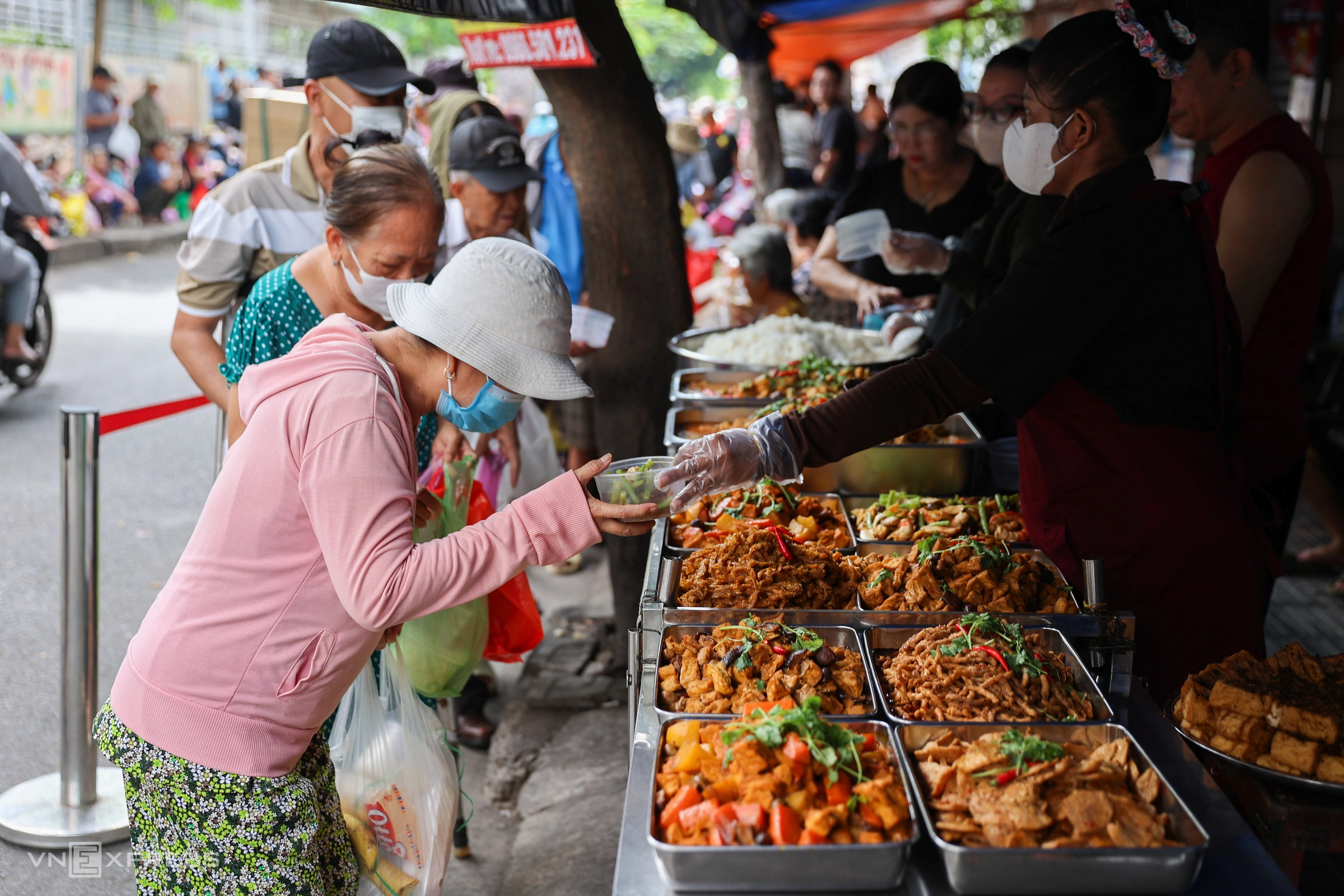 |
A breast cancer patient receives a charitable lunch while undergoing radiation therapy at Cho Ray Hospital on 27/7. Photo: Quynh Tran |
The Ministry of Health is actively considering the proposal to include nutritional therapy within health insurance coverage. M.Sc. Nguyen Tri Dung, Deputy Director of the Health Insurance Department, Ministry of Health, stated at the workshop that the agency is gathering expert opinions on this matter. He noted that the current health insurance contribution rate stands at 4,5% of salary, with total fund revenue around 160 trillion VND annually. Given the continuously increasing demand for medical examination and treatment expenses, any expansion of benefits requires careful consideration to maintain fund balance.
The Health Insurance Department is reviewing its list of drugs and related items to explore the feasibility of adding nutritional products for treatment to the payment scope. If fund conditions permit, the agency plans to support nutritional products for cancer treatment, aiming to progressively alleviate the financial burden on patients.
In 6/2026, the Ministry of Health will issue guidelines for the diagnosis and nutritional treatment of cancer patients. These guidelines will mandate initial screening for malnutrition risk and risk stratification to ensure appropriate intervention plans.
Vietnam faces a growing cancer burden, with 177,404 new cases and 111,015 deaths recorded in 2024, meaning nearly one person dies from the disease every 5 minutes. Compared to 2008, new cases increased by approximately 59%, and deaths by about 35%. The World Health Organization projects that cancer cases in Vietnam could rise by 61% between 2024 and 2050, underscoring the urgent need for comprehensive patient care, including nutritional support.
Le Phuong