Many people use their phones before bed. According to ophthalmologists, improper use can increase digital eye strain, causing dry eyes, headaches, and affecting sleep quality.
using your phone in the dark
Many people turn off all lights before scrolling on their phones. According to the Times of India, when eyes constantly adjust between a bright screen and a dark environment, the ciliary muscle works harder, which can quickly lead to eye strain and discomfort.
To reduce this, it is advisable to have a soft light source in the room or adjust screen brightness to match ambient light, rather than having an overly bright screen.
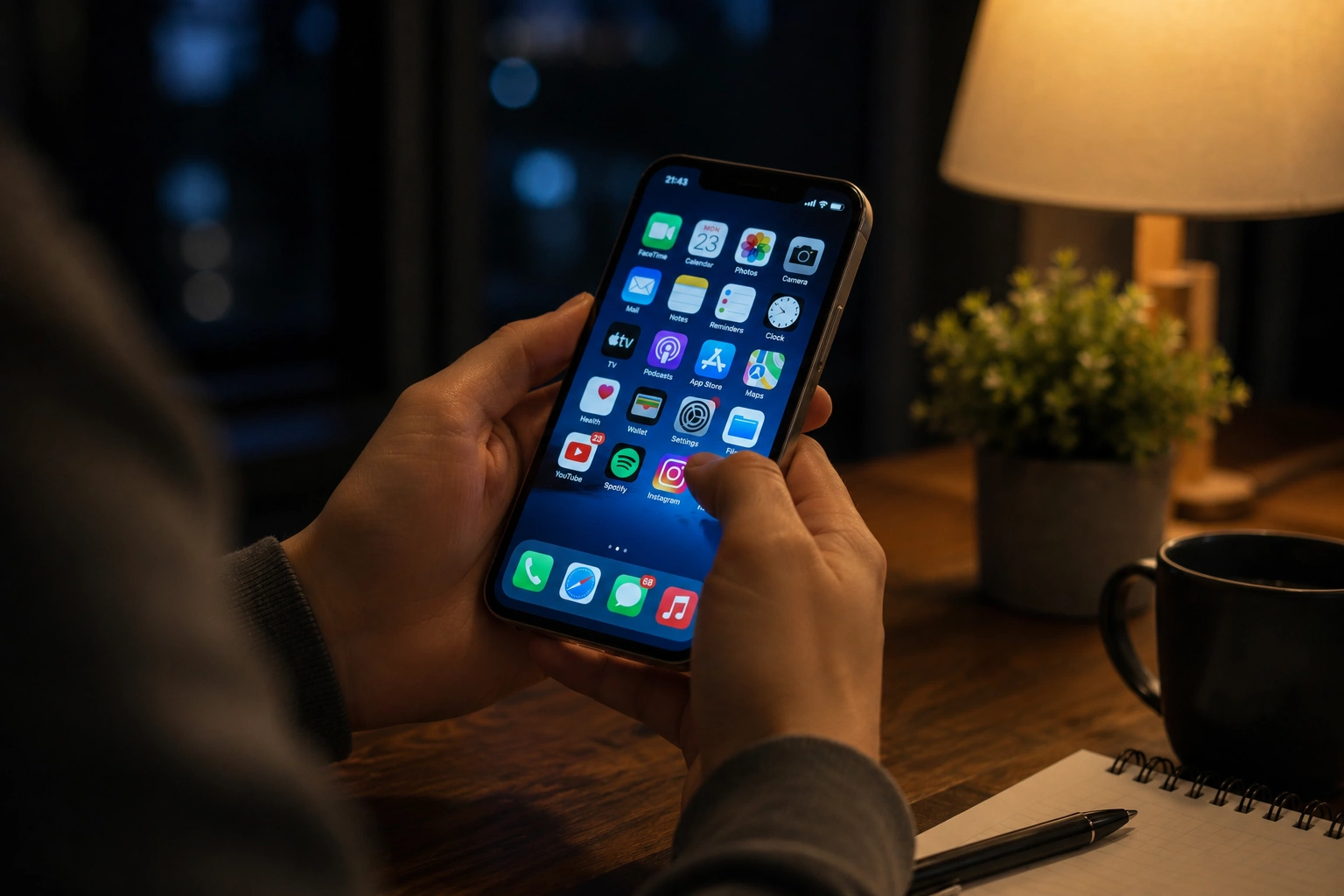 |
Staring at a phone screen in the dark can make eyes tire faster and feel more uncomfortable. *AI generated image* |
staring at the screen for too long without a break
Focusing on a phone for extended periods forces the eyes to constantly adjust at a close distance. According to Verywell Health, compared to reading printed materials, screen viewing requires continuous focal adjustment to maintain clear images, contributing to eye strain during prolonged device use. Experts recommend applying the 20-20-20 rule: after every 20 minutes of screen time, look at an object about 6 meters (20 feet) away for at least 20 seconds to relax your eyes.
forgetting to blink
When using a phone, blink frequency often decreases significantly. This causes tears to evaporate faster, leaving the eye surface dry and easily irritated.
According to Healthline, infrequent blinking is one of the common causes of dry, burning, and tired eyes for long-term electronic device users. You should actively blink frequently and can use artificial tears if your eyes are consistently dry, as directed by a doctor.
setting the screen too bright
Many people keep their screen brightness unchanged when viewing their phone at night or set it too high. An overly bright screen creates a strong contrast with the surroundings, forcing eyes to constantly adjust. Conversely, a screen that is too dim also makes eyes work harder to see clearly. Therefore, adjust brightness to a comfortable level and use a warm light mode (night shift or night mode) if your device supports it.
Digital eye strain often improves with eye rest, reduced screen time, or adjusted device viewing habits. However, if blurry vision persists, severe eye pain, double vision, red eyes, or symptoms do not improve after proper rest and eye care, patients should seek early medical examination. These could be signs of underlying eye conditions or vision problems requiring timely diagnosis and treatment.
Bao Bao (Compiled)
| Readers can submit questions about ophthalmology here for doctors to answer. |