Associate Professor Doctor Nguyen Duy Thinh, a food safety expert from Hanoi University of Science and Technology, states that accurately identifying pork infected with African swine fever or other infectious diseases is not possible through visual inspection alone. Instead, it requires clinical examination of live pigs, post-mortem inspection, and laboratory testing for a definitive conclusion. Furthermore, some fraudulent establishments often use spoiled or decomposing pork for ground and heavily seasoned dishes. These products typically feature finely ground ingredients mixed with many spices and additives, making signs like pale color or foul odor difficult to detect.
For example, sausages are products prone to fraud regarding origin, quality, and expiration dates. These products also often use artificial coloring to achieve an appealing red hue. Consumers find it very difficult to distinguish the quality of meat used in sausages or Vietnamese ham ("gio cha") through ordinary sensory evaluation.
However, from a food safety perspective, consumers can identify several unusual signs to avoid purchasing potentially substandard meat:
Observe the color: Healthy pork ranges from fresh pink to light red with a dry surface. Abnormal meat may appear dark, purplish, or unusually deep red. Some cuts might have tiny hemorrhagic spots or bruises under the skin; ears or snout may show bleeding areas (if the piece is intact).
Check elasticity: Fresh meat quickly springs back when pressed, while poor-quality meat feels soft, mushy, or overly flaccid, with a slimy surface, and leaves a persistent indentation when pressed.
Smell: Avoid purchasing meat that has a rancid, sour, unusually foul odor, or smells of medicine or unfamiliar chemicals.
Observe discharge: Normal meat has minimal liquid discharge, but meat that leaks excessive red or cloudy water, or has a slimy fluid, should be avoided.
Internal organs: In diseased pigs, organs such as the liver, spleen, and lymph nodes may show abnormalities like swelling, hemorrhage, or numerous purple or black spots.
Specifically for pork infected with African swine fever, the skin and ears of the pig may display scattered hemorrhagic spots, and the ears might turn bluish-purple. During slaughter, internal organs often show hemorrhages. The meat piece itself may have an unusual color such as dark red, brown, purplish, or grayish-blue, lacking its natural fresh red hue. When touched, the meat feels soft, mushy, lacks elasticity, and may leak water or slimy fluid.
Another risk involves diseased pork treated with chemicals or artificial colors to deceive buyers. These cuts might appear abnormally bright red externally but feel tough and lack elasticity. When cut, the inside may be dark, mushy, and emit an unusual odor. Upon washing, the meat easily loses color, develops an unpleasant fishy smell, and the fat may turn yellowish. During cooking, the broth often appears cloudy and foul-smelling, and the fat separates into small particles instead of forming large layers. However, these signs are not always obvious.
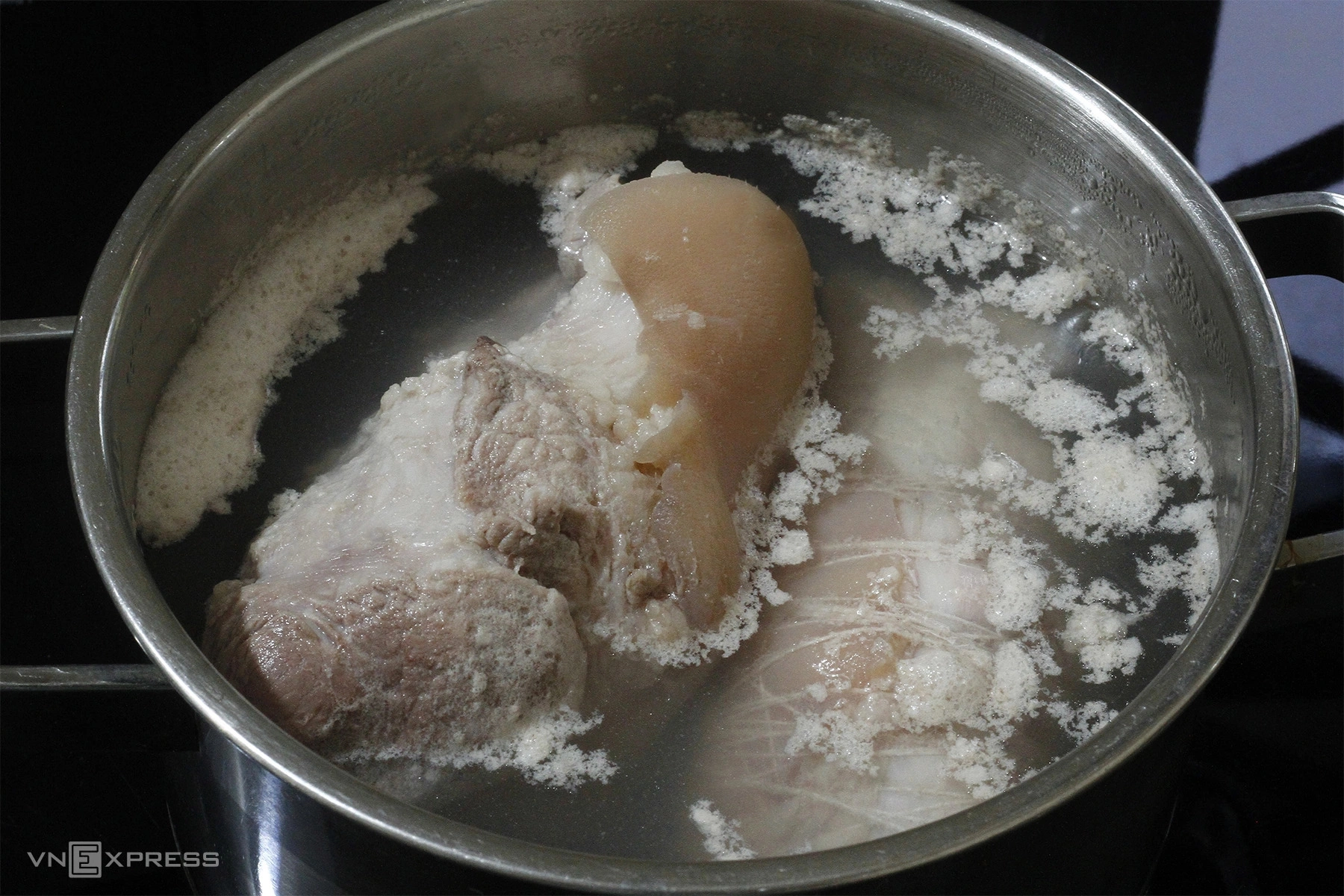 |
Illustration: Bui Thuy |
Pork infected with African swine fever not only carries the disease pathogen but can also be contaminated with other bacteria or diseases such as porcine reproductive and respiratory syndrome (PRRS), influenza, and typhoid. Even after cooking, toxins may persist in the meat. Consuming such meat can lead to diarrhea, vomiting, and even septic shock, potentially resulting in death. Furthermore, sick or dead pork may be contaminated with other bacteria and parasites (such as worms, Salmonella, E.coli) causing food poisoning or dangerous digestive diseases in humans.
Doctor Le Van Thieu from the National Hospital for Tropical Diseases states that many pig viruses do not transmit directly through the digestive tract but can spread indirectly via unclean hands or processing tools. Toxins like histamine, endotoxin, and mycotoxin persist even when cooked at 100°C. Ingesting contaminated meat can easily cause acute poisoning with severe vomiting, abdominal pain, diarrhea, high fever, and low blood pressure. Severe cases may lead to shock and death.
Long-term exposure to small amounts of toxins can cause damage to the liver, kidneys, and immune system, increasing cancer risk. Toxin-containing meat often shows no change in color or taste, leading consumers to drop their guard.
Substandard pork also carries the risk of parasitic infections such as trichinella and pork tapeworm, which can easily enter the human body when undercooked infected meat is consumed, potentially causing damage to muscles, eyes, and the central nervous system.
Beyond diseased pork, caution is advised for meat showing white spots in the muscle fibers, which may indicate tapeworm infection. These white particles are rice-grain tapeworm larvae, resembling grains of rice, with opaque white, hard heads, containing fluid and the tapeworm scolex inside. Tapeworm larvae enter the pig's digestive tract, then parasitize strong motor muscle groups such as the tongue base, thighs, shoulders, legs, and diaphragm. Industrially raised pigs rarely contract this disease; it is mainly found in free-range pigs. Tapeworm-infected meat has an unusual taste and poses many health risks from substandard preserving chemicals.
Experts recommend purchasing meat from reputable, quarantined sources. Avoid pale, bruised, watery, foul-smelling meat, or meat with numerous hemorrhagic spots on the skin. Pork must be thoroughly cooked; do not consume raw dishes like "nem chua" (fermented pork) or "tiet canh" (blood pudding). When preparing food, wash hands thoroughly and use separate cutting boards and knives for raw and cooked foods to prevent cross-contamination. Absolutely do not buy abnormal meat just because it is cheap. Consumers should be vigilant about online information, selectively apply food safety knowledge, and protect their health amidst the many risks of unsafe food.
Thuy Quynh