The habit of rinsing raw chicken directly under a faucet to clean off blood and impurities, while seemingly hygienic, poses significant health risks. According to nutritionist Wang Yu-ching from Taiwan (China), raw poultry often harbors dangerous bacteria such as Salmonella and Aspergillus. Many mistakenly believe that rinsing with water cleans the meat. However, the strong spray from the faucet can actually cause bacteria on the meat's surface to splash onto nearby sinks, cutting boards, utensils, or even fruit.
Doctor Kimberly Baker, Director of the Food Safety and Systems Program Team and an extension specialist at Clemson University, US, shares this view. She explains that many people wash chicken instinctively, similar to cleaning fruits and vegetables, or due to older cooking shows. However, modern medical understanding confirms that rinsing poultry under a faucet does not eliminate bacteria; instead, it spreads pathogens.
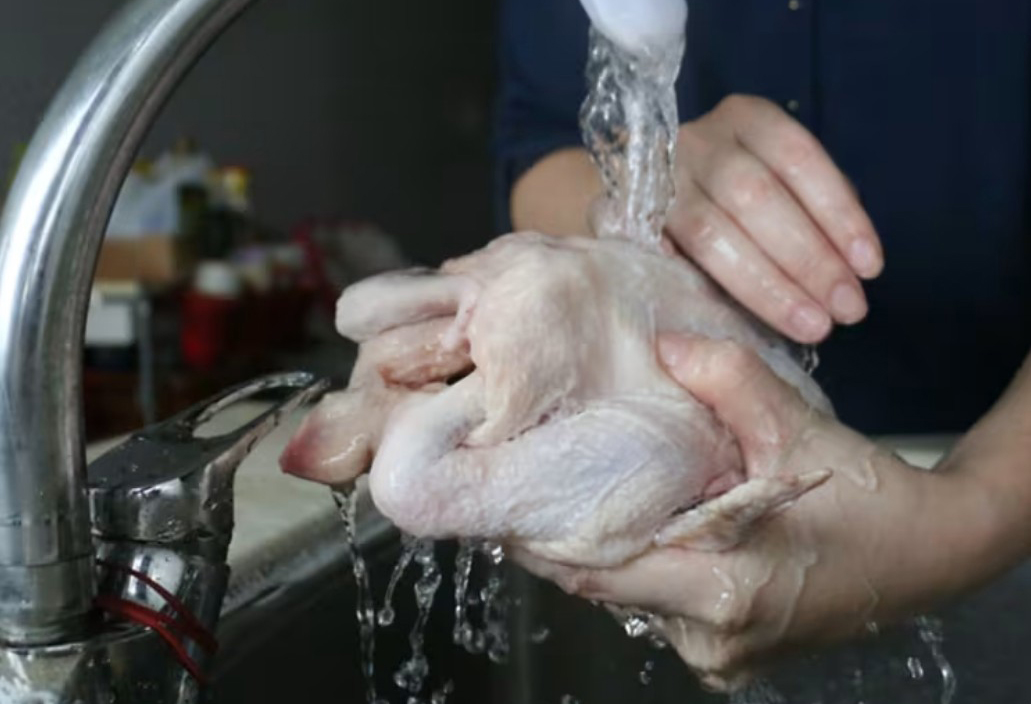 |
Washing raw chicken can increase the risk of Salmonella infection. *Illustration: Alicia Tatriandy* |
The US Centers for Disease Control and Prevention (CDC) reports that on average, one in 25 packages of chicken sold in stores contains Salmonella bacteria. Statistics also indicate that one in 7 people who wash chicken in their sink still leave bacteria in the basin even after cleaning, posing a serious risk of cross-contamination.
Accidentally consuming contaminated food can lead to acute gastroenteritis, with symptoms including high fever, vomiting, severe abdominal pain, and serious diarrhea.
To proactively prevent bacteria from spreading in the kitchen, experts recommend consumers strictly follow safe handling and storage principles:
Safe preparation order:
Prioritize preparing ready-to-eat foods (fruits, raw vegetables) first, followed by vegetables that require cooking, and finally, raw meat and fish. This principle eliminates the risk of bacteria from raw meat contaminating foods consumed directly.
Safe handling of excess blood and impurities:
If meat is pre-packaged and clean: No washing is necessary. Place it directly into a pot or pan for cooking.
If the surface needs drying: Use a specialized paper towel to blot gently, then immediately discard it into a covered trash can and wash your hands.
If meat purchased from a traditional market still has dust, fine hairs, or blood: Do not rinse it under a strong faucet. Instead, gently soak and wash it in a separate basin, minimizing vigorous agitation that could splash water. Afterward, clean and sanitize the basin with soap.
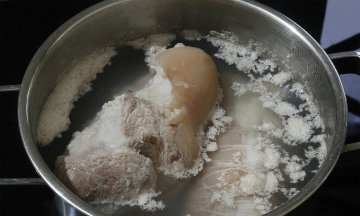
Cold water blanching method: Place the meat in a pot covered with cold water, then gradually heat it until it simmers gently, allowing blood foam to coagulate. Skim off the foam and proceed with cooking.
Cutting board and knife principles:
Equip at least two separate cutting boards and knives: one set for raw foods and another for cooked foods or fruits. Regardless of whether you use wooden or plastic cutting boards, replace them when deep cut grooves appear on the surface, as these are places where bacteria can easily harbor and are difficult to clean.
Hand and preparation area hygiene:
Wash hands with soap under warm water for at least 20 seconds immediately after touching raw meat. Regularly sanitize the kitchen sink and surrounding countertops with a specialized cleaning solution.
 |
Taiwanese nutritionist Wang Yu-ching. *Photo: Fanpage Wang Yu-ching* |
Binh Minh (According to United Daily News)