Li, 61, endured persistent chills and seizures, seeking treatment widely. Initial diagnoses proved incorrect until doctors at Guangdong 39 Brain Hospital discovered an 8 cm living tapeworm in her brain, Sina reported.
Her husband, Liu, recounted that Li underwent lumbar spine surgery in 2021. Following the procedure, she experienced numbness in her left limbs and nocturnal tremors. For two years, she felt a persistent numbness across her entire scalp, even contemplating shaving her head for relief. Her family attributed these symptoms to complications from her spinal condition. Last June, amidst a severe heatwave in Guangdong, Li developed full-body chills, feeling cold even under two blankets. A local hospital diagnosed her with a cerebral infarction, discharging her after one week of medication.
 |
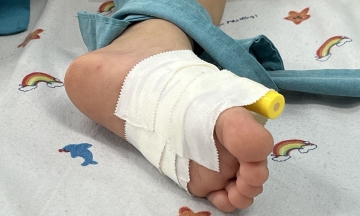
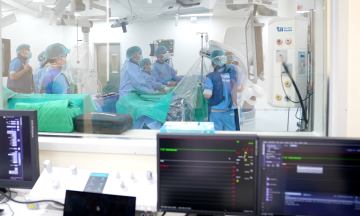
Patient Li after surgery. Screenshot |
Early one morning last December, Li suffered a seizure, frothing at the mouth and experiencing facial distortion. After a few days of observation, she was discharged, but seizures returned frequently that same night. For several months, she sought treatment at various hospitals, where doctors suspected glioma or metastatic brain cancer. She had her hair shaved in preparation for surgery, but the procedure was abruptly canceled the following day. Following a consultation, specialists suspected granulomatous inflammation caused by parasitic infection. However, tests failed to detect any tapeworm traces, leaving the cause unknown.
"Just hearing the names of the diseases was terrifying; the thought alone gave me shivers and kept me awake nightly," Liu recalled. As a last resort, the family brought Li to Guangdong 39 Brain Hospital, a specialized brain facility.
During the examination, Doctor Lu Ming, Head of Neurosurgery Department 5, identified a key clue in the imaging: the lesion had moved and left "tunnel signs," distinct grooves indicating a tapeworm's path within the brain parenchyma. Drawing on extensive experience in treating parasitic infections, Doctor Lu diagnosed cerebral sparganosis. Subsequent serum tests confirmed the presence of tapeworm antibodies. The medical team performed surgery, successfully extracting a living tapeworm from Li's brain.
"This tapeworm was very cunning. When we attempted to remove it, it wasn't in its 'home' but had moved to another location. Ultimately, we found it quite far from its original nest," Doctor Lu Ming explained to reporters, gesturing to a video of the surgery.
Liu reported that his wife's long-standing symptoms, including scalp numbness and left limb tremors, significantly improved post-surgery. Li recalled that during her youth, whenever she experienced a toothache, her mother would catch live frogs, cut their thighs, and insert them into the tooth gap for about 30 minutes to "catch tooth worms." She performed this act multiple times, noting it was a common folk remedy in her village. Furthermore, over 20 years ago, she frequently drank spring water and recently consumed raw snake-infused wine and raw fish.
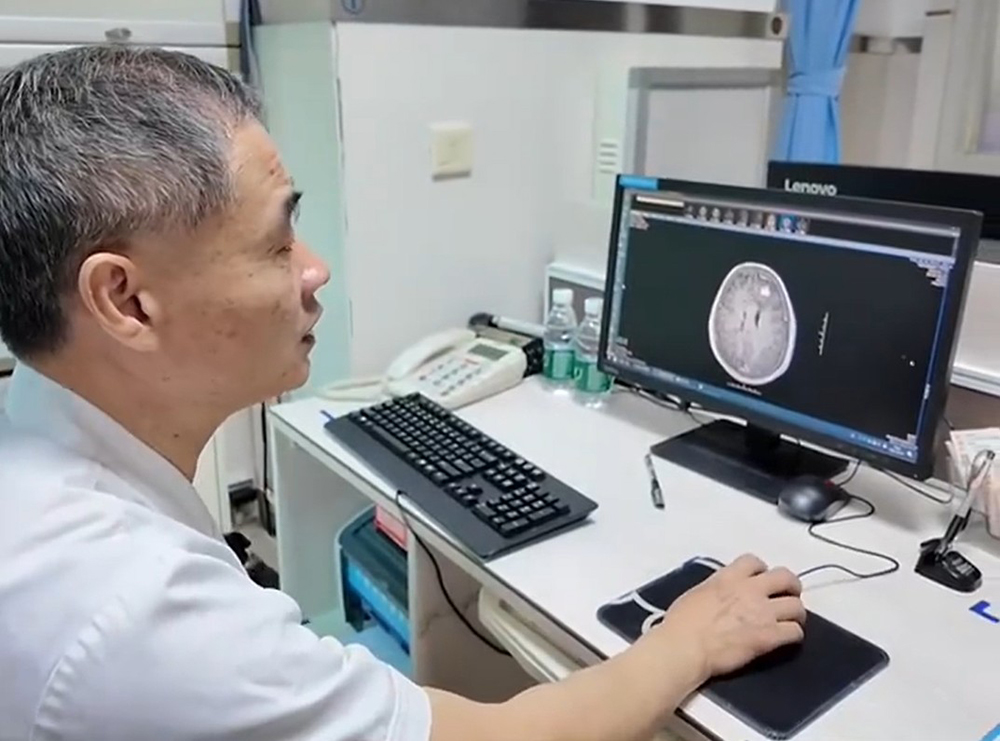 |
The doctor explains patient Li's case. Screenshot |
Doctor Lu Ming issued a warning that applying raw frog or snake meat to wounds carries an extremely high risk of parasitic infection. "Folk remedies such as 'stuffing frog thighs into teeth' should be absolutely avoided," he emphasized.
Tapeworm larvae primarily infest wild animals. Upon entering the human body, they can migrate and penetrate vital organs such as the brain and eyes, causing irreversible damage. The public should not trust unscientific remedies and must always consume thoroughly cooked food and boiled water.
By Binh Minh (Source: Sina, Sohu)