Prior to this incident, Minh had a healthy pregnancy and a normal delivery, with no history of cardiovascular disease.
Master, Doctor Duong Cong Linh, from the Cardiology Department at Tam Anh General Hospital Hanoi, reported that the patient presented with acute ST-elevation myocardial infarction. A percutaneous coronary angiography revealed a dissection originating from the left main coronary artery and extending into the left anterior descending branch. This caused severe narrowing, with one segment almost completely blocked. The intimal layer of the vessel wall had torn, allowing blood to enter the tear and accumulate within the vessel wall, forming a hematoma that ultimately led to the heart attack.
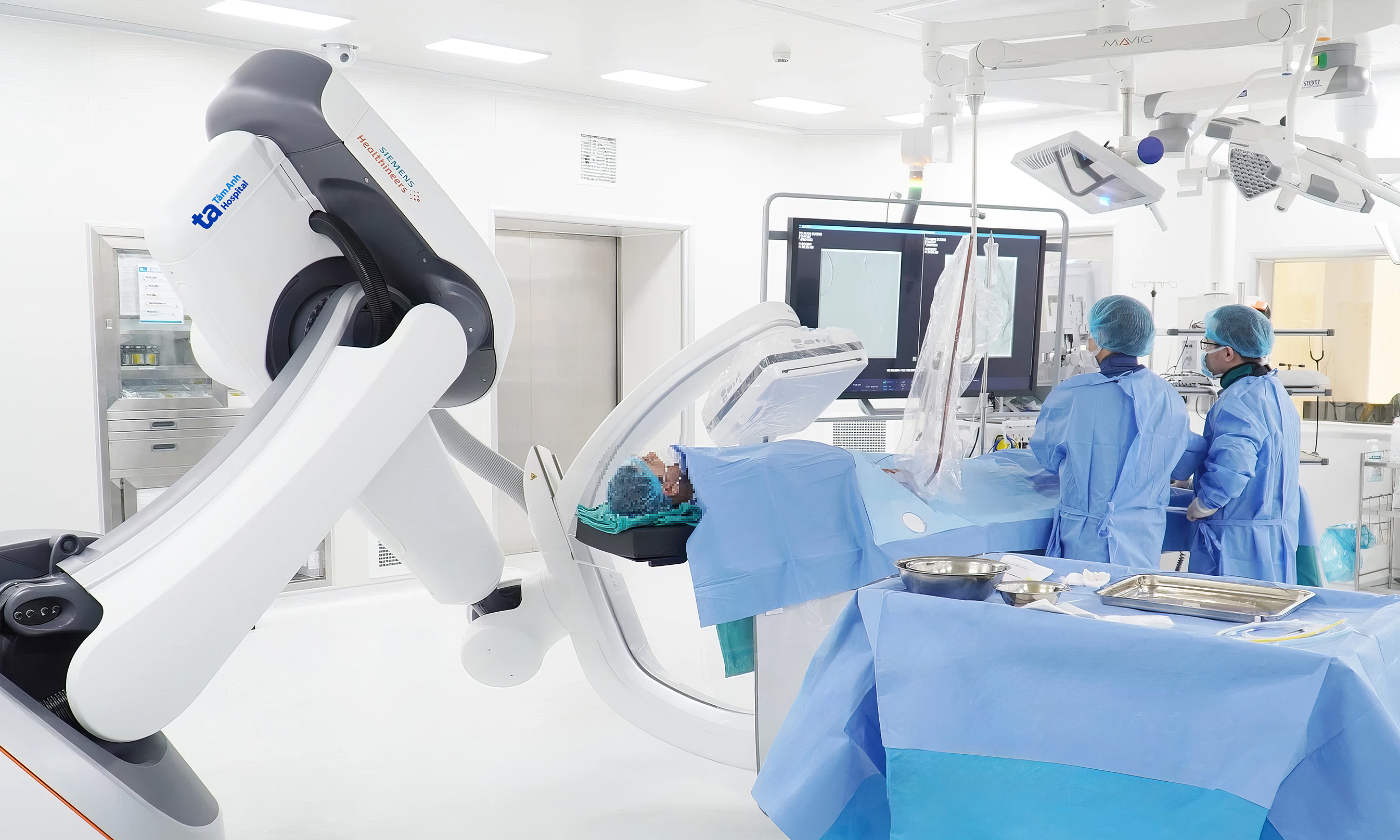
After locating the lesion, the intervention team utilized intravascular ultrasound (IVUS) to directly visualize the interior of the vessel wall. However, due to the extensive damage and the patient's unstable hemodynamics, the team inserted an intra-aortic balloon pump (IABP) to support circulation. This device operates synchronously with each heartbeat, improving coronary blood flow and reducing the load on the weakened heart, thereby aiding myocardial recovery.
Following stent placement, coronary blood flow improved, and hemodynamics gradually stabilized, allowing Minh to pass the critical period.
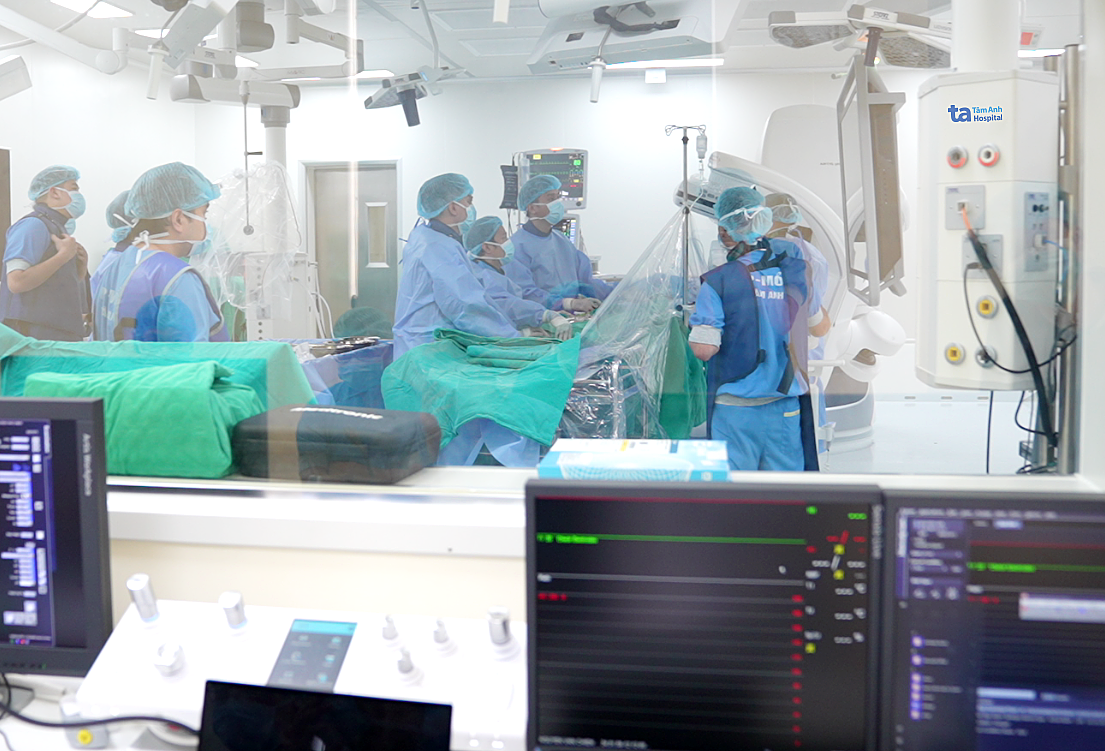 |
The team placed an intra-aortic balloon pump to support circulation and a stent to restore coronary blood flow for the patient. *Photo: Tam Anh General Hospital*
According to Doctor Linh, spontaneous coronary artery dissection (SCAD) is an uncommon cause of myocardial infarction, accounting for approximately 1-4% of acute coronary syndromes. This condition can lead to severe consequences such as arrhythmias, cardiogenic shock, or even death if not treated promptly. SCAD primarily affects women, including those without pre-existing cardiovascular risk factors. During pregnancy and postpartum, SCAD is a leading cause of myocardial infarction, potentially occurring immediately after childbirth or several months later.
Research indicates that SCAD may be linked to physiological changes during pregnancy and postpartum. Hormonal fluctuations can weaken the structure of the vessel walls, making them more vulnerable. Concurrently, the heart works harder, and increased blood volume elevates pressure on the vessel walls. When additional factors like strenuous exertion (e.g., pushing during labor, heavy lifting), stress, sleep deprivation, or postpartum stress arise, the sudden increase in pressure on the coronary artery walls can trigger dissection, leading to acute cardiac events.
Doctor Linh advises women during and after pregnancy to ensure adequate rest, avoid excessive physical exertion, maintain a healthy lifestyle, effectively manage blood pressure and cholesterol levels, and proactively monitor their cardiovascular health. Should symptoms such as postpartum chest pain, pain radiating to the shoulder or arm, shortness of breath, palpitations, or dizziness occur, patients should seek immediate medical evaluation for timely diagnosis and treatment.
Ly Nguyen
*Patient's name has been changed
| Readers can send cardiovascular questions here for doctors to answer. |