Sleep apnea is a condition characterized by repeated pauses in breathing during sleep, lasting ten seconds or more, leading to a decrease in blood oxygen levels. This condition can cause numerous complications, including high blood pressure, heart attack, diabetes, and even stroke or sudden death. There are three main types: obstructive sleep apnea, central sleep apnea, and mixed sleep apnea. Obstructive sleep apnea syndrome is the most common.
During the Tet holiday, daily routines, including eating and resting habits, often change. People tend to consume more alcohol, sleep late, and eat calorie-rich fried foods and starches, which can lead to temporary weight gain. Fat accumulation in the neck and pharyngeal area narrows the upper airway, making it prone to collapse and causing loud snoring.
This period also often involves less physical activity and insufficient sleep for adults, which can worsen snoring and obstructive sleep apnea. Staying up late, sleeping late, and irregular sleep schedules disrupt the circadian rhythm, prolonging rapid eye movement (REM) sleep, which often concentrates towards the end of the night. During this phase, overall muscle tone, including that in the pharyngeal region, is at its lowest, making the airway more susceptible to collapse and leading to more frequent and severe sleep apnea.
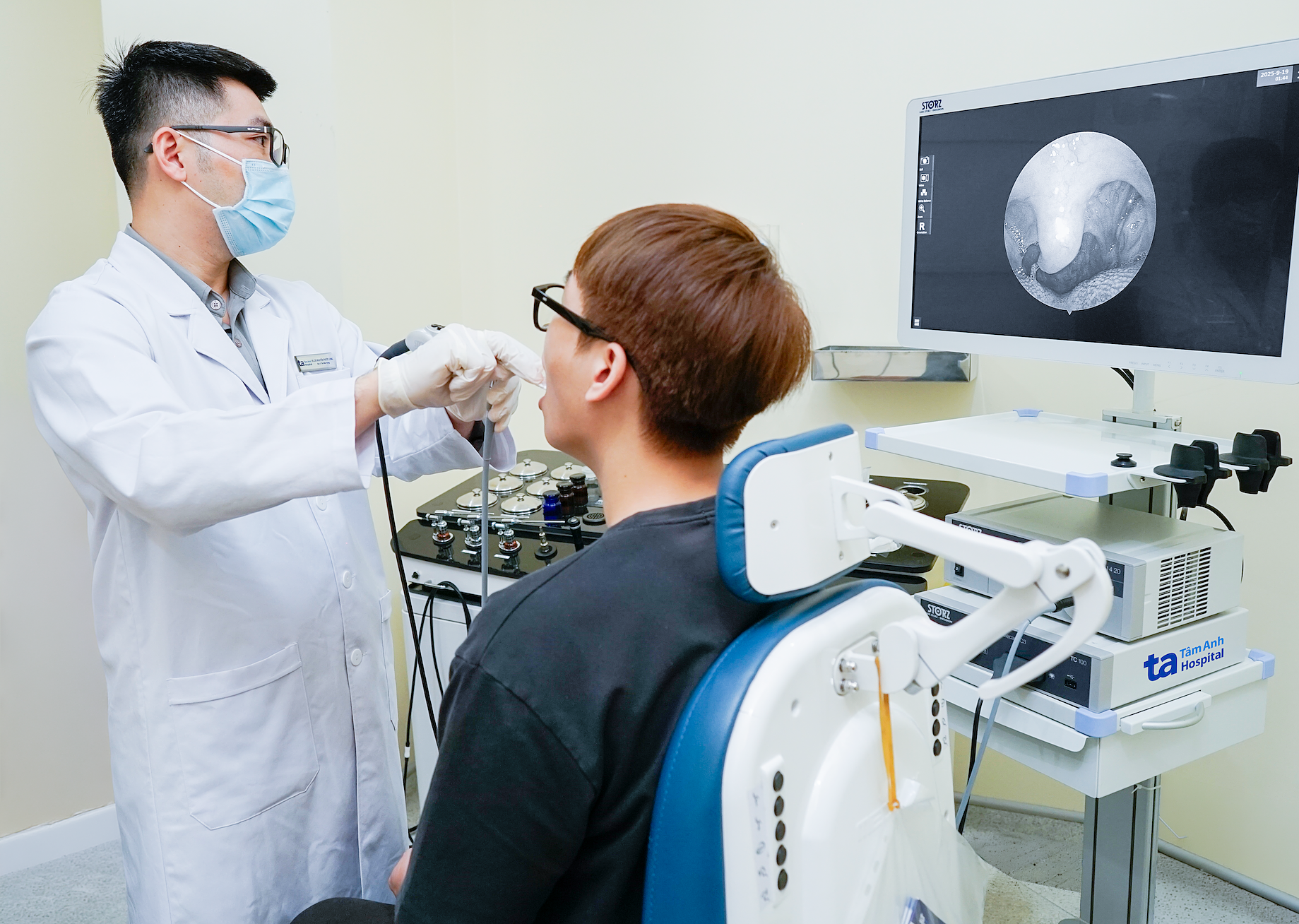 |
Dr. Long performing a throat endoscopy on a patient. *Photo: Tam Anh General Hospital*
To prevent sleep apnea from worsening during Tet, individuals should adjust their lifestyle, limit alcohol consumption, and avoid eating large meals two to three hours before bedtime. Strive to maintain a regular daily routine. If you experience persistent loud snoring, severe sleep apnea, gasping, choking during sleep, fatigue and headaches upon waking, drowsiness, or reduced concentration, you should consult a doctor for assessment and treatment to prevent complications.
Doctor Nguyen Phuoc Long
Ear, Nose, and Throat Center
Tam Anh General Hospital, TP HCM
| Readers can submit questions about ear, nose, and throat conditions here for doctors to answer. |