Uric acid is the final product created when the body breaks down purines, a substance naturally found in cells and present in some foods and drinks. After metabolism in the liver, approximately 2/3 of uric acid is excreted by the kidneys through urine, with the remainder eliminated via the intestines. When the body produces too much or fails to excrete enough, uric acid can accumulate in the blood, leading to high uric acid levels.
According to Verywell Health, normal uric acid levels differ between men and women. In men, this level is typically around 2.4-7.4 mg/dL of blood, while in women it is about 1.4-5.8 mg/dL. Estrogen is thought to help the kidneys excrete uric acid, so the risk of increased uric acid may be higher after menopause when levels of this hormone decrease.
High uric acid levels often do not cause clear symptoms. However, when uric acid accumulates into urate crystals and is associated with gout, individuals may experience some abnormal changes in their skin and soft tissues.
Hard lumps under the skin
Tophi are hard masses that form due to the long-term accumulation of monosodium urate crystals. They can appear as nodules or lumps under the skin, white, yellow, or close to skin color. Tophi are often associated with long-standing gout. If left untreated, these masses can become painful, cause tissue damage, and even ulcerate, discharging a chalky white substance.
Red or swollen skin
When uric acid in the blood increases and forms urate crystals in the joints, the body may initiate an inflammatory response, triggering an acute gout attack. During this time, the skin over the affected joint may appear red or purple, feel hot, swollen, and sensitive; the skin sometimes looks shiny or taut due to the inflammation. This manifestation commonly occurs in the big toe, ankles, or knees.
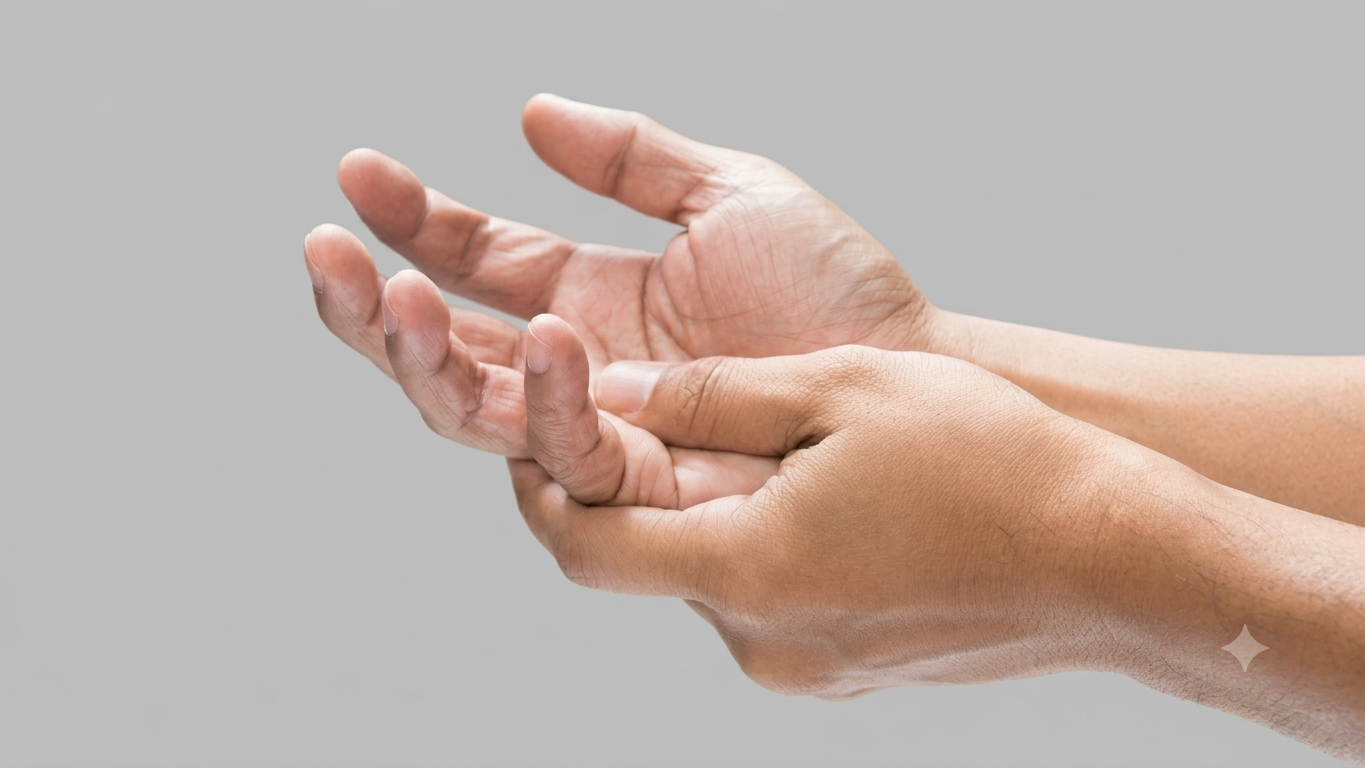 |
Red, swollen skin over a joint may be due to inflammation when urate crystals form from high uric acid. Illustration: AI |
Taut, shiny skin
When a joint is significantly swollen during an acute gout attack, the skin above it can become taut, shiny, or smoother due to underlying tissue inflammation and fluid accumulation. However, in some cases, this is not a specific sign of high uric acid but usually appears with swelling and inflammation in the gout-affected area.
Darker skin
Hyperpigmentation around the joint area can be linked to chronic inflammation or tissue damage in individuals with high uric acid. However, according to Times of India, this is not a primary diagnostic sign of high uric acid. Therefore, if darker skin around a joint, especially when accompanied by pain, swelling, or other symptoms, occurs, individuals should seek medical examination instead of self-diagnosing it as high uric acid.
Peeling skin after a gout attack
After gout-related inflammation subsides, the skin over the affected joint may sometimes become dry, peel, or flake. This phenomenon can occur when the skin was significantly taut or inflamed during the acute attack. This may indicate the skin is recovering from inflammation.
The above manifestations can sometimes appear in many other medical conditions and require testing and examination to determine the cause.
Bao Bao (Compiled)