Doctors at the Dermatology Department, Tam Anh Hanoi General Hospital, noted that Binh had grade three acne with numerous inflammatory cysts, indicating a high risk of scarring. Over a six-month period, the treatment objective was to control inflammation and stabilize her skin using a gentle, minimalist cleansing routine, moisturizing to restore the skin's protective barrier, and prescribed medication to prevent acne recurrence. Once her acne was under control, Binh proceeded with treatment for pitted scars and post-inflammatory erythema.
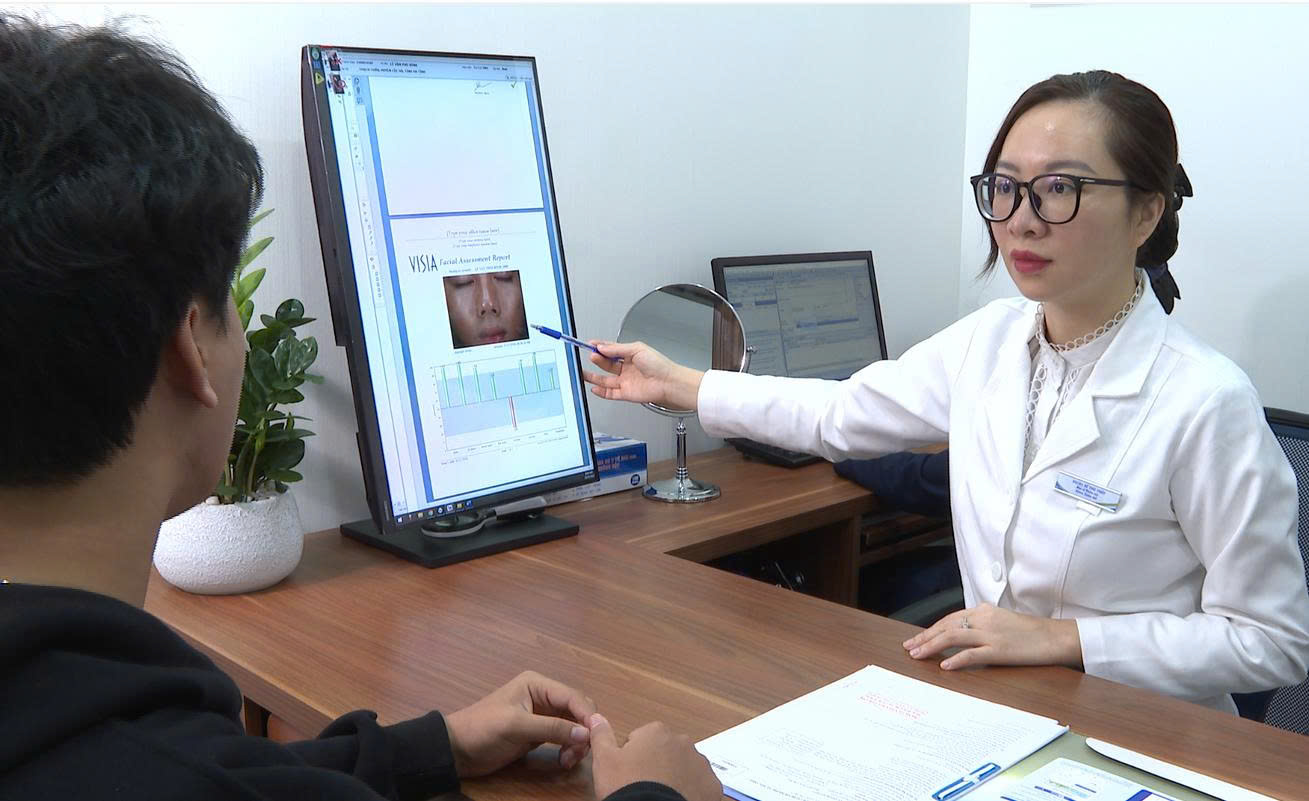 |
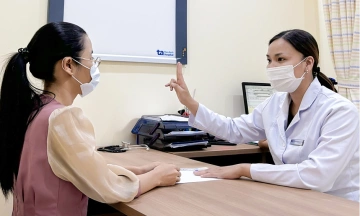
Binh's skin condition is explained by a doctor. Photo: Provided by the hospital
According to Doctor of First Degree Specialization (BS.CKI) Be Thu Thuy from the Aesthetics Department, acne scars are not merely surface indentations. Prolonged inflammation destroys the dermal structure, creating fibrous bands that pull the scar base downwards, while also leaving behind post-inflammatory erythema as acne develops.
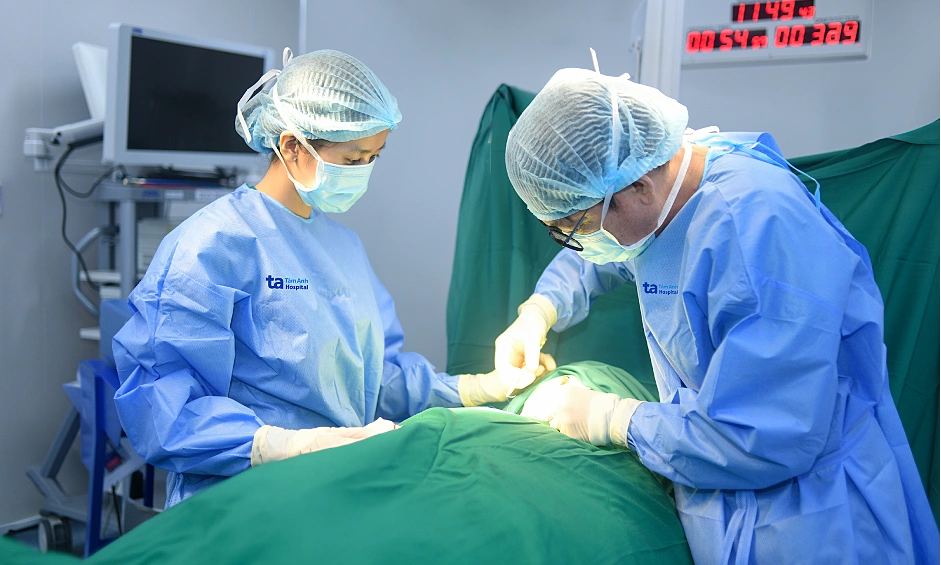
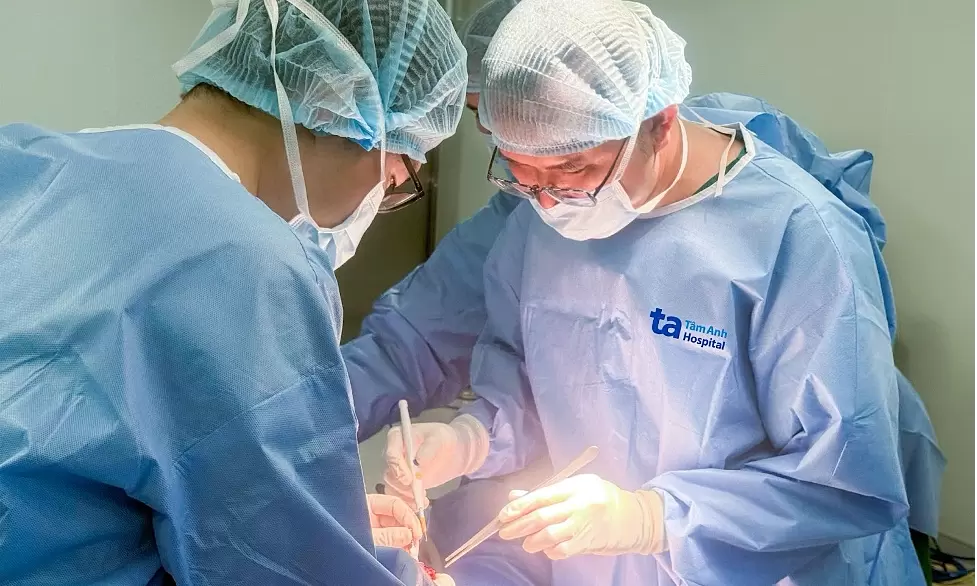
Binh's treatment plan involved five sessions, each spaced one month apart, combining two laser systems: Fotona Dynamis and StarWalker.
The StarWalker system utilizes pico technology with an ultra-short pulse duration and low heat retention, which minimizes pain and reduces recovery time. Its FracTat mode offers non-invasive subcision, cutting the scar base without the need for needles like older methods, thereby limiting post-treatment damage for the patient.
Typically, skin requires 10 to 14 days to return to normal after laser treatment, but with this technology, it only takes five to seven days, with no prolonged burning or numbness, and minimal damage. The Fotona Dynamis system, using appropriate wavelengths, treats post-acne erythema, controls residual inflammation, and deeply targets the scar structure.
After three treatment sessions in the initial three months, Binh's skin surface showed clear improvement in scar depressions, especially on her cheekbones. The erythema faded, and her skin tone became more even. By the end of four treatment sessions, scar filling reached approximately 70% to 80%. For her temples, where scars were deeper, Doctor Thuy prescribed one to two additional intensive sessions.
Following each treatment course, Binh had follow-up appointments one to two months later to monitor her skin's reaction and manage the risk of acne recurrence. If acne returns, new scars can continue to form, diminishing the aesthetic results.
Doctor Thuy advises young people with persistent inflammatory acne to seek early treatment. Timely control of inflammation not only shortens treatment duration but also prevents pitted scars. When acne has just stabilized and scars have not yet hardened, the higher collagen regeneration capacity in young individuals leads to significantly better outcomes compared to older scars. Once scars are present, personalized treatment plans and close monitoring by a doctor are essential for effective results.
Thanh Ba