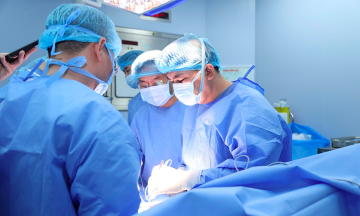
Luong was admitted to the hospital with pale skin and mucous membranes, difficult-to-measure blood pressure, a rapid pulse, and a soft but distended abdomen, though no external bruising was visible. A FAST (focused assessment with sonography for trauma) ultrasound revealed free fluid in the abdominal cavity, specifically subhepatic, perisplenic, interbowel, and in the pelvis, indicating internal bleeding.
The ultrasound also showed a mixed lesion in the upper pole of the spleen, measuring approximately 89x39 mm, compressing the splenic parenchyma. Dr. Ngo Hoang Kien Tam, from the Endoscopy and Gastrointestinal Endoscopic Surgery Center at Tam Anh General Hospital, suspected a complicated splenic injury with rupture and recommended surgery.
The spleen is a major blood reservoir in the body. When the spleen ruptures, blood can rapidly flood the abdominal cavity. A patient can lose several liters of blood quickly, leading to hypotension, circulatory failure, and even death. According to Dr. Tam, splenic injuries may not manifest immediately after trauma. Some cases involve a "delayed splenic rupture", where the splenic capsule is damaged but does not rupture immediately. Patients might feel normal for a few hours to several days, after which the capsule ruptures, causing massive bleeding and rapidly progressing to hypovolemic shock, as seen in Luong's case.
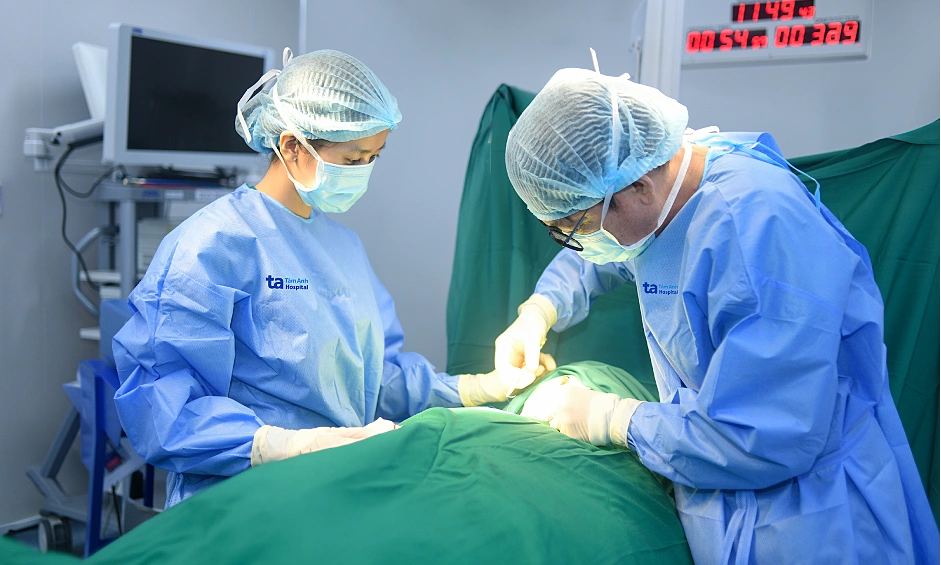
Upon opening the abdomen, the surgical team observed significant amounts of liquid and clotted blood. After aspiration and irrigation, doctors found a 6 cm long laceration on the outer surface of the spleen, with active bleeding. Surgeons temporarily controlled the bleeding with gauze, secured the splenic pedicle, and then performed a splenectomy to completely remove the source of hemorrhage.
Dr. Tam stated that due to extensive blood loss, Luong received a transfusion of 1,400 ml of packed red blood cells and 400 ml of plasma during surgery to maintain circulation and prevent the risk of tissue hypoxia, multiple organ failure, and permanent brain damage.
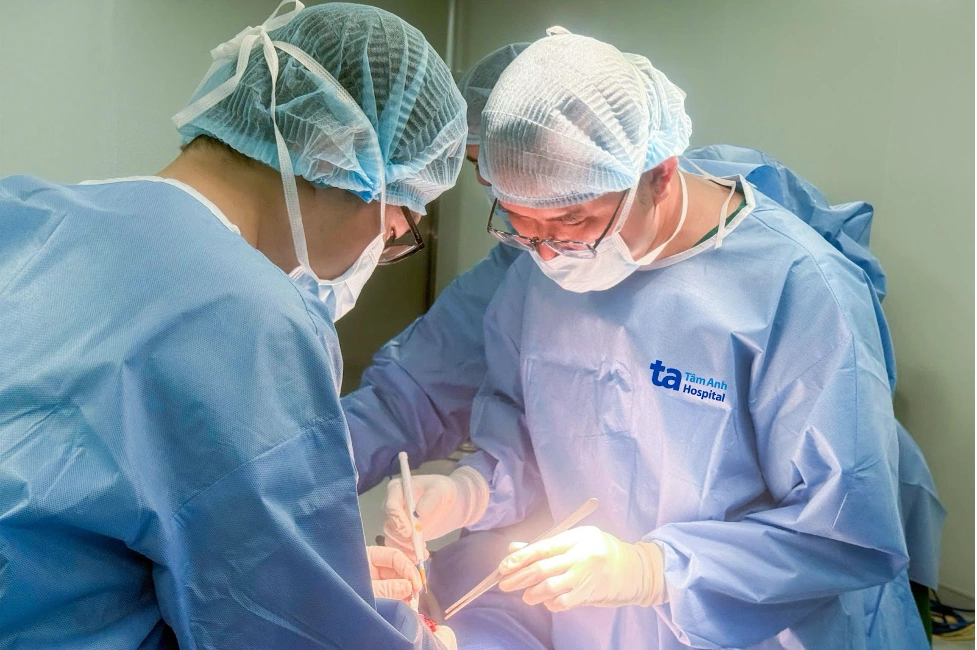 |
Dr. Tam (right) performs a splenectomy on Luong. Photo: Tam Anh General Hospital. |
Post-surgery, the bleeding was controlled, with no further damage observed in other abdominal organs. One day after the operation, Luong was able to consume light food, move in bed, and was discharged within a few days.
The spleen is located in the left hypochondrium and is protected by the ribs, making it vulnerable to strong impacts to the left abdomen or lower chest. Additionally, the spleen's soft, spongy, highly vascular structure and fragile parenchyma, lacking a robust fibrous framework, make it prone to tearing upon impact.
Dr. Tam advises individuals involved in traffic accidents or severe impacts to seek timely medical examination and treatment. Key symptoms to watch for include increasing abdominal pain, abdominal distension, pale skin, cold sweats, dizziness, rapid pulse, and shortness of breath. To detect internal organ injuries early, doctors may order ultrasound, CT scans, or blood tests.
Quyen Phan
*Patient's name has been changed
| Readers can submit questions about digestive diseases here for doctors to answer |