Working at a domestic violence support center, Lan, 36, accompanied many women and children through trauma. For 10 hours each day, the specialist listened to things that could not be shared with anyone else: one woman with bruises that had not yet faded, one child who no longer dared to sleep alone, another considering "ending it all" because they could not endure the tormenting suffering.
During a period of understaffing, Lan handled up to 10 therapy sessions consecutively each day. The overwhelming stories offered no escape. She began to fear crowds, suffered from insomnia, and frequently experienced nightmares featuring her clients. This anxiety persisted for two years. Lan tried every method she had taught others—reading, mindfulness, setting emotional boundaries—but nothing worked.
"The more I tried to heal myself, the more helpless I felt", she recounted.
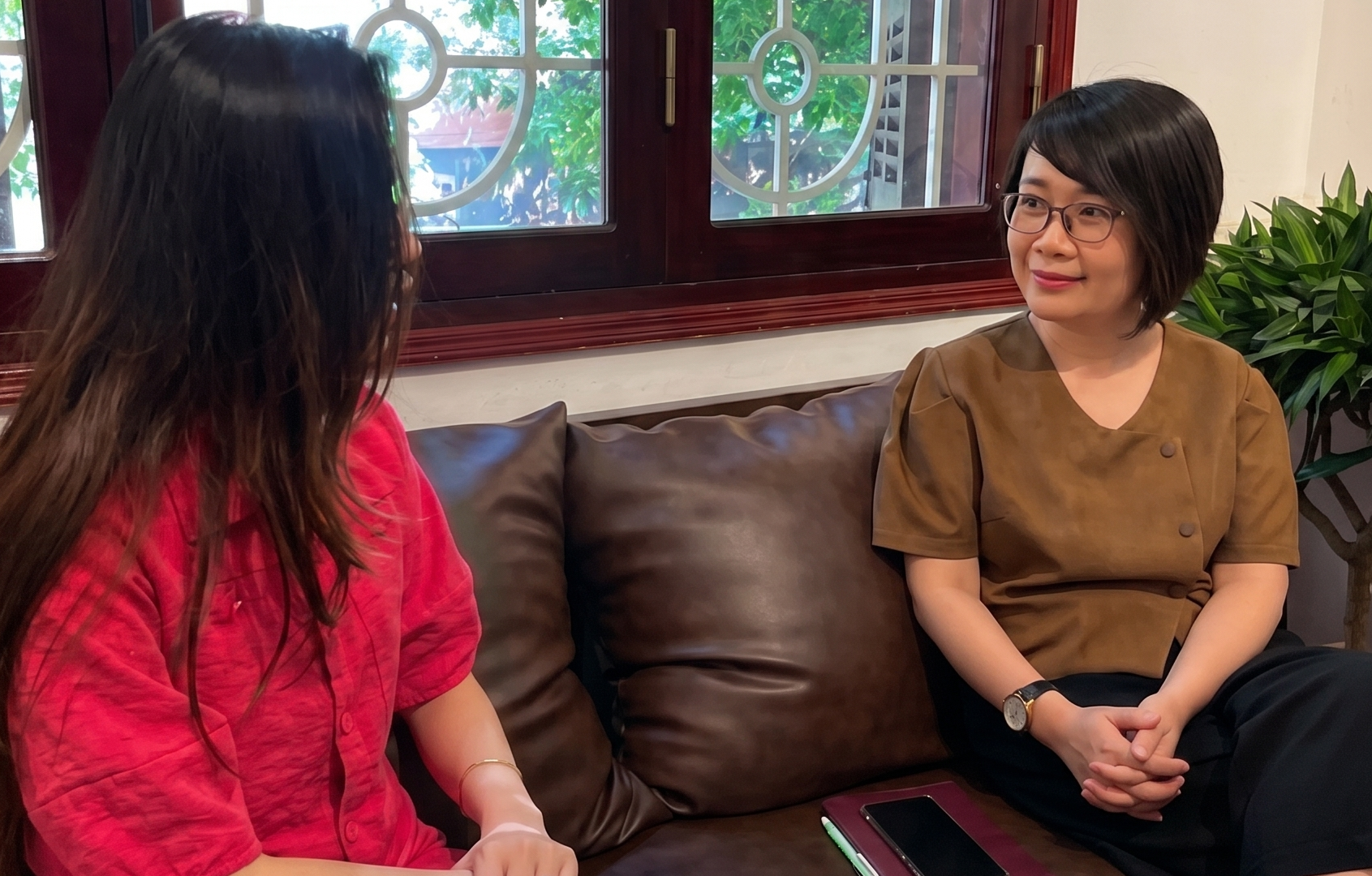 |
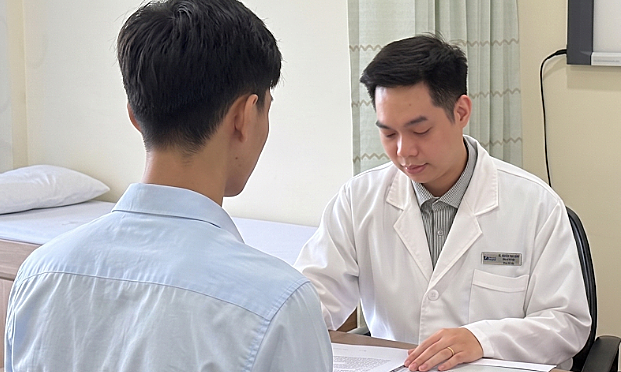
TS.BS Ngo Thi Thanh Huong consults a patient. Photo: Thu Trang
What the psychologist experienced is scientifically termed compassion fatigue. This is not a vague psychological state. Research published in the journal Traumatology indicates that more than 50% of professionals working with trauma victims show moderate to severe symptoms of compassion fatigue. For those working intensely in domestic violence or mental healthcare, this rate is significantly higher.
According to the Ministry of Health, approximately 15 million Vietnamese people currently suffer from common mental disorders. Depression and anxiety account for the highest proportion. Meanwhile, the country has only about 1,000 psychiatrists. This ratio of nearly one doctor per 100,000 residents is much lower than the average of 3,96 recorded by the World Health Organization in 2022.
The shortage of medical personnel at higher levels inadvertently pushes psychologists to become the initial point of contact for patients. This massive workload leads to compassion fatigue syndrome. A report from the American Psychological Association (APA) highlights an alarming reality: 45% of therapists have experienced symptoms of occupational burnout, a number that indicates a risk of breakdown in the frontline defense system.
"That personnel gap places a heavy burden on psychologists and counselors at the initial access level. They become the first 'gateway' people turn to during mental crises, yet they are the least protected group within the system", said TS.BS Ngo Thi Thanh Huong, senior advisor and co-founder of the Safe and Sound project under the Institute of Applied Medical Technology.
This pressure also carries professional risks. Dr. Huong pointed out that many cases initially appear as normal stress or poor adaptation, but are actually early stages of severe mood disorders, anxiety disorders, or even psychosis.
"Without foundational psychiatric knowledge, professionals can easily miss crucial signals or underestimate the level of risk", she stated. Such errors not only affect clients but also accumulate as a psychological burden on the therapist themselves.
One issue is the lack of consistent professional language between psychology and psychiatry, which reduces the effectiveness of coordination in cases requiring combined psychological therapy and medication. ThS.BS Nguyen Van Cong, Director of the Institute of Applied Medical Technology, believes that current training trends need to shift more strongly towards practical application, increasing case analysis and multi-specialty collaboration to bridge the gap between theory and clinical practice. He emphasizes that frontline psychologists need not only foundational knowledge but also must know when to refer cases and how to coordinate with psychiatrists in specific situations.
However, all these systemic solutions depend on one prerequisite: that practitioners themselves remain strong enough to continue. Lan eventually sought therapy from a colleague. On the first day sitting in the position of someone needing support, she broke down in tears, not from pain, but from the relief of shedding the "mask" of someone who always had to be strong.
After a period of rest, re-establishing work boundaries, and continuing therapy, she gradually regained balance and returned to her profession. For Lan, the lesson was not about any technique or theory.
"Mental health support professionals can only go the distance with others if they know how to care for their own mental health", the specialist confided.
Le Phuong