Nasal polyps are benign growths in the nasal and sinus lining, typically soft and painless. They develop from chronic inflammation of the nasal and sinus lining, often due to viral infections, bacterial infections, or allergies. Prolonged inflammation causes the mucous membrane to swell, thicken, and degenerate, leading to its prolapse and gradual formation into polyps.
While benign, nasal polyps do not disappear without treatment. Small polyps often have few symptoms, making them difficult for patients to detect. As they grow, polyps obstruct airflow in the nasal cavity and impair sinus drainage. Common symptoms include chronic nasal congestion, nosebleeds, a reduced sense of smell, and snoring. Secondary symptoms may include phlegm, facial pain, headaches, and sleep disturbances.
Nasal polyps are categorized into 4 stages based on their size and progression. Stage one involves small, soft polyps confined to the middle meatus. Stage two polyps are medium-sized, filling the middle meatus and touching the middle turbinate. In stage three, large polyps reach the inferior turbinate, causing breathing difficulties and an impaired sense of smell. Stage four describes very large polyps almost completely blocking the nasal cavity and extending to the nasal opening.
Doctors diagnose nasal polyps by reviewing medical history, performing an ear, nose, and throat endoscopy, and conducting a computed tomography (CT) scan of the nose and sinuses. In some cases, doctors may also order additional tests to evaluate allergies or related conditions.
 |
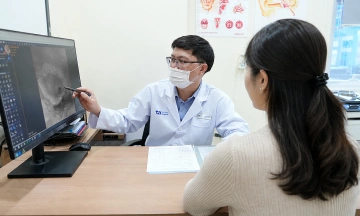
Doctor Phat is consulting a patient. Illustration: Tam Anh General Clinic District 7.
For small polyps, medical treatment with medication can help control inflammation and reduce polyp size. If large polyps cause prolonged nasal obstruction, a reduced sense of smell, recurrent chronic sinusitis, or do not respond to medical treatment, doctors recommend endoscopic polypectomy.
Patients should adhere to treatment, attend follow-up appointments, and manage risk factors like allergic rhinitis and bronchial asthma, while avoiding tobacco smoke and respiratory irritants. If symptoms do not improve or polyps continue to grow, obstructing the nasal cavity, doctors may consider surgery to restore respiratory function and improve quality of life.
Master Doctor Truong Tan Phat, Specialist Level I
Head of Ear, Nose, and Throat Department
Tam Anh General Clinic District 7