Doctor Nguyen Anh Dung, Head of the Thoracic and Vascular Surgery Department at the Thoracic and Vascular Surgery Center, Tam Anh General Hospital in TP HCM, noted an abdominal aortic aneurysm in Mr. Dang with a diameter of 58 mm (normally around 20 mm). The aneurysm had an ulcer that perforated its inner wall. This aneurysm posed a risk of sudden rupture if Mr. Dang engaged in strenuous activity or experienced blood pressure fluctuations, which could lead to massive, life-threatening hemorrhage. Mr. Dang had a long history of hypertension and dyslipidemia.
An abdominal aortic aneurysm is a condition where the blood vessel wall weakens and abnormally dilates due to the effects of atherosclerosis and prolonged high blood pressure.
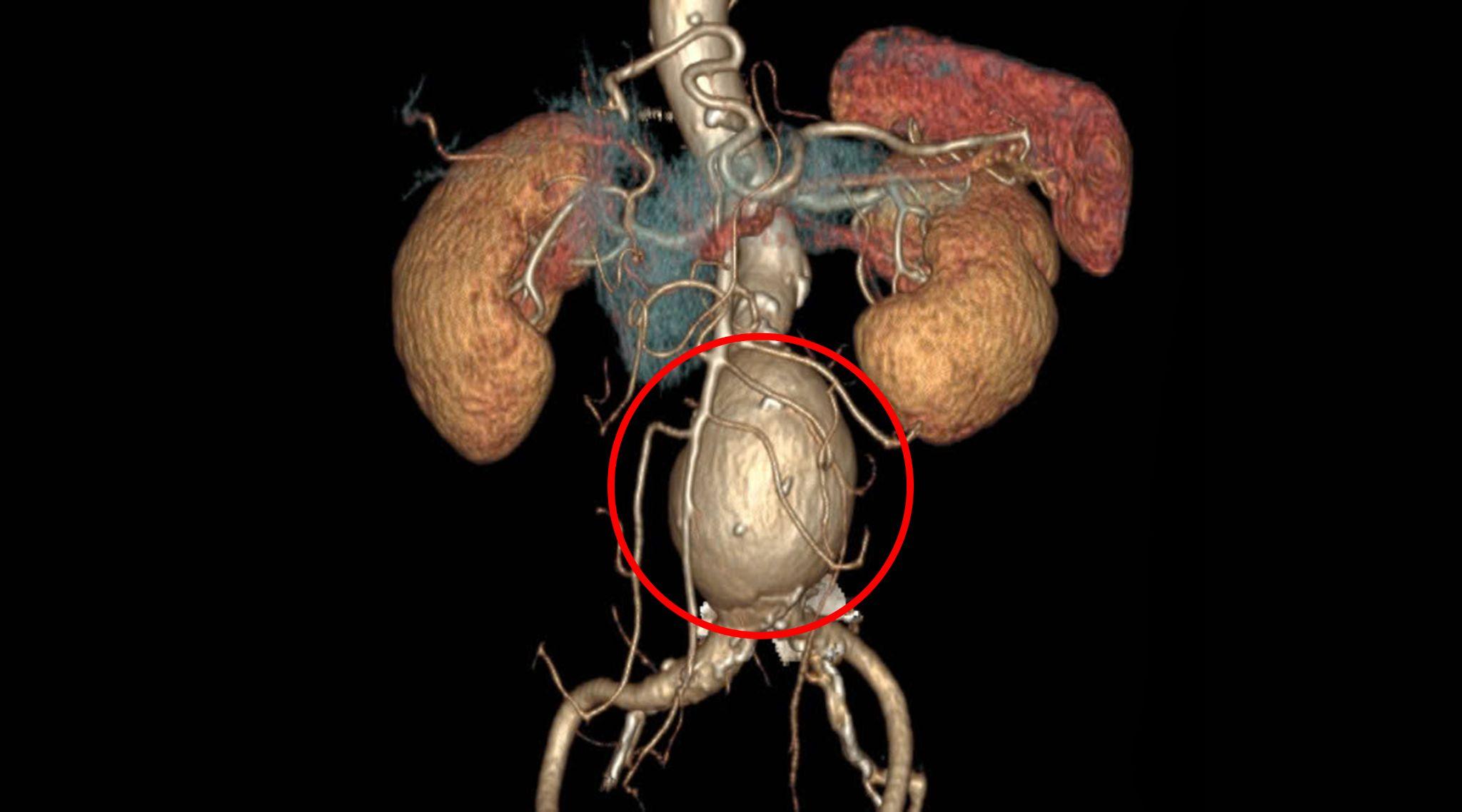 |
3D CT scan showing a large aneurysm (red circle) in the patient's abdominal aorta. *Tam Anh General Hospital* |
Surgery was necessary to prevent the risk of aneurysm rupture. Before the intervention, Mr. Dang took medication to control his blood pressure, closely monitored for any unusual symptoms, and underwent a comprehensive evaluation of his heart and kidney function. Once his vital signs stabilized, doctors performed open surgery to replace the damaged segment of the abdominal aorta with a prosthetic blood vessel prothese.
According to Doctor Dung, the prosthetic blood vessel prothese is made from medical polymer materials with high mechanical durability and biocompatibility with the body. The vessel has a special microporous structure that helps reduce the risk of thrombosis, allowing the body's natural endothelial cells to adhere and form a durable blood conduit to replace the damaged vessel.
After opening the abdomen, doctors temporarily clamped the blood vessel to prevent blood flow through the aneurysm, while the anesthesia team maintained hemodynamics, controlled blood pressure and heart rate, ensuring perfusion of the underlying organs. The surgeon opened the aneurysm, cleaned out atherosclerotic plaques, and sutured the prosthetic graft (prothese) to replace the dilated segment of the abdominal aorta. Finally, the team checked the anastomoses for leaks, thrombosis, and unobstructed circulation before closing the incision.
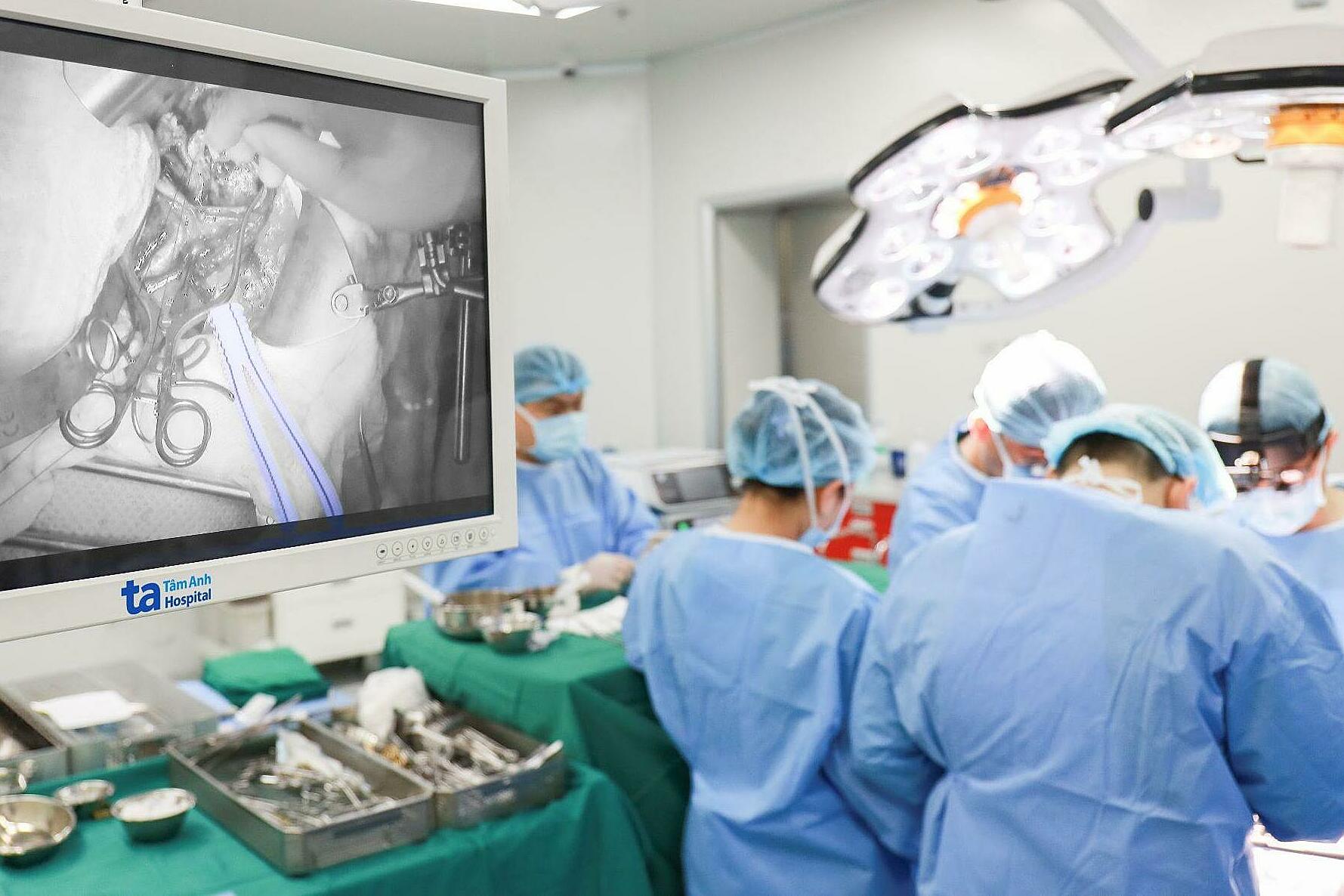 |
The surgical team replaces the aneurysmal aortic segment with a prosthetic blood vessel. *Tam Anh General Hospital* |
The patient recovered quickly, experienced less post-operative pain, could walk and eat normally, and was discharged after 7 days.
Doctor Dung noted that after surgery, patients need regular follow-ups, adherence to medication, control of blood pressure and blood lipids, maintenance of a suitable diet, weight loss, avoidance of stimulants, and protection of the prosthetic blood vessel segment.
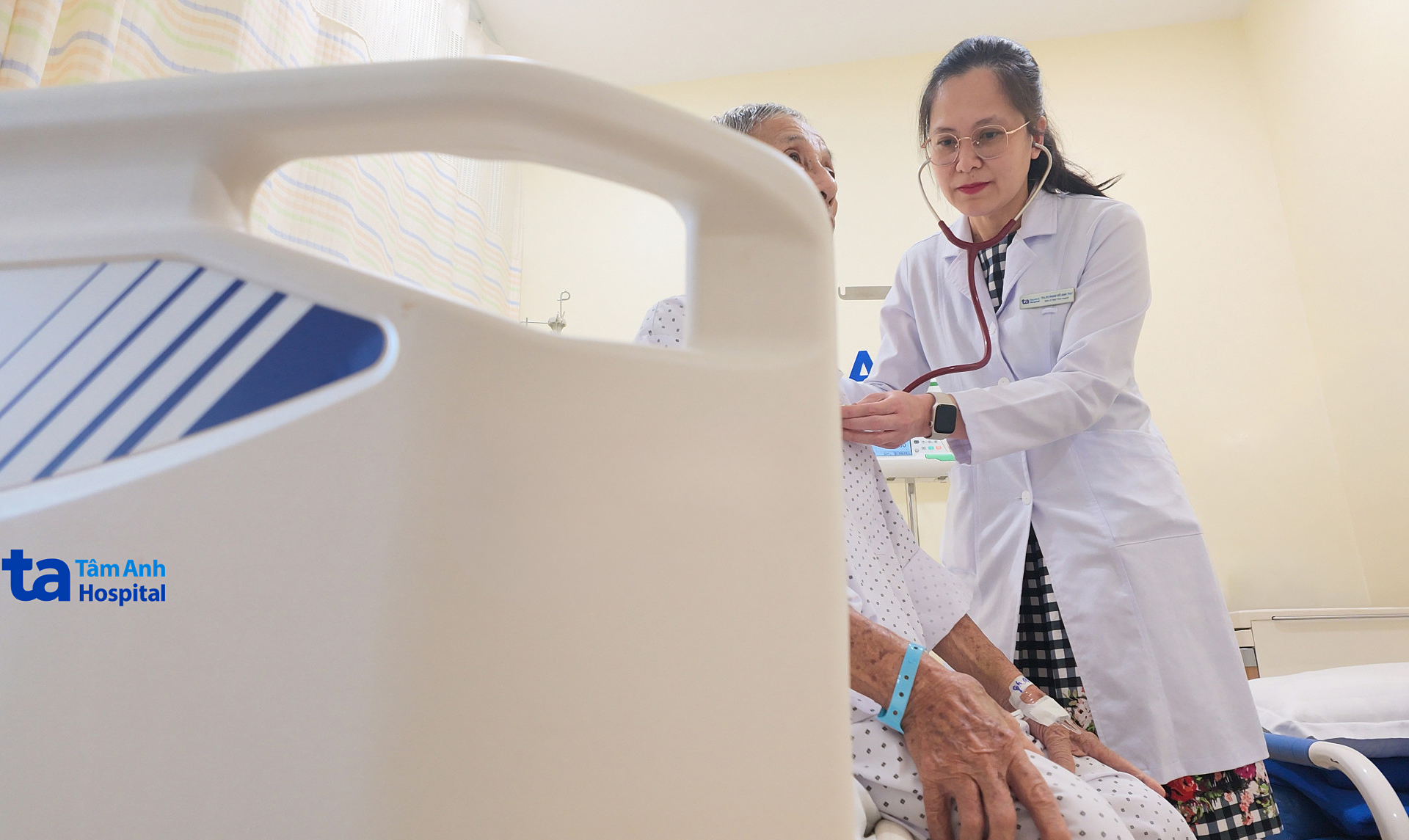 |
Doctor Pham Do Anh Thu, Head of the Heart Valve Disease Unit, Cardiovascular Center, examines the patient post-surgery. *Tam Anh General Hospital* |
Atherosclerosis and aneurysms are conditions that progress silently and can appear in various locations, such as cerebral blood vessels, coronary arteries, or the aorta. By the time patients experience noticeable symptoms, the disease is often already in a dangerous stage. Individuals with risk factors such as hypertension, dyslipidemia, or smoking should proactively undergo regular screening.
Bao Anh
*The patient's name has been changed
| Readers can submit questions about cardiovascular disease here for doctors to answer |