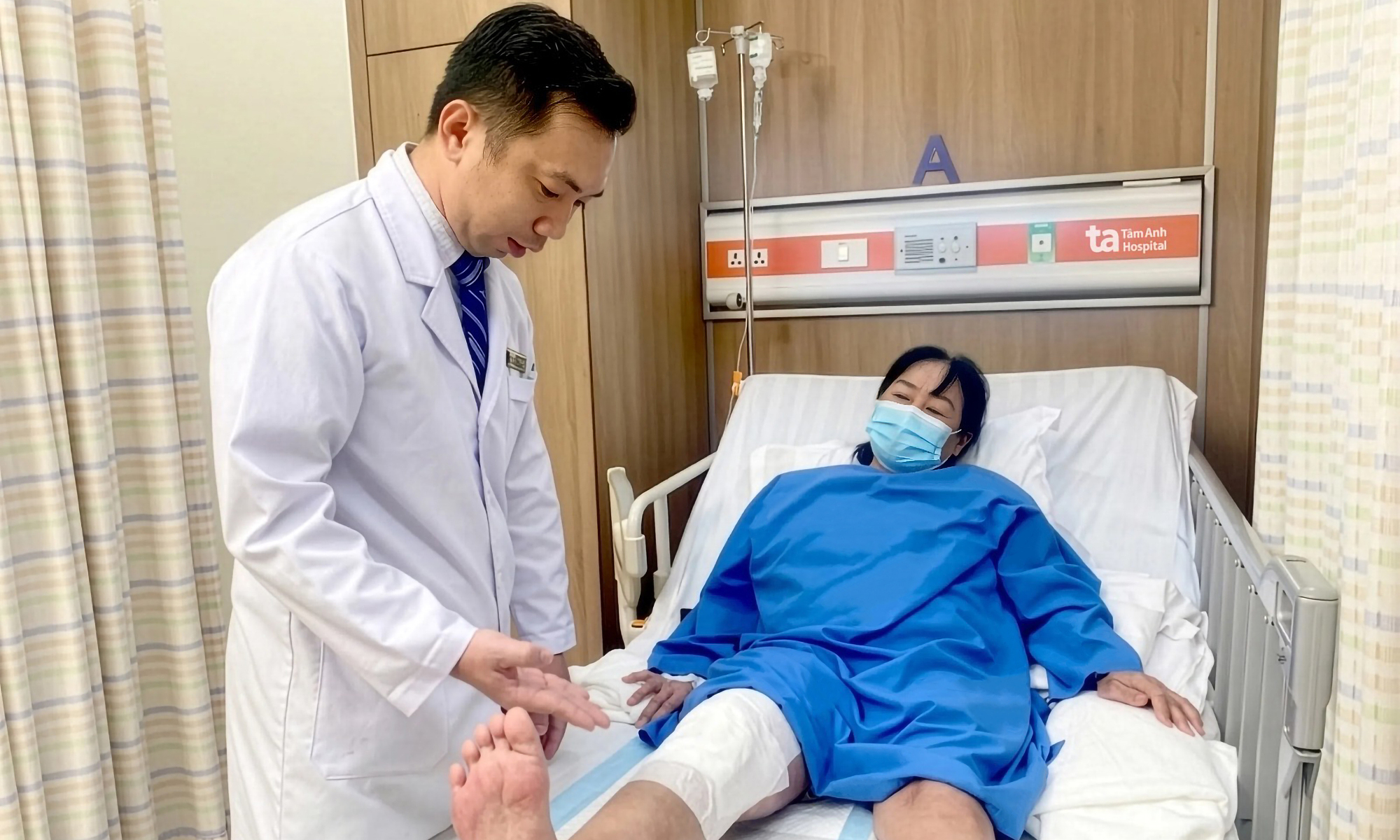
Ms. Hau, who has a 10-year-old child, wished to have another but was unable to conceive. An MRI scan at Tam Anh General Hospital in Ho Chi Minh City revealed that her bladder floor was lower than its original position. Dr. Le Phuc Lien, Head of the Female Urology Unit at the Urology - Nephrology - Andrology Center, diagnosed the patient with grade 3 bladder prolapse. This condition caused a heavy, aching sensation in her pelvis and urinary incontinence, hindering intercourse and contributing to her difficulty conceiving.
Dr. Lien recommended Da Vinci Xi robotic surgery due to the deep, narrow structure of the pelvic region, which contains multiple organs such as the bladder, rectum, and uterus, along with a complex network of blood vessels and nerves. This method also allows access to the bladder from the abdominal cavity, preventing vaginal scarring and maintaining the integrity of the pelvic floor structure. Post-surgery, patients can resume normal marital relations without pain or reduced sensation compared to traditional methods.
The robotic arms, featuring flexible joints, can rotate 540 degrees, enabling precise maneuvers in confined spaces. With images from a 3D camera magnified 15 times, the surgeon clearly observes each ligament and small blood vessel, meticulously suturing the T-shaped mesh to the pectineal ligament. This approach minimizes bleeding and nerve damage, preserving the genital region and reproductive capacity for the patient after surgery.
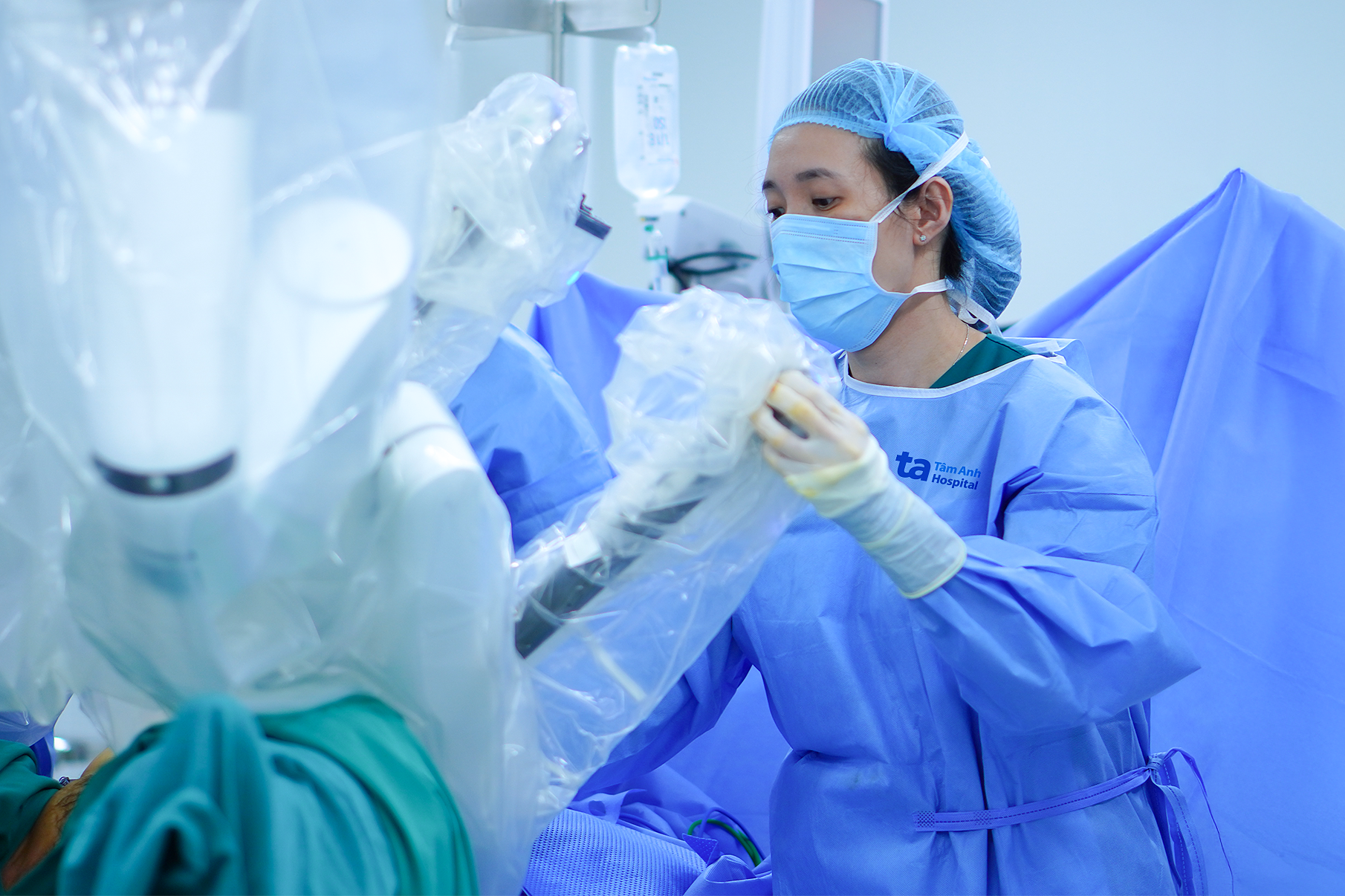 |
Dr. Lien preparing for Ms. Hau's surgery using the Da Vinci Xi robot. Photo: Tam Anh General Hospital |
Following the surgery, Ms. Hau no longer felt a heavy sensation in her abdomen and could walk and perform light activities after one day. Doctors advised her to consume fiber-rich foods, drink sufficient water to prevent constipation, and avoid heavy lifting, strenuous activities, or prolonged coughing for the initial 3 months post-surgery. She also needed to perform Kegel exercises to strengthen her pelvic floor muscles, supporting her long-term recovery.
Female genital prolapse, also known as pelvic organ prolapse, occurs when one or more pelvic organs, such as the uterus, bladder, or rectum, descend from their normal position into the vagina, sometimes protruding externally. Individuals at risk for this condition include those with multiple pregnancies and births, menopause, chronic constipation or coughing, obesity, or those who frequently lift heavy objects.
Dr. Lien advises that patients experiencing a heavy, sluggish, or aching sensation in the pelvis, urinary incontinence, difficulty urinating, frequent urination, constipation, painful intercourse, or lower back pain should seek examination at hospitals with a urology department. This allows for proper diagnosis and appropriate treatment. Depending on the prolapse severity and the patient's wishes, doctors may recommend treatments such as Kegel exercises, pessary insertion, or surgery.
Dinh Lam
*The patient's name has been changed.