Answer:
Magnetic resonance imaging (MRI) uses magnetic fields and radio waves to create images of the body's interior. It does not use X-rays, thus avoiding radiation exposure. The strong magnetic field of an MRI machine often causes concern that metal in artificial knee joints might be attracted or displaced during the scan, potentially affecting results. However, modern artificial knee joints are made from special alloys that are not affected by the MRI machine's magnetic field.
Patients with artificial knee joints can undergo a spine MRI normally. In your case, a lumbar spine MRI, the area of interest is in the lower back, quite far from the knee joint. Therefore, it will not affect the spine images on the MRI scan.
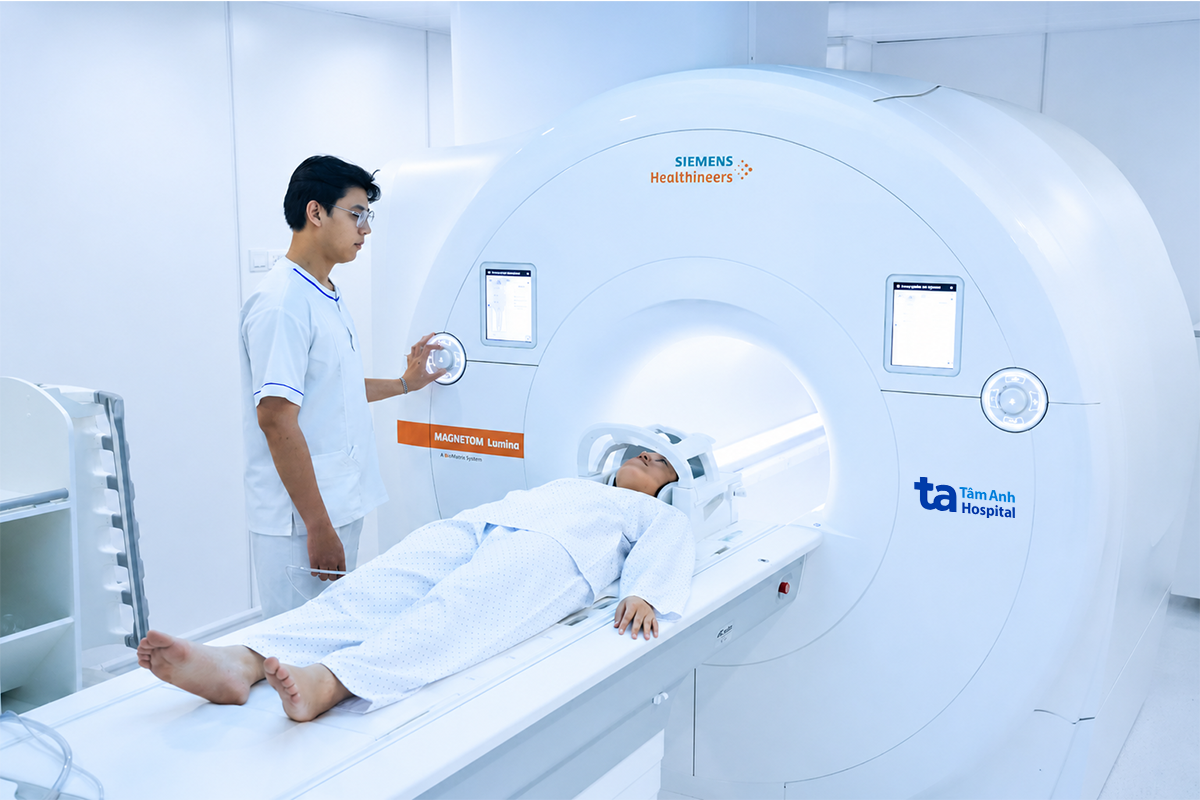 |
Patients who have undergone knee replacement can have an MRI to assess spinal and neurological conditions. *Photo illustration: Tam Anh General Hospital* |
As a general rule, patients should inform their doctor and technician about their specific health conditions before an MRI, especially if they have any metal implants such as artificial joints, bone pins, artificial heart valves, or pacemakers.
You should not arbitrarily refuse or delay an MRI due to concerns about affecting your artificial joint. For back pain radiating down the leg, as you described, a spine MRI is a necessary diagnostic method. It helps the treating doctor identify the correct cause and determine appropriate treatment, preventing the condition from worsening.
Master, Doctor Nguyen Xuan Phong
Diagnostic Imaging Unit
Tam Anh Cau Giay General Clinic
| Readers can submit questions about neurological conditions here for doctors to answer. |