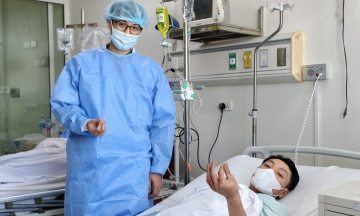
Mr. Thang has suffered from chronic obstructive pulmonary disease (COPD) since 2022, and his physical condition has progressively weakened. Upon hospital admission, the patient was severely debilitated with a body mass index (BMI) of 11,95 (weighing under 40 kg, at a height of 1,79 m), experiencing dyspnea and recurrent, rapidly worsening hemoptysis.
Master, Doctor, Level I Specialist Nguyen Thanh Thuy from the General Internal Medicine Department at Tam Anh General Hospital, TP HCM, stated that Mr. Thang was suffering from an acute exacerbation of chronic obstructive pulmonary disease due to bacterial superinfection. He had a complex medical history, including sequelae of pulmonary tuberculosis, bronchiectasis, and coronary artery disease with a stent implant.
Doctors prescribed aggressive treatment for the patient, including intravenous broad-spectrum antibiotics, hemostatic agents, bronchodilators, and oxygen therapy. Initial vital signs showed an SpO2 of approximately 95%, a respiratory rate of about 20 breaths per minute, and low blood pressure.
Chest computed tomography (CT) results revealed bronchiectasis and complete collapse of the left upper lung lobe. According to Doctor Thuy, the patient's lungs suffered severe damage from long-term smoking and sequelae of pulmonary tuberculosis. Multiple other underlying conditions led to prolonged lung infection with fungal superinfection, worsening the hemoptysis. Despite medical treatment, the patient continued to experience recurrent hemoptysis daily, approximately three to five ml per episode, with some days seeing four to five episodes. This posed a risk of developing "thunderclap hemoptysis"—massive bleeding with a high risk of hypovolemic shock, requiring emergency intervention.
Doctor, Level I Specialist Duong Dinh Hoan, Head of the Neuro-Intervention Unit at the Center for Diagnostic Imaging and Interventional Radiology, prescribed bronchial artery embolization using coils under the guidance of a digital subtraction angiography (DSA) system. This minimally invasive interventional procedure directly controls bleeding from the bronchial artery system.
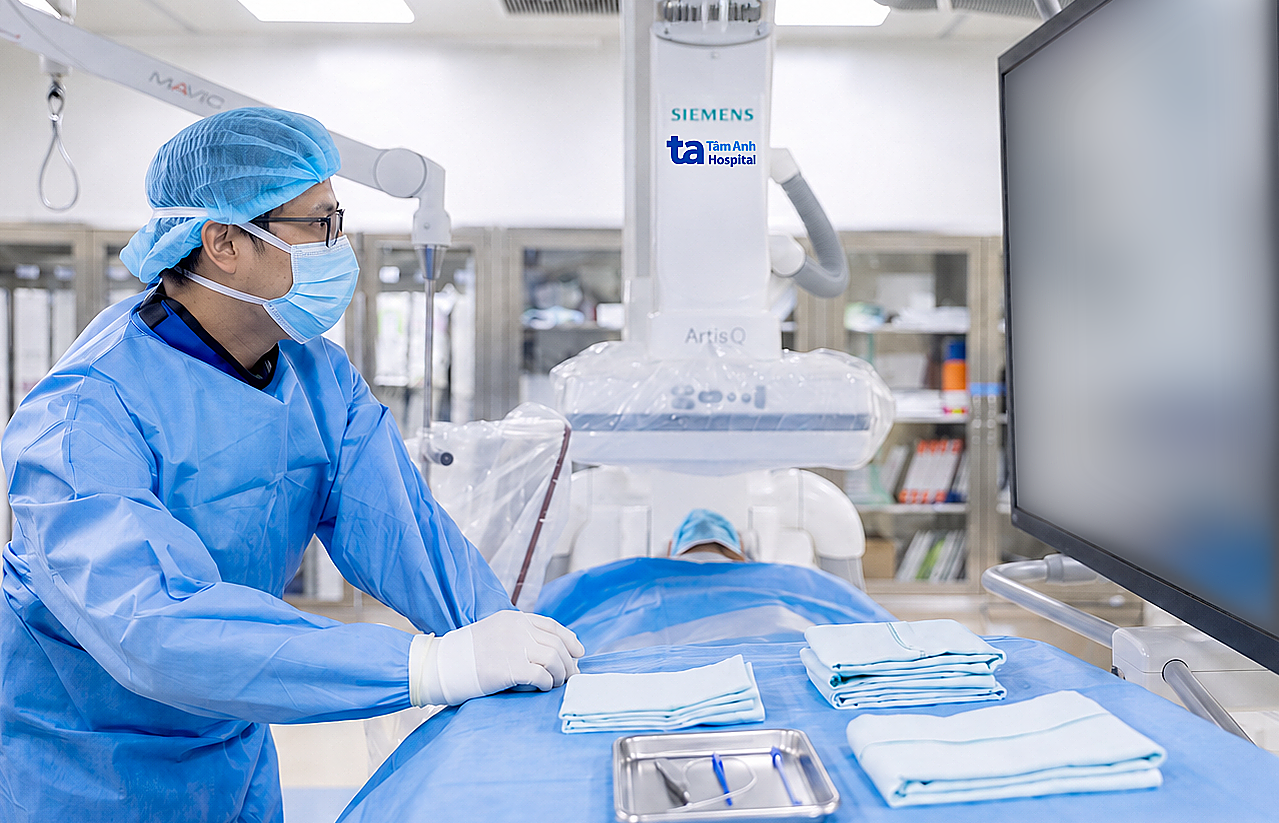 |
Doctor Hoan performs a hemostatic intervention for Mr. Thang. *Photo: Tam Anh General Hospital* |
After the intervention, the patient stopped experiencing hemoptysis and continued treatment with antibiotics and bronchodilators. A positive fungal test led Doctor Thuy to diagnose the patient with an acute exacerbation of COPD due to bacterial infection and fungal superinfection, prompting the addition of antifungal medication. After two weeks, Mr. Thang's respiratory condition stabilized, and he was discharged from the hospital, with follow-up appointments scheduled.
Doctor Thuy stated that hemoptysis in patients with bronchiectasis and pulmonary tuberculosis sequelae is a dangerous complication. Currently, bronchial artery embolization using embolic particles under DSA guidance is an effective method for controlling bleeding.
Individuals with chronic lung disease should seek medical attention if they experience unusual symptoms such as persistent cough, hemoptysis, or progressively worsening dyspnea. Regular health check-ups, especially for long-term smokers and those with a history of lung disease, help detect damage early for timely treatment and condition management.
Nhat Thanh
*Patient's name has been changed
| At 20h on 14/5, Tam Anh General Hospital, TP HCM, will host an online consultation titled "High-tech control of asthma and COPD: breathe easier, live lighter". The program will feature doctors from the General Internal Medicine Department: Doctor of Philosophy, Doctor Dang Thi Mai Khue; Master, Doctor, Level II Specialist Nguyen Thi My Hanh; and Master, Doctor, Level I Specialist Nguyen Thanh Thuy. Readers can submit questions here for consultation. |