Approximately 7 million people in Vietnam, aged 30-69, have diabetes. Eye damage is a notable complication of this disease. According to the World Health Organization (WHO), about one-third of individuals with diabetes experience diabetic retinopathy to varying degrees of severity.
Diabetic retinopathy often progresses silently. In its early stages, patients may not notice any clear changes in their vision. By the time symptoms such as blurred vision, distorted images, dark spots, or vision loss appear, retinal damage may already be advanced.
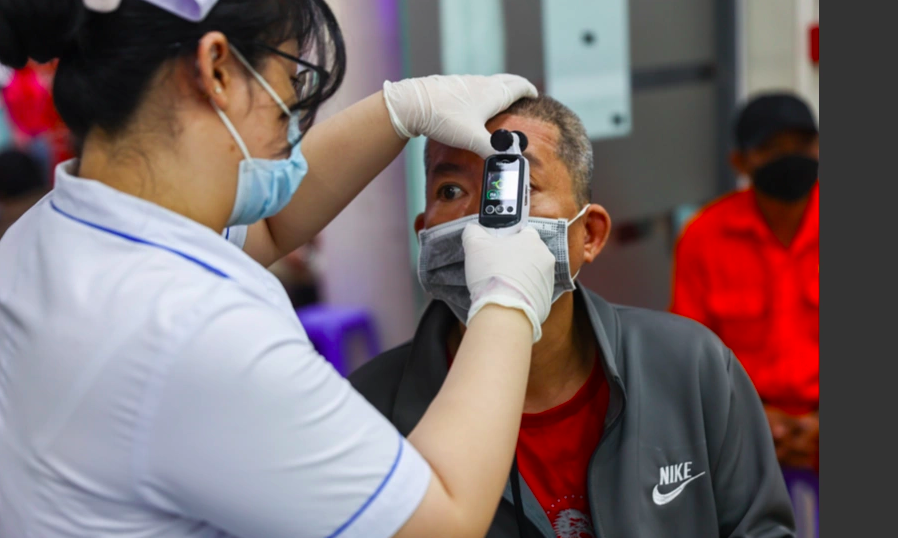 |
Doctors and medical staff at Ho Chi Minh City Eye Hospital examine residents. Photo: Quynh Tran |
Doctors and medical staff at Ho Chi Minh City Eye Hospital examine residents. Photo: Quynh Tran
Sustained high blood sugar can damage the small blood vessels that nourish the retina, the neural tissue layer at the back of the eye responsible for receiving light and transmitting visual signals to the brain. Over time, these blood vessels can become damaged, leak, or become blocked, leading to diabetic retinopathy.
This condition is particularly concerning for individuals in their working age, as vision impairment not only affects daily life but can also reduce work capacity, increase care costs, and burden families. However, vision loss due to diabetes is not always an unavoidable outcome. According to WHO, over 80% of diabetes-related vision loss cases can be prevented or effectively treated with early detection.
A major challenge in managing diabetic retinopathy is that patients often seek ophthalmological care only after their vision has clearly changed. In contrast, regular fundus examinations help detect retinal damage before patients notice symptoms. WHO recommends that individuals with diabetes undergo regular eye check-ups.
Screening through fundus photography allows doctors to evaluate retinal images, identify abnormalities, and decide whether to refer patients to specialized facilities for further examination, diagnosis, or treatment. This method is particularly useful in general hospitals, where diabetic patients frequently visit for check-ups and chronic disease management.
To address the issue of patients undergoing multiple separate examinations at different facilities, a comprehensive management model for diabetic retinopathy and macular edema aims to connect Endocrinology, General Medicine, and Ophthalmology specialties within a unified care process.
This model is currently being implemented as part of the "For Vietnamese Eyes" cooperation program, a joint effort by the Medical Services Administration (Ministry of Health), Roche Pharma Vietnam, National Eye Hospital, Ho Chi Minh City Eye Hospital, and Orbis International in Vietnam. Doctor Nguyen Trong Khoa, Deputy Director of the Medical Services Administration, stated that this model not only improves treatment quality for patients but also represents a significant step forward for the development of ophthalmology specialties in public hospitals, particularly at the provincial level.
The program has begun implementing the model at participating hospitals. On 1/10, Thu Duc Regional General Hospital received a non-mydriatic color fundus camera with artificial intelligence-powered image analysis software. Previously, Ba Ria - Vung Tau Eye Hospital also received this equipment, enhancing early detection capabilities for retinal damage.
 |
The "For Vietnamese Eyes" program donates fundus cameras to hospitals. Photo: Thu Thuy |
The "For Vietnamese Eyes" program donates fundus cameras to hospitals. Photo: Thu Thuy
Burak Pekmezci, General Manager of Roche Pharma Vietnam, shared that the model's objective extends beyond detecting eye diseases to establishing a continuous care process. This process ensures patients receive complication monitoring from basic healthcare levels and access specialized treatment when necessary.
Under the plan, the program will support professional capacity building for over 100 doctors, nurses, and technicians. Over 20,000 patients at participating hospitals are expected to benefit from early detection, referral, and timely treatment activities through the end of 2027.
Le Nga