Doctor Nguyen Dai Duong, a specialist in Orthopedic Trauma at Tam Anh General Clinic, District 7, states that shoulder pain at night or early morning upon waking is a common condition. While often caused by incorrect sleeping posture, it can also signal various underlying medical conditions.
Shoulder osteoarthritis commonly affects older adults, individuals with a history of shoulder injury, or those with congenital shoulder abnormalities. When damage occurs, the joint cartilage gradually erodes, leading to a decline in shoulder joint function.
Patients experience pain even with slight movement, a dull ache at night that can disrupt sleep. Pain and shoulder stiffness may worsen upon waking but often improve with gentle shoulder rotation.
Osteoarthritis is a chronic condition with no complete cure. Early detection and treatment help manage pain, preserve joint movement, and maintain function. Patients can combine medication, physical therapy, and lifestyle modifications. Surgery is considered if conservative treatments are ineffective or if the condition significantly impacts daily life.
A rotator cuff tear involves a partial or complete tear in one or more tendons that stabilize and rotate the shoulder joint.
Patients may feel pain on the outside of the shoulder joint, radiating down the arm but typically not past the elbow. The pain can also extend to the neck and often intensifies at night. Repetitive movements, heavy lifting, especially reaching overhead, exacerbate the pain. Patients find it difficult to lie on the affected shoulder and may hear a grinding sound in the joint when moving the humeral head.
Rotator cuff tears generally do not heal on their own, and the injury site can worsen without medical intervention. Over time, patients may experience functional decline, instability, or shoulder osteoarthritis. The choice between conservative treatment and surgery depends on factors such as the extent of the injury, activity demands, age, and physical condition.
 |
Doctor Dai Duong examines a patient's shoulder joint range of motion and muscle strength. *Photo: Tam Anh General Clinic, District 7* |
Frozen shoulder (adhesive capsulitis) occurs when scar tissue forms around the joint, causing the shoulder capsule to thicken, stiffen, and tighten. This condition can develop after an injury or surgery that requires prolonged shoulder immobilization. However, in most cases, the exact cause is unclear, and it is more common in individuals with diabetes or thyroid conditions.
Patients typically experience deep shoulder pain that radiates down the upper arm, worsening at night and leading to sleep difficulties. Joint stiffness is also a common symptom, making it difficult or impossible for patients to move their shoulder.
Frozen shoulder can resolve on its own after one to three years. Some cases may last longer or result in slight residual movement limitations. During this period, doctors can help manage pain and improve shoulder joint mobility.
Physical therapy is a vital component in treating frozen shoulder, helping to reduce pain, improve flexibility, and limit disease progression. This method is often combined with other interventions and requires consistent application until the joint recovers.
Cervical radiculopathy, or a pinched nerve in the neck, typically results from a herniated disc or cervical spondylosis. When a patient lies down, the natural cervical curve changes, increasing nerve root compression and intensifying the pain. Prolonged immobility during sleep also causes inflammatory fluid to accumulate around the nerve root, leading to pain upon waking. The condition is characterized by pain radiating from the neck and nape down to the shoulder and arm, accompanied by numbness and tingling in the fingertips.
For mild compression, patients are treated with pain relievers, anti-inflammatory medications, and muscle relaxants to alleviate symptoms. Physical therapy may be prescribed in combination to strengthen neck and shoulder muscles and stabilize the spinal axis. If the condition does not improve after 6 to 12 weeks, or if symptoms like muscle weakness, atrophy, or significant numbness appear, surgery may be considered.
 |
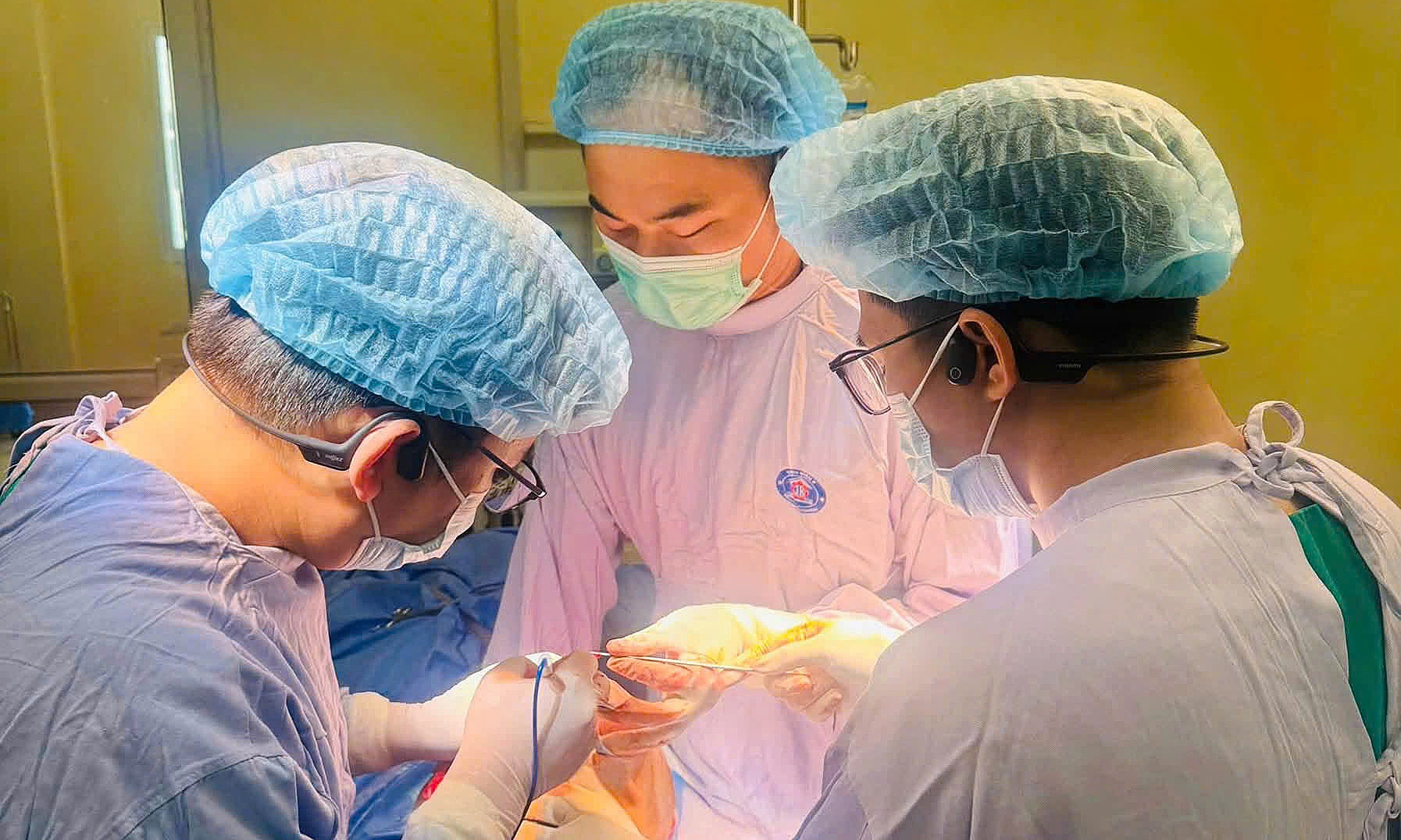
Doctor Dai Duong (right) performs endoscopic surgery to treat shoulder joint conditions, helping patients experience less pain and recover quickly. *Photo: Tam Anh General Hospital* |
Doctor Dai Duong notes that while nighttime shoulder pain is not life-threatening, it can reduce mobility, disrupt sleep, and negatively impact mental well-being. When this condition occurs frequently, patients should seek medical examination to determine the cause and receive appropriate treatment.
By Phi Hong
| Readers can submit questions about musculoskeletal conditions here for doctors to answer. |