Ovarian function decline with age can disrupt the hypothalamic-pituitary-ovarian (HPO) axis. Levels of sex hormones like estrogen, progesterone, and testosterone change markedly.
According to pharmacist Do Xuan Hoa, from the Medical Information Center, Tam Anh General Hospital TP HCM, these hormones are linked to reproductive function and regulate energy metabolism. Women over 40 may gain an average of 0,4 to 0,9 kg annually. The following are the reasons why women tend to gain weight during this phase.
Slower metabolism
The body expends about 60% to 80% of its daily energy through basal metabolism at rest. During perimenopause and menopause, the metabolic rate drops due to age and lower estrogen. This means the body burns fewer calories with the same diet and activity. Surplus energy becomes stored fat. Many women notice their weight slowly increases, even without changes in eating habits.
Hormonal decline also speeds up muscle loss with age. After every 10 years from 30, muscle mass can decrease by about 3% to 8%. Muscle is the body's most energy-burning tissue. As muscle mass drops, metabolism slows, raising the risk of fat accumulation and weight gain, according to pharmacist Hoa.
Impact on hunger and satiety
Hormones also regulate appetite through hunger and satiety signals. Estrogen connects with leptin, a hormone promoting fullness, and ghrelin, a hormone stimulating hunger. When estrogen declines, this hormonal coordination is impacted, causing more frequent hunger or delayed satiety.
Many women during perimenopause and menopause also tend to crave high-energy foods such as pastries, milk tea, soft drinks, or fried items. If calorie intake consistently exceeds the body's needs, weight will increase over time.
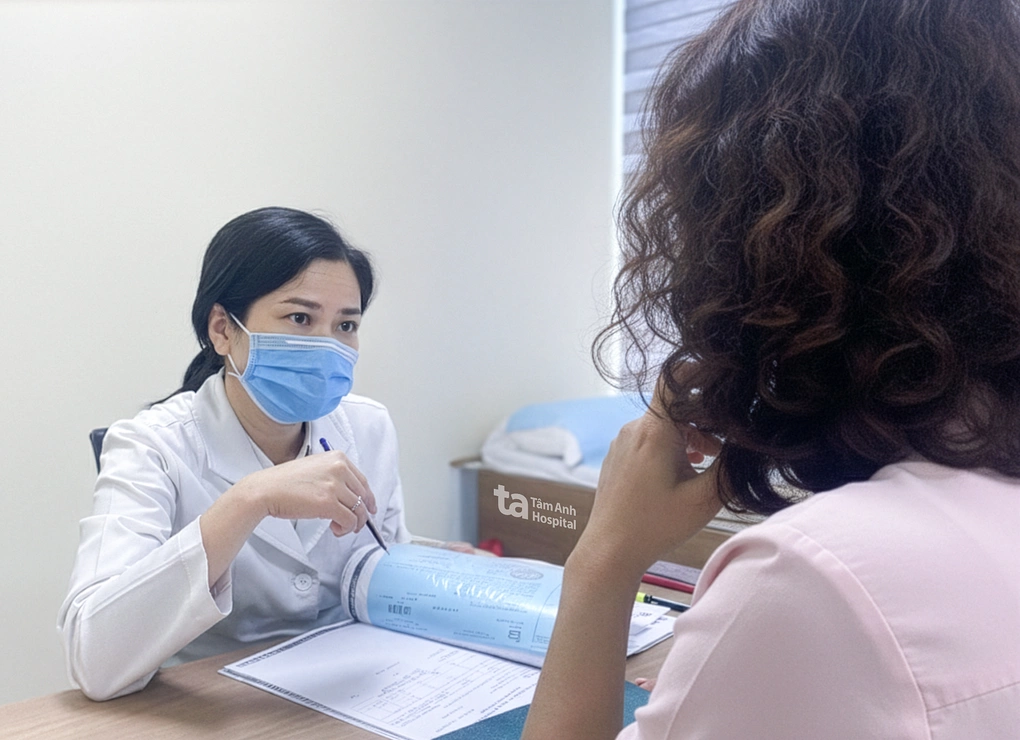 |
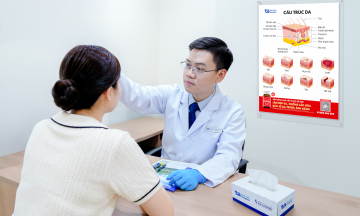
A doctor at Tam Anh General Hospital consults a patient. *Photo provided by the hospital* |
Fat easily accumulates in the abdominal area
As estrogen declines, fat tends to gather in the abdomen, hips, and thighs, particularly increasing visceral fat. Many women notice their waist circumference grows quickly, even with minor changes in total weight. Visceral fat is more dangerous than subcutaneous fat, as its long-term accumulation links to insulin resistance, dyslipidemia, type 2 diabetes, hypertension, and cardiovascular disease.
Weight gain during perimenopause and menopause is not an unmanageable condition. Women should maintain stable endocrine system function while adopting a healthy lifestyle.
Pharmacist Hoa advises women in perimenopause and menopause to prioritize monitoring their body's changes closely. They should control their diet and lifestyle scientifically, maintain an ideal body mass index (BMI) from 18,5 to 22,9, and keep their waist circumference below 80 cm to prevent cardiovascular disease, diabetes, and osteoporosis.
Women can regularly supplement with natural extracts such as Lepidium Meyenii and P. Leucotomos, which are rich in vitamins and minerals. These can positively impact the hypothalamic-pituitary-ovarian (HPO) axis, supporting hormonal balance and the body's natural physiological needs.
Dinh Dieu