Doctors Without Borders (MSF) on 30/5 issued an alert regarding the alarming and unprecedented speed of the disease's spread, noting a rapid increase in cases over a short period. Alan Gonzalez, MSF Deputy Director, stated that the organization's teams are "seeing a response process that has not kept pace with the rapid spread of the disease." He added, "No one fully understands the true scale and severity of this outbreak. New suspected cases are reported daily, but hundreds of samples are still awaiting testing."
To date, WHO has recorded 906 suspected cases and 223 suspected Ebola deaths in the Democratic Republic of Congo (DRC). The country's Ministry of Communication confirmed 282 positive cases, including 42 deaths. The disease has also begun to spread to neighboring countries, with Uganda reporting 9 infections and one death. In Brazil, authorities are strictly quarantining two men returning from the affected area with symptoms of fever, cough, and diarrhea, despite initial negative test results.
Disease control efforts face significant obstacles from armed conflict in the Ituri region and public non-cooperation. Aid workers not only lack basic supplies like masks but also confront violence. Dissatisfaction with body handling procedures, which go against traditional customs, has incited local residents to carry out at least three attacks on treatment facilities. During a visit to the outbreak's epicenter in eastern Congo on 31/5, WHO Director-General Tedros Adhanom Ghebreyesus called for a ceasefire to prioritize saving lives. He emphasized that the fight against Ebola is a responsibility for all society, affirming that patients can fully recover if they seek medical attention immediately upon symptom onset.
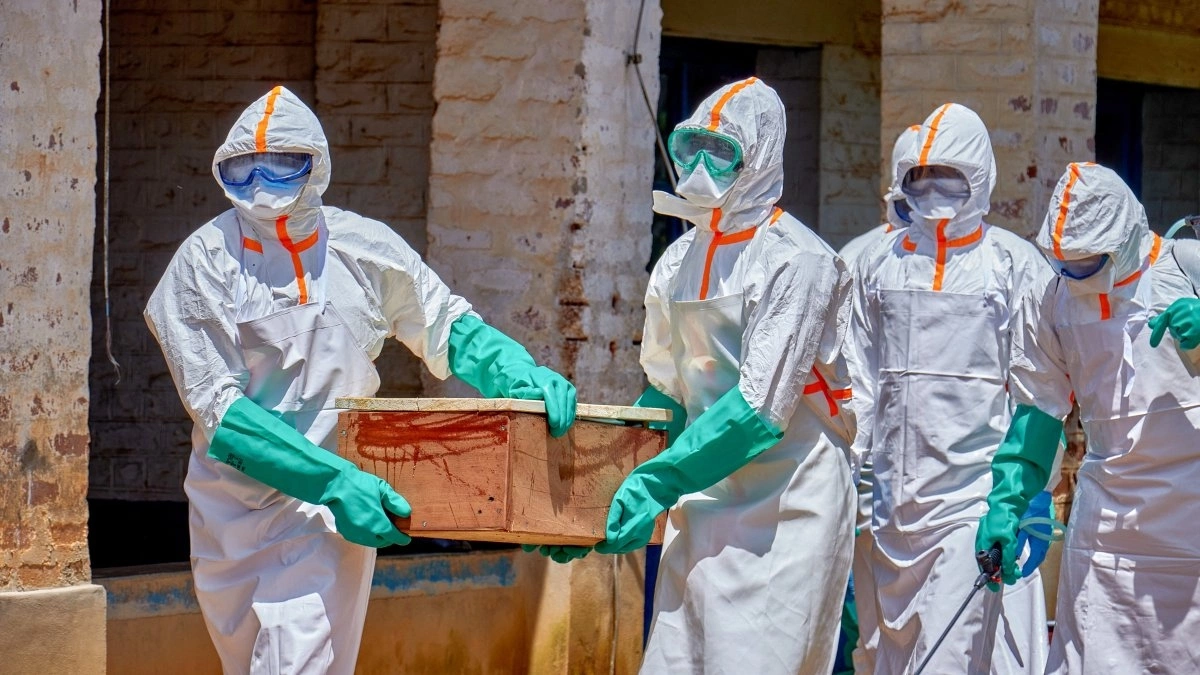 |
Red Cross workers carry a coffin containing the body of a child who died from Ebola, as aid agencies intensify efforts to control a new outbreak linked to the Bundibugyo virus strain in Mongbwalu, Djugu region, Ituri province, DRC, on 24/5. *Photo: Reuters* |
This 17th outbreak in Congo is caused by the Bundibugyo variant, for which scientists have not yet found a vaccine or specific treatment. The virus transmits from fruit bats to humans, then spreads rapidly through direct contact with blood or bodily fluids. Infected individuals have an incubation period of two to 21 days, starting with symptoms of fever, fatigue, and muscle pain before quickly progressing to vomiting, diarrhea, and multi-organ failure.
International efforts aim to support disease control. The European Union has sent medical supplies to Ituri, while the United States announced additional funding, raising its total commitment to 112 million USD. In Vietnam, the Ministry of Health assesses the risk of Ebola infiltration as low because the virus only spreads through direct contact, but the agency has issued warnings and proactively prepared response plans.
Binh Minh (According to The Guardian)