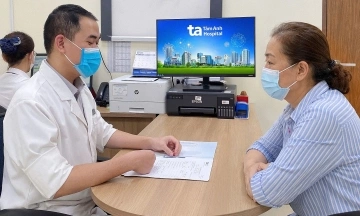
Viet's ear, nose, and throat endoscopy revealed residual lymphoid tissue in the nasopharynx and tonsils with multiple crypts. Dr. Tran Thi Hoa, an ENT specialist at Tam Anh General Hospital, diagnosed Viet with crypt tonsillitis and a benign nasopharyngeal tumor. She prescribed tonsillectomy using coblator plasma technology to remove the inflamed tonsils and an adenoidectomy (removal of lymphoid tissue in the nasopharynx).
A week prior, doctors in the Department of General Internal Medicine diagnosed Viet with an infection stemming from acute purulent nasopharyngitis and hypertrophied adenoids. Earlier ENT endoscopy revealed an ulcerative, proliferative mass in the nasopharynx, accumulating pus. A head and neck MRI indicated a localized lesion in the nasopharyngeal mucosa, narrowing the nasopharyngeal space. Both tonsils were enlarged, constricting the oropharyngeal space, alongside several small lymph nodes in the neck.
After a week of treatment, the inflammation subsided, but the sore throat symptoms persisted. The patient was referred to the ENT Department for examination.
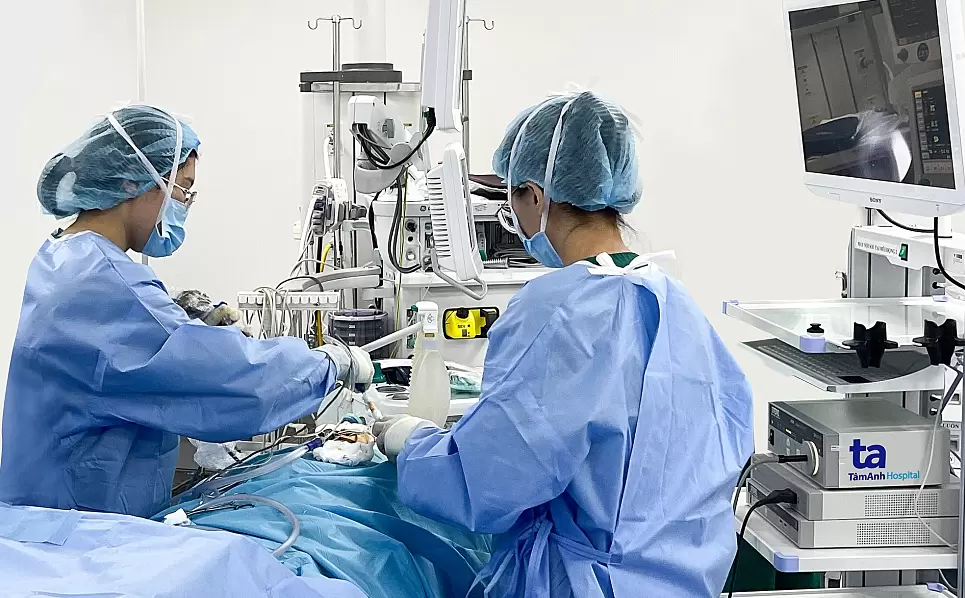 |
Doctors performing an adenoidectomy on a patient. Photo: Tam Anh General Hospital.
Following the tonsillectomy and adenoidectomy, Dr. Hoa confirmed the mass was an abscess, not a tumor. She explained the patient's chronic adenoid inflammation caused lymphoid tissue proliferation in the nasopharynx, leading to persistent swelling and mucosal inflammation. Repeated inflammation formed a localized abscess, which clinically and radiologically mimicked a nasopharyngeal tumor.
Typically, nasopharyngeal lymphoid tissue reaches maximum development in children aged 5-7, then gradually atrophies. By adolescence, most adenoids shrink, and the fatty tissue in this area disappears. Persistent adenoid development in adults is termed residual adenoids, making individuals susceptible to viral or bacterial infections.
According to Dr. Hoa, adenoidectomy is indicated for recurrent chronic adenoiditis or hypertrophy causing airway obstruction and impacting adjacent organs. The treatment aims to eliminate the infection, improving the patient's respiratory function and sleep.
Tran Duong
*Patient's name has been changed
| Readers can ask questions about ear, nose, and throat conditions here for doctors to answer |