Eng English
China 中国人

Eng English
China 中国人
  • News
  • World
  • Business
  • Entertainment
  • Sports
  • Law
  • Education
  • Health
  • Lifestyle
  • Travel
  • Science
  • Digital
  • Automobiles
  • Trở lại Thể thao
  • Health
Monday, 1/6/2026 | 11:01 GMT+7

Is cerebral aneurysm hereditary?

My father had a ruptured cerebral aneurysm. Is this condition hereditary, and do I need a cerebral angiogram for screening? (Ha Vinh, Thanh Hoa province)

Answer:

A cerebral aneurysm is a condition where a weakened area in the wall of a brain artery abnormally bulges, forming a balloon-like sac due to the continuous pressure of blood flow. When an aneurysm ruptures, blood can leak into the subarachnoid space, causing a brain hemorrhage, which requires emergency medical attention.

Genetics is one of the factors that increase the risk of cerebral aneurysms. Individuals with two or more direct relatives (parents, siblings, or children) diagnosed with a brain aneurysm typically have a higher incidence of this condition. Besides family history, certain hereditary diseases are also associated with a high risk of aneurysm formation, such as hereditary polycystic kidney disease, congenital connective tissue disorders, and congenital vascular malformations.
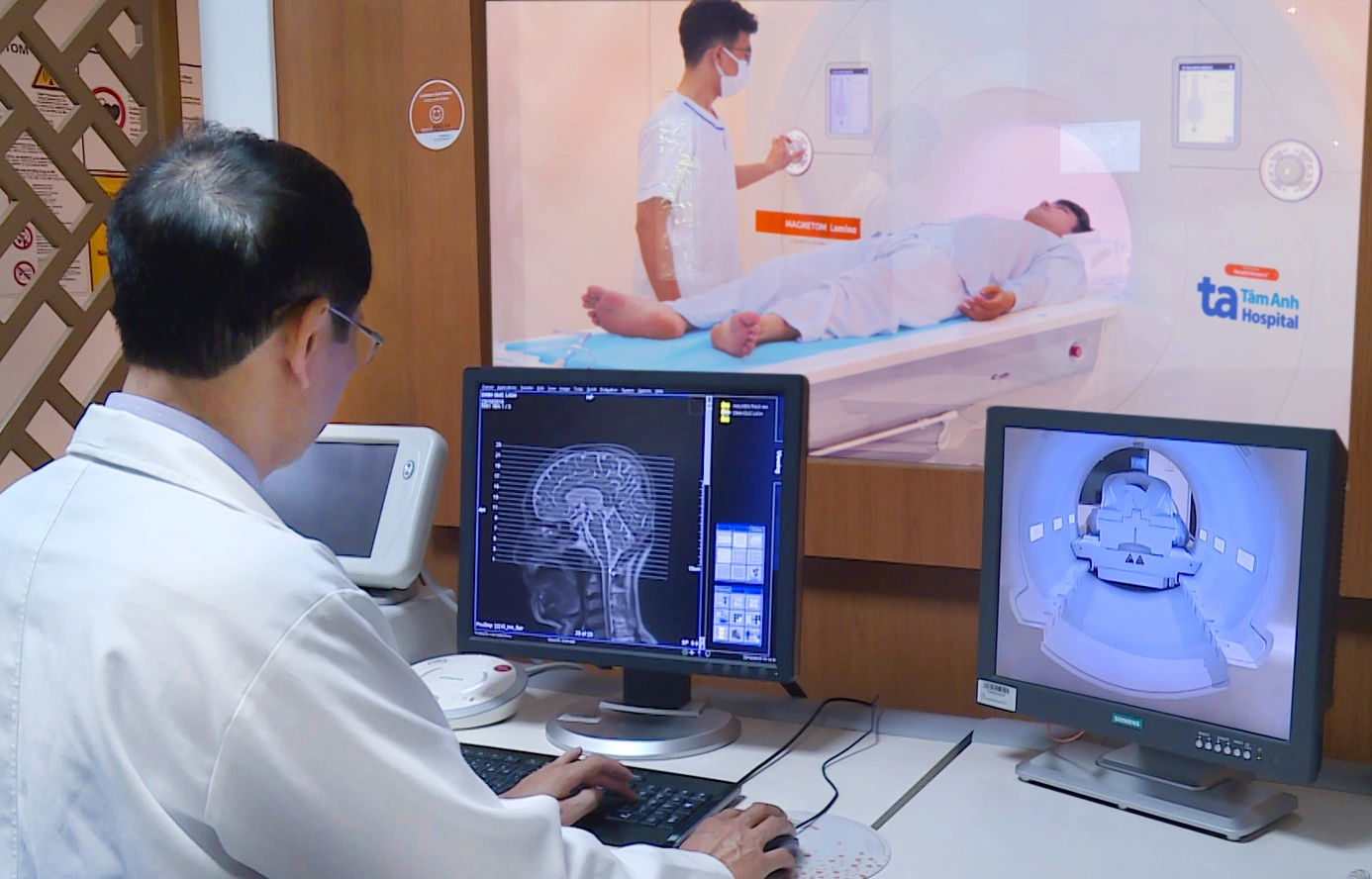
Patients undergo magnetic resonance imaging (MRI) to screen for vascular malformations and brain aneurysms. Illustration: Tam Anh General Hospital

Other risk factors include hypertension, smoking, alcohol consumption, and stimulant use. Among these, smoking and hypertension are considered the two leading causes of brain aneurysms.

However, not everyone with a family history of the condition will develop a brain aneurysm. Doctors determine the need for a cerebral angiogram to screen for aneurysms based on the patient's underlying health conditions, lifestyle, age, and neurological symptoms observed during a clinical examination. If only one relative has been diagnosed and you are otherwise healthy with no other risk factors, regular brain imaging may not be necessary.

If a brain aneurysm is detected, the decision for treatment depends on its size, location, shape, rupture risk, as well as the patient's age and underlying health conditions. In reality, many small aneurysms can remain stable for many years and only require periodic monitoring as guided by a doctor; not every case necessitates immediate surgery or intervention.

You should not worry or self-assess your risk based on family history. Instead, visit a hospital with a neurology department to be examined by a doctor who can evaluate your risk factors and recommend screening if necessary.

Doctor Nguyen Duc Anh

Head of Neurosurgery and Spine Department

Tam Anh General Hospital System in Hanoi

By VnExpress: https://vnexpress.net/phinh-mach-mau-nao-co-di-truyen-khong-5080460.html
Tags: neurological disease cerebral aneurysm

News in the same category

Acute hepatitis after taking medication based on 'AI doctor's' advice

Acute hepatitis after taking medication based on 'AI doctor's' advice

Thuy, 47, developed yellow skin and eyes, facial swelling, and hives due to acute hepatitis after 21 days of taking medication prescribed by an "AI doctor".

The potential of Cuba's cancer vaccine

The potential of Cuba's cancer vaccine

HEBERSaVax, a therapeutic cancer vaccine candidate developed by Cuba, works by activating immunity and impacting tumor nourishment.

Ebola outbreak spreads at 'unprecedented' rate

Ebola outbreak spreads at 'unprecedented' rate

The World Health Organization (WHO) and health experts warn that the Ebola outbreak in the Democratic Republic of Congo is progressing at an unprecedented rate of spread.

Suspected nasopharyngeal tumor turns out to be an abscess

Suspected nasopharyngeal tumor turns out to be an abscess

Viet, 19, suffered from chronic sore throat, nasal congestion, and runny nose due to adenoid inflammation; doctors found an abscess resembling a nasopharyngeal tumor.

Why is blood cholesterol control necessary?

Why is blood cholesterol control necessary?

High blood cholesterol often presents no clear symptoms but can silently narrow blood vessels, increasing the risk of heart attack and stroke.

Aspiration pneumonia from gastric reflux

Aspiration pneumonia from gastric reflux

Mr. Hao, 58, developed aspiration pneumonia after gastric reflux entered his airways following months of coughing.

3-year-old boy diagnosed with 14-diopter myopia

3-year-old boy diagnosed with 14-diopter myopia

An, a three-year-old boy, has experienced rapidly worsening vision since he was one, with his prescription quickly increasing to 14 diopters, prompting doctors to diagnose congenital lens dislocation.

Doctor reveals breakfast mistake leading to uncontrolled weight gain

Doctor reveals breakfast mistake leading to uncontrolled weight gain

Failing to consume enough protein at breakfast triggers an automatic energy compensation mechanism, leading to unconscious overeating and a loss of control in subsequent meals.

4 signs of healthy kidneys

4 signs of healthy kidneys

Less body fatigue, healthy skin, and fresh breath can indicate well-maintained kidney function.

7 daily habits for better sleep

7 daily habits for better sleep

Exposure to morning sunlight, regular exercise, and consuming sleep-supporting foods can promote easier and deeper sleep at night.

Eng English
China 中国人
  • News
  • World
  • Business
  • Entertainment
  • Sports
  • Law
  • Education
  • Health
  • Lifestyle
  • Travel
  • Science
  • Digital
  • Automobiles
FPT Tower, 10 Pham Van Bach Street, Dich Vong Ward,
Cau Giay District, Hanoi, Vietnam
Email: contacts@vnportal.net
Tel: 028 7300 9999 - Ext 8556
Advertise with us: 090 293 9644
Register
© Copyright 2026 vnnow.net. All rights reserved.
Terms of use Privacy policy Cookies