Minh was shocked when his routine health check-up results showed his total cholesterol level was double the normal range. Suspecting an error, he returned to Phuong Dong General Hospital. The results remained unchanged, confirming a diagnosis of dyslipidemia, or high blood fat.
"That's a typical trap," stated Master of Science, Doctor Doan Du Manh, Deputy Director of the International Cardiology and Stroke Center at the hospital. Dyslipidemia is an internal change, completely "invisible" to the naked eye. Despite Minh's consistent exercise, he had fallen into unhealthy eating habits: two to three times a week after soccer matches, he would indulge in heavy meals of pork offal, dog meat, noodles, and alcohol.
Similarly, Khoi, a 34-year-old sales employee, runs regularly every morning, maintains a fit body, does not smoke, avoids alcohol, and limits carbohydrates. However, he frequently consumed red meat and animal organs, believing that his physical activity would "burn off" these foods.
In early July, during a run, Khoi experienced a sudden sharp pain in his left chest, radiating to his arm, accompanied by dizziness and a rapid heartbeat. Examinations revealed his cholesterol level had reached 8.9 mmol/l, and his electrocardiogram showed signs of mild myocardial ischemia – a warning sign of potential myocardial infarction if his diet, rich in organ meats, was not immediately adjusted.
"The disease progresses silently. By the time it's detected, the damage is already deep," said Doctor Manh. "Obese, sedentary individuals develop the disease faster, but even those who exercise diligently yet eat poorly are not immune."
 |
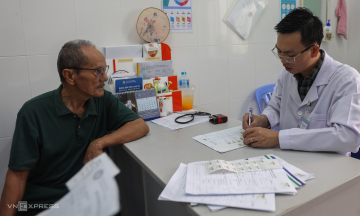
A patient being examined for numbness in limbs and high blood fat. Photo: Le Phuong |
Cholesterol, a component of blood lipids, plays a vital role in nerve cell function and hormone production. Elevated levels of low-density lipoprotein (LDL), often called "bad cholesterol," and triglycerides are the primary causes of high blood fat.
The National Institute of Nutrition of Vietnam announced in 2022 that over 29% of Vietnamese adults suffer from dyslipidemia. In urban areas, this figure rises to 44,3%. Notably, the disease is affecting increasingly younger individuals. Instead of primarily appearing in people aged 50 and older, it is now common among those in their 40s and 50s, and even in their 20s and 30s.
Associate Professor, Doctor Do Van Dung, former Head of the Public Health Department at the University of Medicine and Pharmacy in Ho Chi Minh City, explained: "Biologically, age 40 marks a turning point, signaling the onset of natural physiological decline and the silent progression of chronic non-communicable diseases, including dyslipidemia."
High blood fat does not discriminate by body type or age. Doctor Lam Vinh Nien, Head of the Nutrition-Dietetics Department at the University Medical Center HCMC, clarified: "Even young, lean individuals can develop high blood fat if they consume excessive fatty foods, lead a sedentary lifestyle, smoke, or drink alcohol."
The primary cause of high blood fat is an unhealthy lifestyle. Diets rich in oils, fried foods, and processed foods lead to the accumulation of excess fat in the body, which gradually develops into a medical condition. Many people mistakenly equate high cholesterol with obesity, believing that being lean protects them from high blood fat, leading to complacency about their diet.
Moreover, the widespread availability and consumption of sugary drinks and foods contribute to increased intake of added sugar, which elevates triglyceride levels and reduces high-density lipoprotein (HDL), or "good cholesterol."
One of the most concerning aspects of dyslipidemia is its asymptomatic nature. This creates a false sense of security, allowing the condition to progress unchecked until complications arise.
If not detected early, high blood fat can lead to fatty liver disease, pancreatitis, atherosclerosis, arrhythmia, angina, and myocardial infarction. A 2020 study indicated that the younger a person is with high cholesterol, the greater their lifetime risk of cardiovascular disease. Many cases of delayed detection have resulted in hypertension, stroke, leading to disability or death.
Associate Professor, Doctor Nguyen Huy Thang, Vice President of the Vietnam Stroke Association, observed that many patients admitted for stroke or myocardial infarction only then discover they have hypertension or dyslipidemia. "Strictly controlling underlying conditions like blood pressure and blood fat is the 'golden key' in preventing stroke and myocardial infarction," Doctor Thang stated.
Most people in their 40s remain complacent, believing they are still young. However, experts emphasize that the 40-60 age window provides a two-decade opportunity for individuals to change their lifestyle behaviors and optimize biological indicators. By ages 50 or 60, biological damage and chronic diseases are often advanced, limiting interventions primarily to managing consequences.
Establishing habits to control baseline indicators such as blood pressure, blood sugar, and blood fat from ages 40-44 creates a robust biological buffer. This helps slow and mitigate the decline in physical function at age 60, reducing the risk of disability.
To protect health after turning 40, experts recommend maintaining a balanced diet, limiting fried and processed foods, increasing vegetable intake, exercising for at least 150 minutes weekly, and moderating alcohol consumption. Most importantly, annual blood tests are crucial for early detection of abnormalities.
Leaving the clinic with a treatment plan, Minh was forced to discontinue his habit of eating pork offal, dog meat, and drinking beer after every soccer game. The unexpected test results helped him realize that at age 40, a slender physique or diligent exercise routine is no longer an absolute guarantee without regular medical check-ups.
My Y