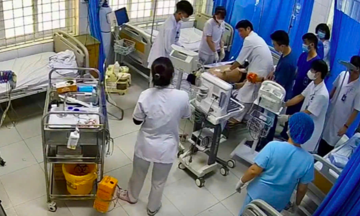
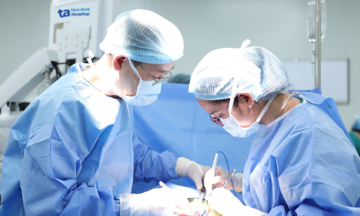
The night before his hospital admission, Minh slept in an air-conditioned room set at about 24 degrees Celsius, with the fan blowing directly onto his face. Doctor Nguyen Huu Khanh, from the Department of Neurology at the Neuroscience Center, Tam Anh General Hospital Ho Chi Minh City, stated that Minh suffered from peripheral facial nerve paralysis due to cold exposure. After one week of medication combined with physical therapy, his facial muscle function improved.
Similarly, Thoa, 52, experienced a dull ache behind her left ear after returning from the morning market. Subsequently, her mouth became distorted, her speech slurred, and she could not fully close her left eye. Suspecting a stroke, she went to Tam Anh General Hospital Ho Chi Minh City for examination.
Based on her brain MRI scan results, doctors ruled out cerebrovascular damage, diagnosing her with peripheral facial nerve paralysis caused by cold exposure. Thoa, who has diabetes, experienced a weakened immune system. This, combined with prolonged cold exposure, led to severe, persistent inflammation and swelling of her facial nerve. She received anti-inflammatory and anti-edema medication along with physical therapy to restore facial muscle function, with significant improvement noted after over two weeks.
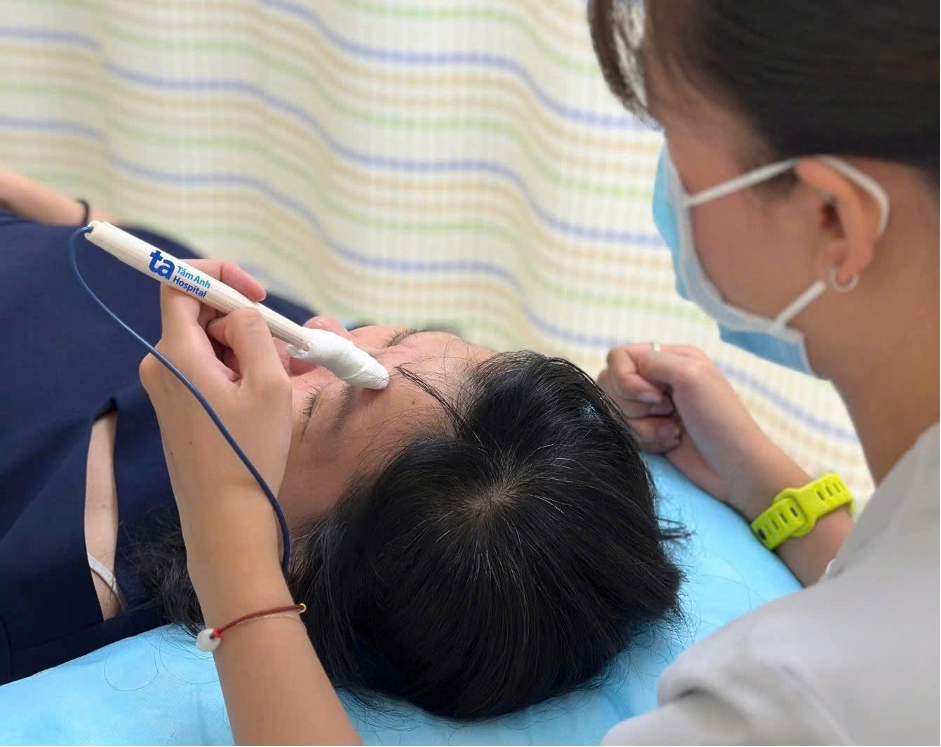 |
A technician uses electrostimulation to stimulate Thoa's facial muscles, maintaining muscle tone and restoring movement. *Photo: Tam Anh General Hospital* |
According to Doctor Khanh, the facial nerve controls facial muscle movement and contributes to taste sensation, tear production, and saliva secretion. Because it passes through a narrow bony canal in the temporal bone, this nerve is highly sensitive to swelling. When the head, face, or neck are suddenly exposed to cold, blood vessels constrict, causing ischemia. This triggers inflammation and swelling, leading to nerve compression and impaired impulse transmission to the facial muscles.
Cold weather is also a contributing factor to the reactivation of viruses, particularly herpes simplex virus type 1 (HSV-1), which is found in the facial nerve ganglia of many healthy individuals. When the virus reactivates, a stronger immune inflammatory response occurs, increasing nerve swelling and causing sudden, distinct facial paralysis symptoms.
Patients typically experience rapid onset, often waking up with signs such as a distorted mouth, a crooked smile, difficulty speaking, drooling or tearing on the affected side, inability to fully close the eye, and a dull pain behind the ear. These symptoms develop within a few hours to one or two days but do not cause altered consciousness.
Doctor Khanh noted that facial paralysis due to cold exposure is usually not accompanied by limb weakness, hemiplegia, or central language disorders, unlike stroke. However, because facial distortion resembles a stroke, it can lead to delayed or incorrect treatment. The "golden window" for treating peripheral facial paralysis is within the first 72 hours. This aims to reduce nerve swelling, protect the myelin sheath, and increase the likelihood of full recovery of facial muscle function.
Treatment protocols often involve early use of corticosteroid anti-inflammatory drugs to reduce inflammation, swelling, and nerve compression. Antiviral medication may be combined if a viral cause is suspected. Patients need to protect the affected eye with artificial tears and an eye patch during sleep to prevent corneal damage. Physical therapy, such as facial muscle exercises, mild electrostimulation, and proper massage techniques, aids in functional recovery. Patients should not self-administer acupuncture or vigorous massage. With early treatment, most patients make a full recovery within a few weeks to several months.
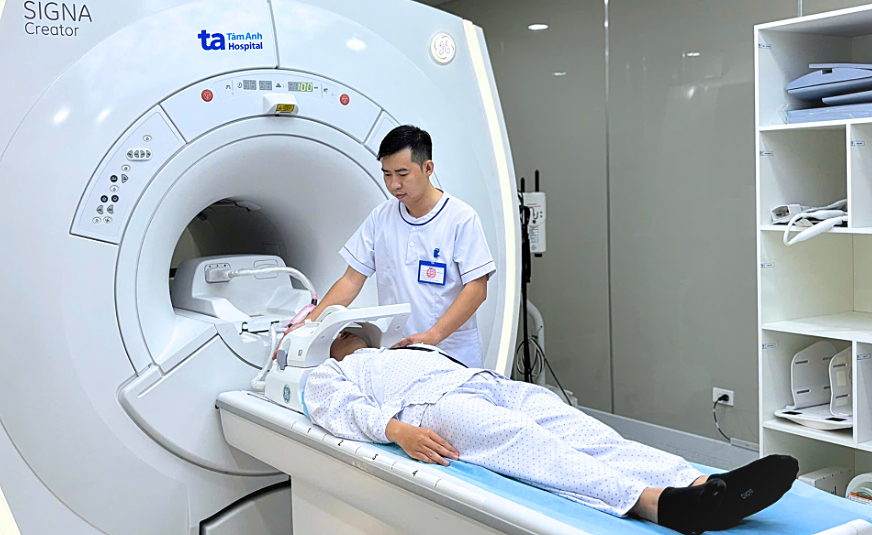 |
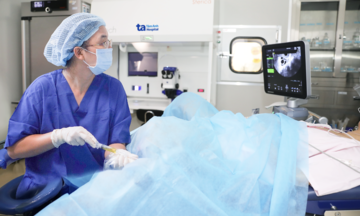
Patients undergo brain MRI scans to rule out stroke as a cause of facial paralysis. *Photo: Tam Anh General Hospital* |
Doctor Khanh recommends that everyone keep their head, face, and neck warm when going out in cold weather. Avoid direct fan or air conditioner drafts on the face, especially while sleeping. Do not bathe late at night, and do not suddenly pour cold or hot water over the head or face. If signs such as a distorted mouth, facial asymmetry, inability to fully close the eye, or pain behind the ear appear, seek examination at a medical facility with a neurology department to differentiate it from stroke and receive timely treatment.
Trong Nghia
| Readers can submit questions about neurological diseases here for doctors to answer |