Early on 30/6, a man and his wife were taking their son, who has congenital pectus excavatum, to Hanoi for treatment. Approximately 20 minutes into their bus journey, as they passed through Ninh Binh, he suddenly experienced severe chest pain, profuse sweating, and cold limbs.
Noticing the unusual signs, his wife immediately asked the driver to take them to Bach Mai Hospital, Ninh Binh facility. This swift decision proved life-saving for the father. Around 7h, the patient arrived at the Emergency Department in a critical "code red" condition. An electrocardiogram confirmed he was suffering from an acute inferior myocardial infarction. Emergency procedures were immediately activated, and the patient was transferred directly to the cardiac intervention room.
Coronary angiography results revealed that his right coronary artery was almost completely narrowed, obstructing blood flow to the heart muscle. Doctors stated that without timely revascularization, the patient faced a high risk of dangerous arrhythmias, atrioventricular block, or cardiac arrest.
 |
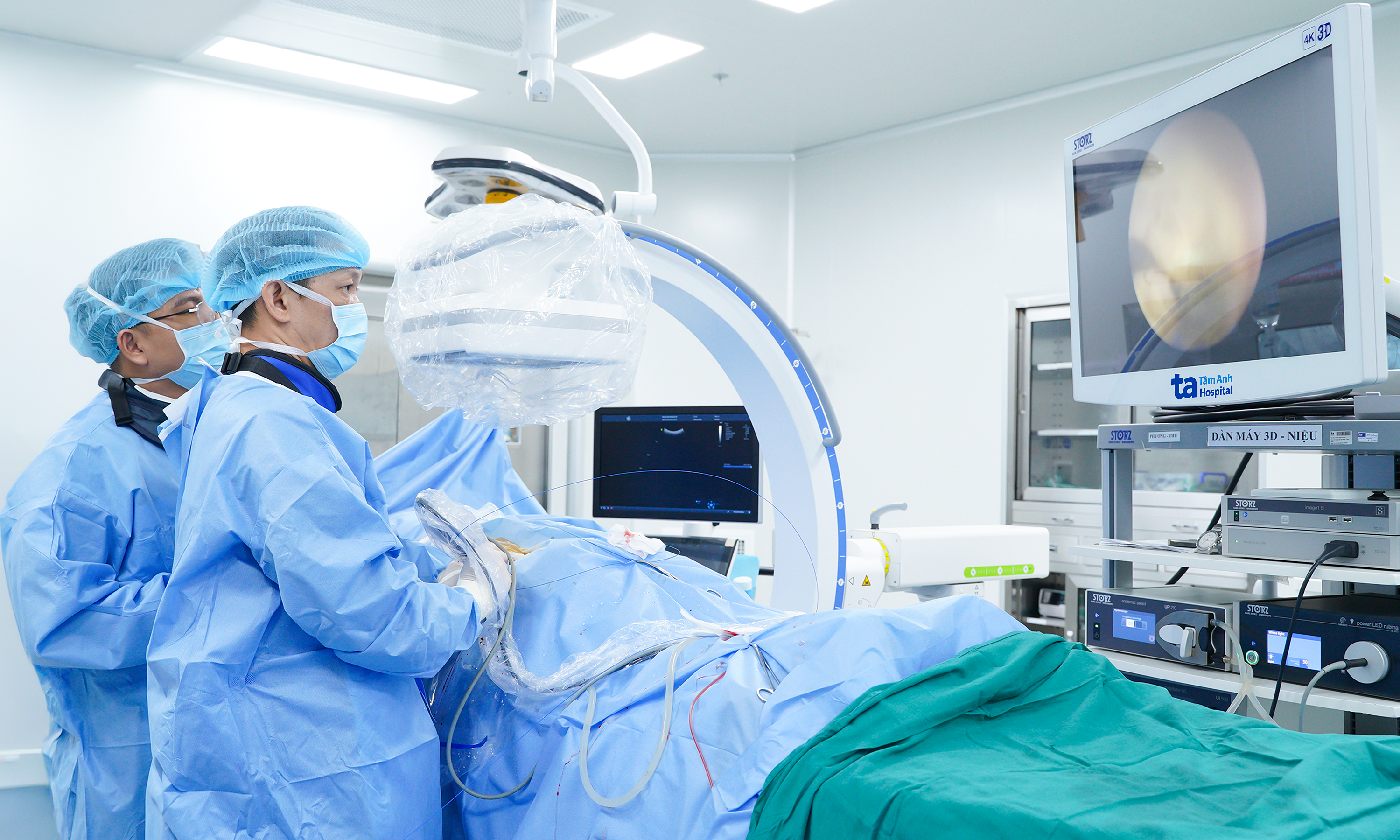
Doctor performing angiography for the patient. Photo: Thanh Duong |
Under the direction of Associate Professor Dr. Tran Song Giang, Deputy Director of the National Heart Institute, the intervention team performed balloon angioplasty and stent placement via the radial artery, successfully reopening the right coronary artery and fully restoring blood flow to the heart. Just about 2,5 hours after admission, the patient had overcome the critical stage, preserved heart function, and is now conscious and free of chest pain.
"I never thought I would have a heart attack while taking my son to the doctor. Fortunately, I received timely emergency care, and now I feel much better," the man shared.
Associate Professor Giang warned that myocardial infarction is increasingly affecting younger individuals. It is commonly observed in smokers, those with hypertension, dyslipidemia, diabetes, overweight individuals, or people experiencing prolonged stress. When symptoms such as severe chest pain, shortness of breath, profuse sweating, nausea, or cold limbs appear, patients must seek medical attention at the nearest facility capable of cardiac intervention to undergo coronary revascularization as soon as possible, thereby reducing the risk of death and complications.
According to Associate Professor Dr. Dao Xuan Co, Director of Bach Mai Hospital, for acute myocardial infarction cases, every minute of delay leads to irreversible necrosis of numerous heart muscle cells. Had the patient continued his journey to Hanoi, the risk of heart failure, arrhythmia, or cardiac arrest en route would have significantly increased.
Bach Mai Hospital, Ninh Binh facility, was established to bring specialized techniques and expert teams closer to the public, especially for emergency conditions that depend on a "golden hour" for intervention, such as myocardial infarction, the hospital director stated.
Le Nga