At age 63, Nguyen Van Sang still calls his father and mother every day. This year's Vu Lan season, he took his parents, Nguyen Van Nuoi and Tran Thi Tam, both 90 years old, to a vaccination center. Nuoi sat in a wheelchair, while Tam still moved quickly, occasionally turning back to call for her husband to follow.
The couple has 10 children. In their youth, Nuoi drove a "xe lam" (a three-wheeled motorized passenger vehicle) and Tam sewed clothes at the market. In their old age, they live with their unmarried children. When their children go to work, their mother still cooks; in the evening, the whole family gathers around the dinner table. For Tam, life at age 90 is encapsulated in these familiar routines.
Looking at his parents, Sang said he still has a "blessing" that not everyone his age shares. "Having a father and mother is like having heaven. At this age, I can still take them for flu vaccines; nothing is better", he stated.
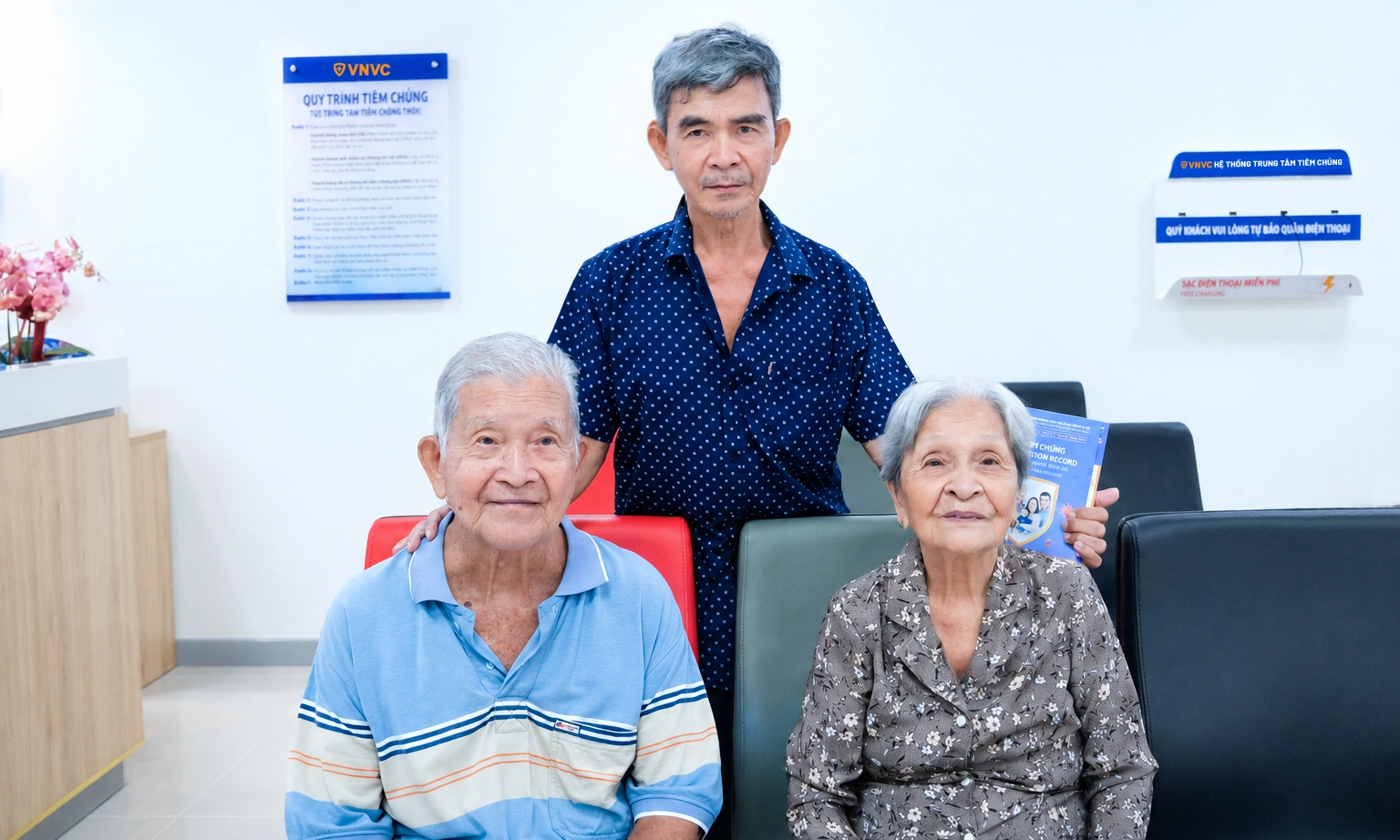 |
Sang (center) with his parents at VNVC. Photo: Hong Dao |
Sang (center) with his parents at VNVC. Photo: Hong Dao
The story of Sang's family reflects a growing trend in many Vietnamese households: children who are themselves retired or beginning to face their own health issues are still the primary caregivers for their very elderly parents. Filial piety thus extends over many years, from taking parents to medical appointments, remembering medication schedules, monitoring chronic conditions, to assisting with mobility and daily activities.
According to the results of the 2024 Mid-term Population and Housing Survey by the General Statistics Office, Vietnam has 14,2 million people aged 60 and above, an increase of 2,8 million compared to 2019. This number is projected to be approximately 18 million by 2030. Increased longevity is an achievement, but it also creates a need for extended care when a family may simultaneously have "younger seniors" aged 60-70 and parents in the 80-90 age group.
According to the United Nations Population Fund (UNFPA), most elderly people in Vietnam still rely on family when they need care. This indicates that caring for the elderly is not just an emotional matter between parents and children, but also a challenge regarding time, health, and the ability to organize family life.
For Nguyen Thi Thanh Tam, caring for her mother has become a part of her daily routine. Her mother, Le Thi Hung, is 89 years old this year and has 11 children. After her father passed away 10 years ago, Tam and her husband moved in with her mother.
She monitors small changes in her mother's daily life, arranges medical appointments, and takes her mother for annual flu vaccines; she also seeks advice on pneumococcal and shingles vaccines. "I try to do whatever I can for my mother", she said.
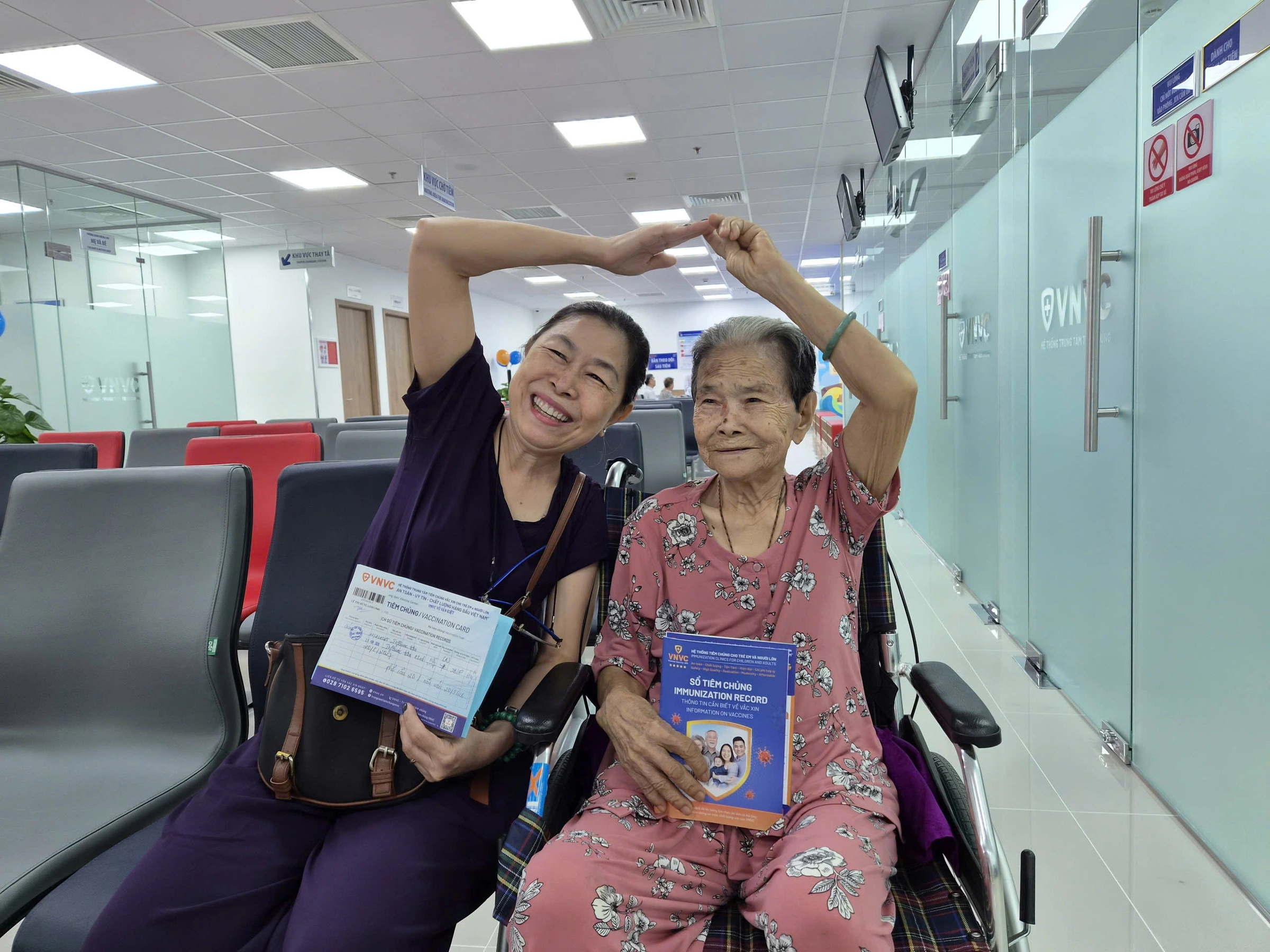 |
Nguyen Thanh Tam (left) and her mother. Photo: Binh An |
Nguyen Thanh Tam (left) and her mother. Photo: Binh An
Every Vu Lan season, Tam still takes her mother to the pagoda. However, in her mind, "the home pagoda is still the best", referring to the house where she can see her mother every day and ask about her health. For Tam, health care does not replace the presence of a child, but is a part of that presence.
Huynh Quoc Anh also arranged to take her mother to a vaccination center twice. The first time, her mother's blood pressure was too high, so she could not be vaccinated and had to return home. The next day, she continued to take her mother back after her health stabilized. "Being able to take my mother is a great happiness", she said.
Doctor Huynh Tran An Khuong, a medical specialist at the VNVC Vaccination System, stated that caring for the elderly should not only begin when illness appears. The important goal is to help them maintain their mobility, self-care, and participation in family life for as long as possible.
The World Health Organization notes that there is no single stereotype for old age: some 80-year-olds still have good physical and mental health, while younger individuals may have significant decline. Therefore, care plans should be based on each person's functional status, chronic conditions, mobility, and needs, rather than solely on age.
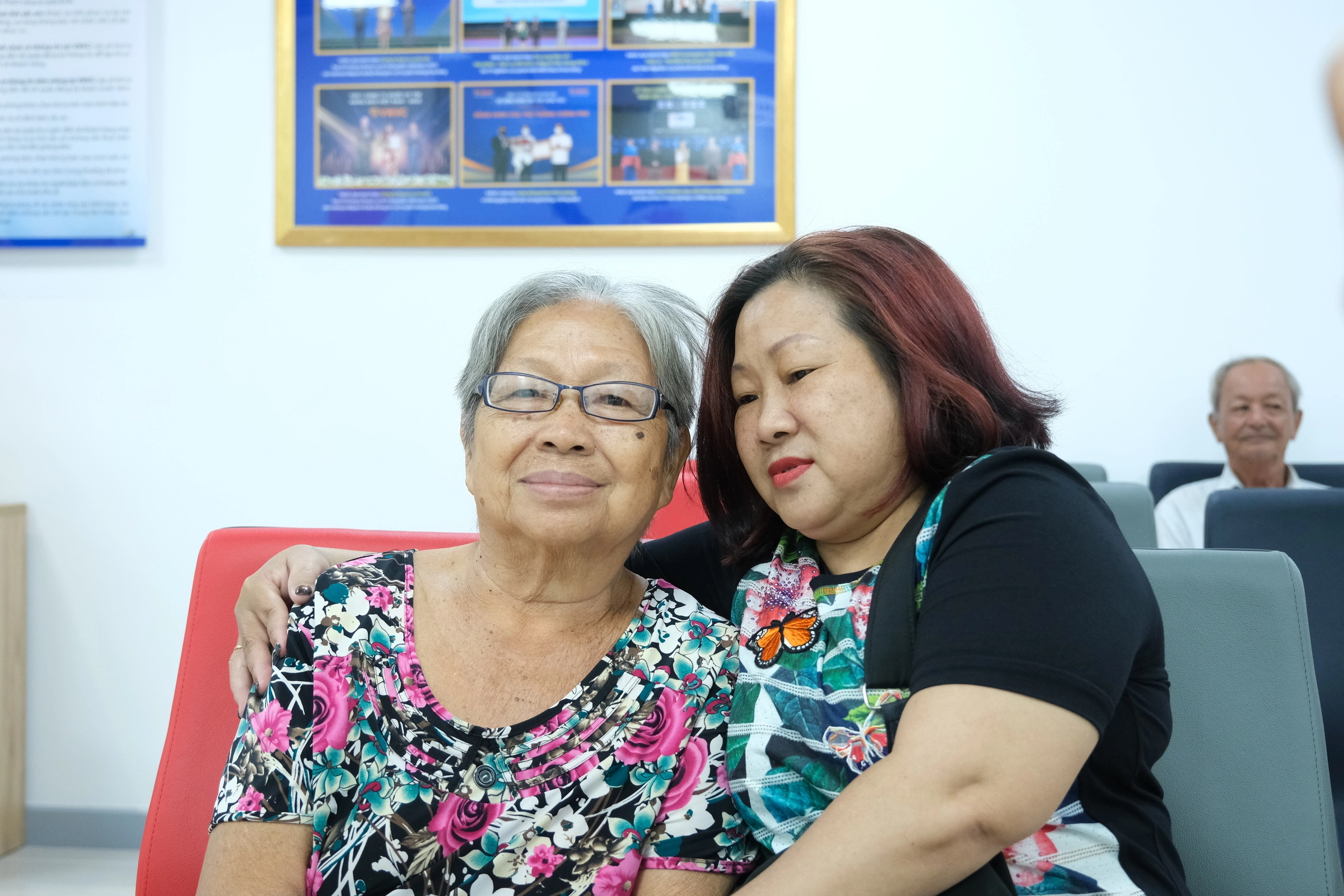 |
Huynh Quoc Anh with her mother at the vaccination center. Photo: Hong Dao |
Huynh Quoc Anh with her mother at the vaccination center. Photo: Hong Dao
According to Doctor Khuong, the aging process impairs immune function. Elderly people often suffer from hypertension, diabetes, chronic obstructive pulmonary disease, or many other conditions. An infection can destabilize chronic diseases, prolong treatment and recovery time, and increase the risk of hospitalization.
Families should support parents with regular health check-ups, chronic disease management, appropriate nutrition and exercise, and monitor changes in memory, balance, sleep, and daily living abilities. Vaccination history also needs to be reviewed so doctors can assess risks and recommend suitable vaccines such as flu, pneumococcal, shingles, respiratory syncytial virus (RSV), and diphtheria-pertussis-tetanus (DTaP), depending on age and health status.
Taking parents for a check-up or vaccine appointment only takes a few hours, but caring for the elderly is a long journey requiring the consistent presence of family members. For children over 60 like Sang, Vu Lan is not just a day to remember the grace of their parents. It is also a blessing that parents are still present to share a meal, ask each other about their health, and continue to care for one another for another year.
Kha Nhien