Nearly a year ago, Dara Kong (55, from Cambodia) was involved in a traffic accident in Phnom Penh, resulting in a severe head injury. Although initial emergency treatment was successful and he recovered, the patient continued to experience numbness, irritation, and pain when touching his head, suspecting residual foreign objects.
Seeking definitive treatment and to prevent long-term complications, the patient and his family came to American International Hospital (AIH). Here, doctor Nguyen Manh Hung, Head of the Neurosurgery and Spine Unit, directly examined and treated him.
Upon examination, the patient was diagnosed with reduced movement of the left eyebrow and presented with multiple mobile, hard masses under the skin that were painful to the touch. A cranial CT scan revealed no intracranial damage but detected small foreign fragments deeply embedded in the subcutaneous soft tissue and the skull bone on both sides of the parietal region.
Doctor Nguyen Manh Hung determined that the patient had foreign objects on both sides of his head and in the left frontal-facial region, causing damage to the left V1 nerve (the sensory nerve for the left forehead and eye area). Doctor Hung recommended early surgery to remove the foreign objects, aiming to reduce the risk of infection and more severe nerve damage.
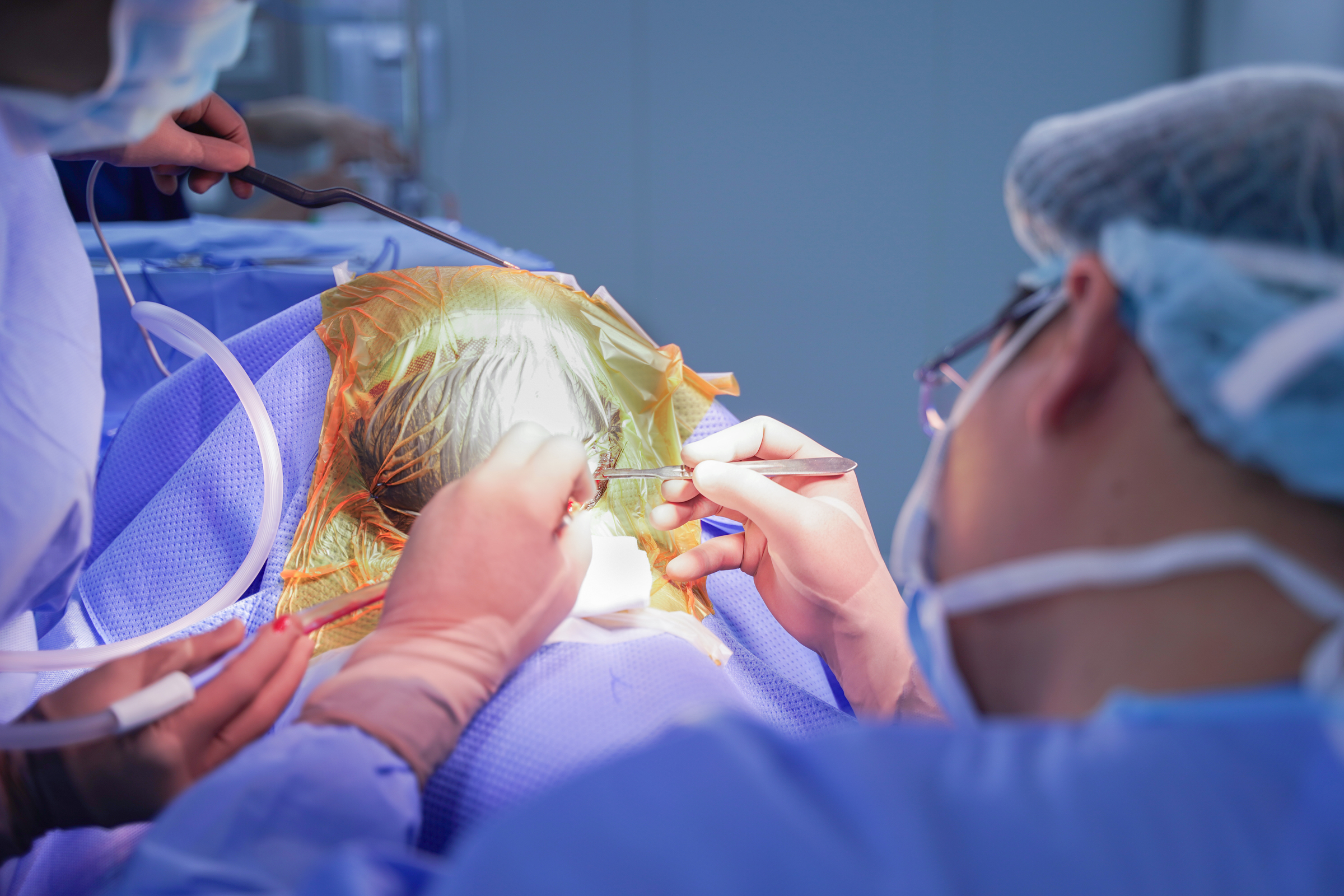 |
Doctor Nguyen Manh Hung extracts a "matrix" of glass fragments embedded in the patient's skull. Photo: AIH
"The surgery was complex because we needed an appropriate incision to remove all foreign objects while ensuring aesthetic results, avoiding scars and scalp necrosis," said doctor Nguyen Manh Hung. The team observed numerous glass fragments of varying sizes deeply embedded under the skin and in the skull, penetrating close to the sensory nerves of the forehead and eye area. Therefore, during the procedure, technicians were careful to remove all foreign objects without damaging surrounding areas.
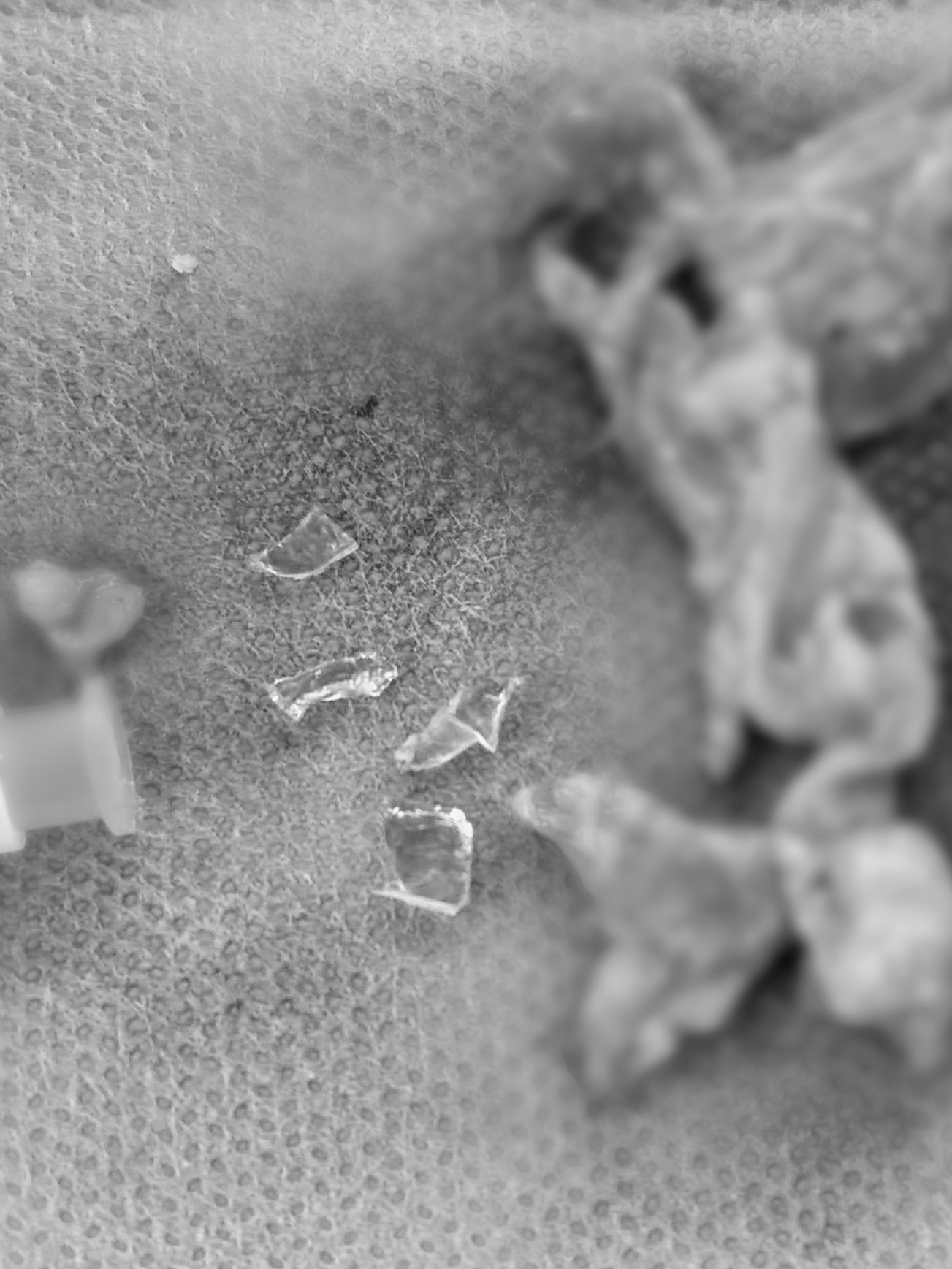 |
Glass fragments of varying sizes deeply embedded under the skin and in the skull. Photo: AIH
After regaining consciousness, the patient was alert and no longer felt the uncomfortable irritation and pain. The patient shared, "My greatest wish was to have a definitive treatment in one surgery so I wouldn't have to worry about future complications."
Doctor Nguyen Manh Hung warned that residual foreign objects after head, forehead, or facial injuries, if not addressed promptly, can cause localized infection or spread deep into tissues, potentially affecting the brain and meninges. Patients also face risks of scarring, indentations, or deformities in the forehead and head regions. Therefore, early examination and intervention after an accident are crucial to prevent long-term and dangerous consequences.
At the Neurosurgery and Spine Unit, American International Hospital (AIH), cases of post-traffic accident complications and traumatic brain injuries receive thorough examination, modern imaging diagnostics, and in-depth assessment. Upon detecting foreign objects or nerve damage, patients are scheduled for early surgery to ensure safety, complete removal of foreign objects, prevent long-term complications, and maintain the aesthetic appearance of the head region.
Trained extensively in Vietnam, South Korea, Germany, and the United States, doctor Nguyen Manh Hung has over 20 years of specialized experience in brain and spine surgery, particularly in managing post-accident complications, removing foreign objects from the head, and treating complex nerve damage.
"Even in emergency cases of traumatic brain injury requiring deep surgical access, we always prioritize hair preservation and aesthetic surgery for patients. While this may seem like a minor detail, it helps reduce psychological trauma for patients after surgery," doctor Hung added.
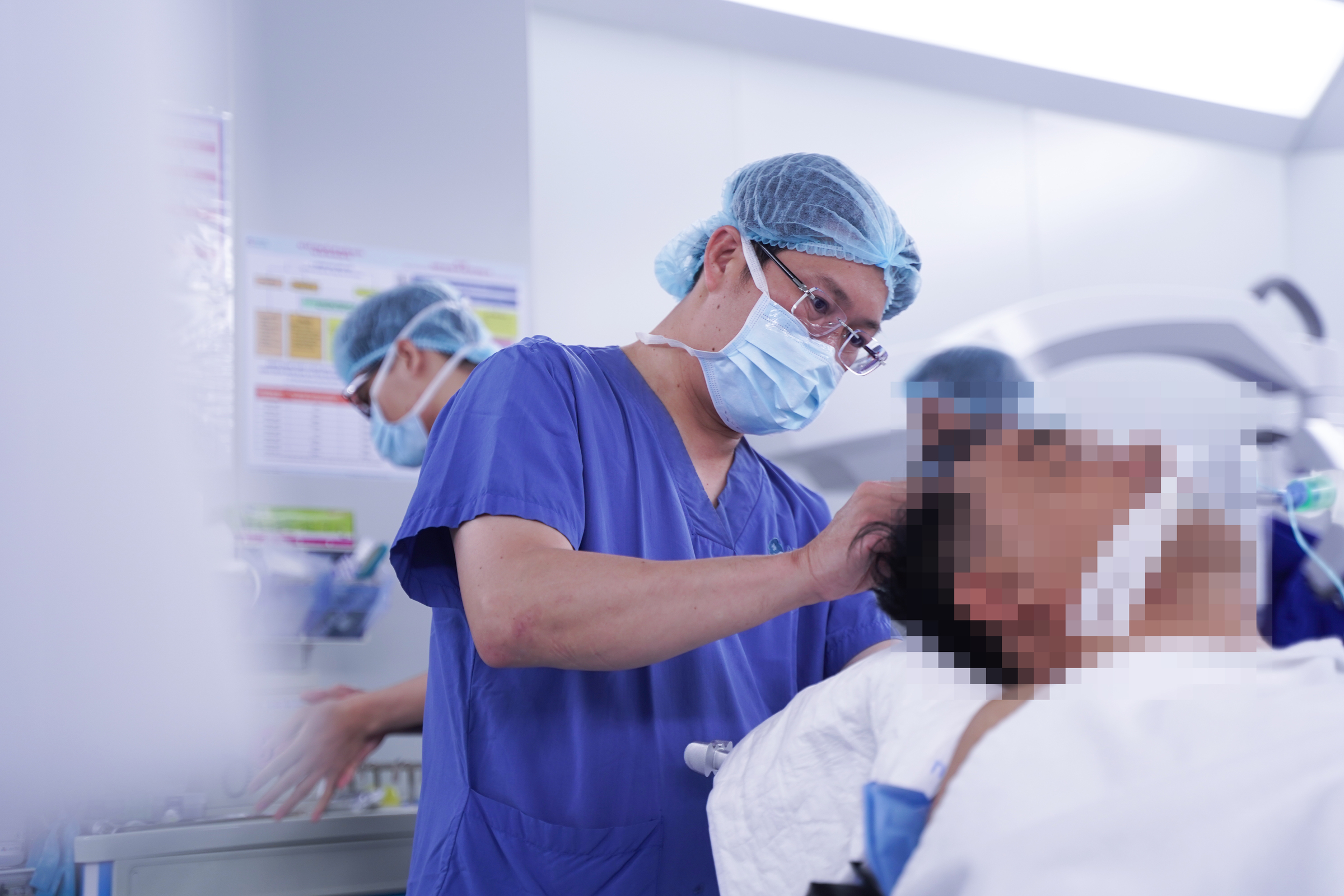 |
Doctor Nguyen Manh Hung applies "aesthetic surgery" techniques, avoiding shaving the patient's hair. Photo: AIH
Recently, American International Hospital (AIH) has admitted and treated many international patients from France, the United States, South Korea, Japan, India, Indonesia, and Cambodia. This reflects the hospital's professional expertise and service quality, adhering to JCI standards, and highlights Vietnam's growing appeal in medical tourism.
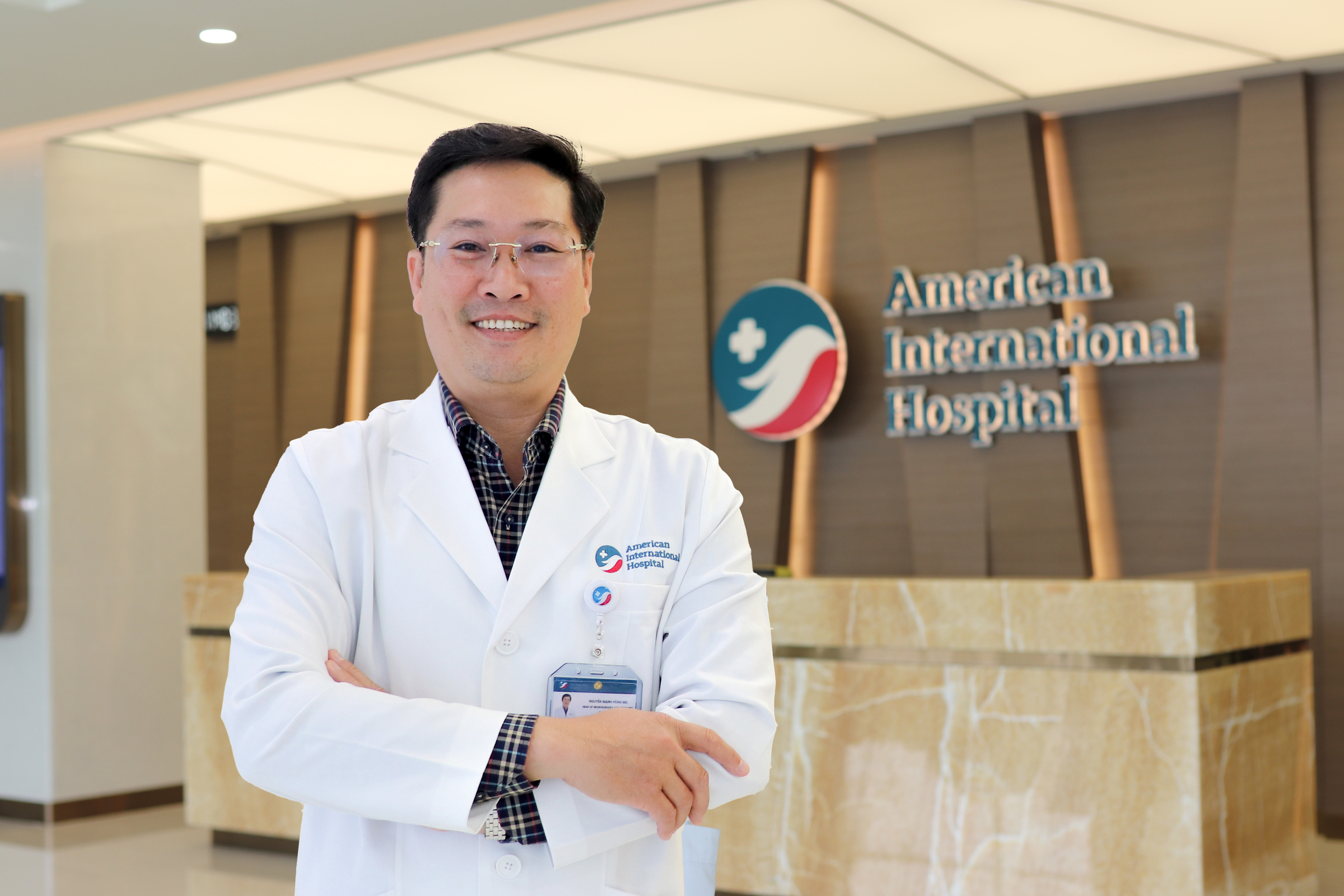 |
Doctor Nguyen Manh Hung, Head of the Neurosurgery and Spine Unit, with over 20 years of experience, trained extensively in Vietnam, South Korea, Germany, and the United States. Photo: AIH
At American International Hospital (AIH), the Neurosurgery and Spine Unit specializes in diagnosing, treating, and caring for complex conditions of the brain, spine, and peripheral nerves. Treatment areas include: traumatic brain injuries (hematomas, skull fractures, brain edema), cerebrovascular diseases such as hemorrhage, infarction, vascular malformations, brain tumors, and brain abscesses. Additionally, it addresses spinal and spinal cord conditions like trauma, herniated discs, degeneration, scoliosis, spondylolisthesis, spinal stenosis, spinal cord tumors, and spinal malformations; along with peripheral nerve injuries due to trauma, surgery, or nerve compression syndromes such as carpal tunnel, cubital tunnel, tarsal tunnel, and nerve tumors.
The Dan
* Patient's name has been changed.
American International Hospital (AIH)
See more information here