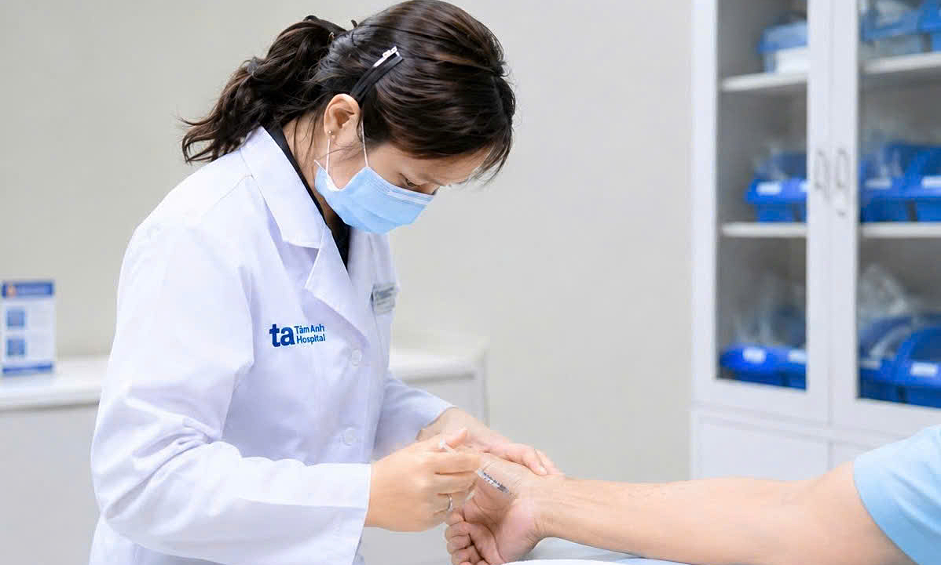
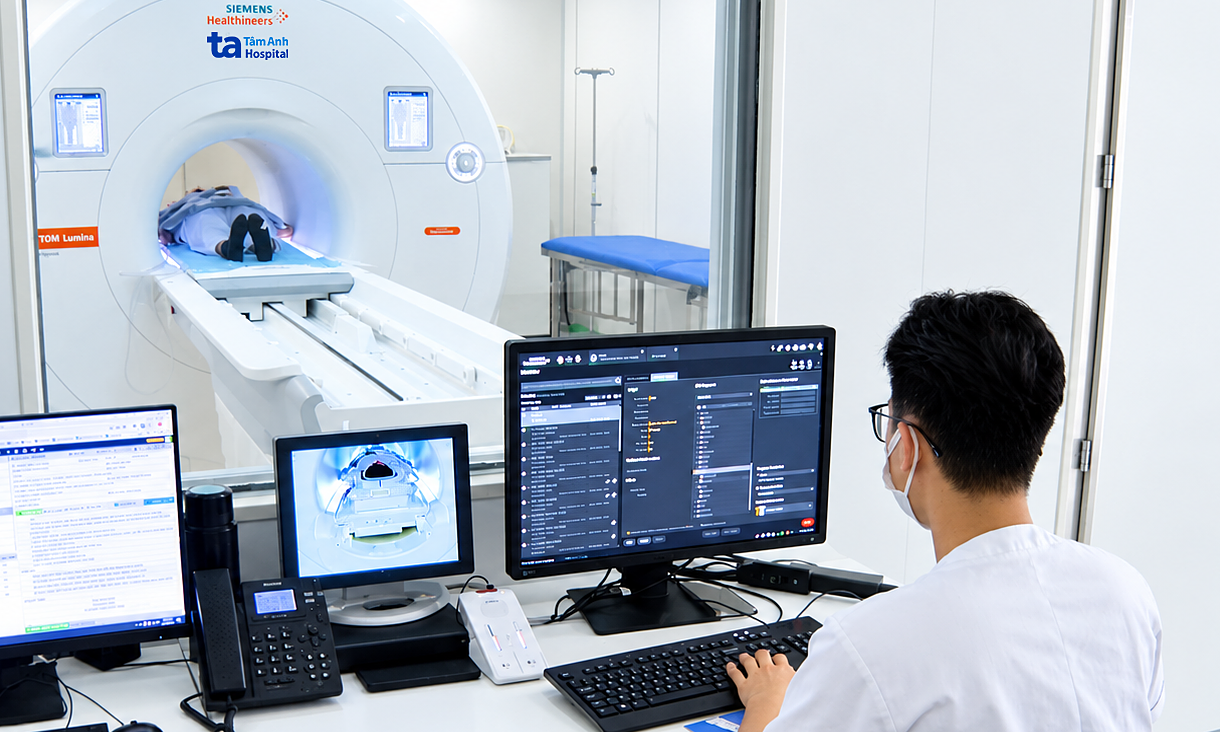
Mr. Hoang frequently experienced daytime sleepiness, persistent sore throat and nasal congestion, mouth breathing, and poor sleep quality. He traveled from Australia to Vietnam for treatment.
Master of Science, Doctor, Level II Specialist Pham Thai Duy, from the Ear, Nose, and Throat Center at Tam Anh General Hospital TP HCM, performed an ear, nose, and throat endoscopy on Mr. Hoang. The examination revealed a deviated nasal septum and enlarged inferior turbinates causing airway obstruction, hypertrophied and inflamed tonsils, swollen soft tissue around the pharynx, and a narrow pharyngeal isthmus.
Obstructive sleep apnea (OSA) occurs when the upper airway repeatedly narrows or collapses during sleep, reducing or stopping airflow for 10 seconds or more. Causes can include nasal and sinus obstructions such as: a deviated septum, nasal polyps, or hypertrophied adenoids; and pharyngeal obstructions like: hypertrophied tonsils or a narrow pharyngeal isthmus. Systemic factors such as obesity and a large neck circumference can also contribute to sleep apnea and snoring.
 |
Doctor Thai Duy consults Mr. Hoang on treatment. *Photo: Tam Anh General Hospital* |
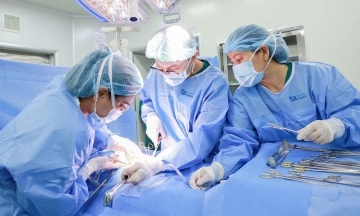
Mr. Hoang underwent "four-in-one" surgery, which included: turbinate reduction, septoplasty, tonsillectomy, and pharyngeal, soft palate, and uvula reconstruction, all performed in a single operation, offering an alternative to daily continuous positive airway pressure (CPAP) machine use.
First, Doctor Duy performed a tonsillectomy using a coblator knife, simultaneously removing excess tissue from the soft palate, uvula, and lateral pharyngeal wall to widen the airway. Under endoscopic visualization, the doctor then performed a partial inferior turbinate resection, preserving the nasal mucosa. Finally, the team detached the mucosal lining on both sides of the septum from the deviated bone, removing the deviated cartilage and bone.
Post-surgery, Mr. Hoang recovered well, experienced minimal pain, and was discharged after two days. During his follow-up appointment, the surgical sites were healing well, and his snoring, nasal congestion, and sore throat had improved. Patients are advised to maintain daily nasal and throat hygiene with physiological saline, avoid smoke and dust, and wear a mask outdoors. After three weeks, with the wounds fully healed, Mr. Hoang flew back to Australia.
 |
Doctor Thai Duy performs turbinate and septum reconstruction surgery on Mr. Hoang. *Photo: Tam Anh General Hospital* |
Snoring can be either physiological or pathological. Physiological snoring occurs occasionally, often when the body is tired after an exhausting day or after consuming alcohol. Pathological snoring, however, typically involves loud, continuous snoring over many nights, leading to fatigue, headaches, sore throats, and daytime sleepiness.
Doctor Duy advises that individuals exhibiting signs of pathological snoring should seek specialized medical evaluation for timely assessment and treatment to prevent the condition from progressing and causing dangerous complications.
Uyen Trinh
| Readers can submit questions about ear, nose, and throat conditions here for doctor consultation. |