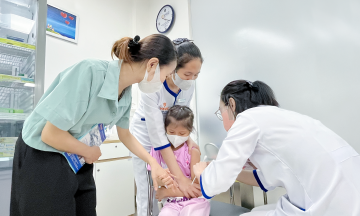
On 14/4, Vo Hai Son, Deputy Director of the Preventive Health Department (Ministry of Health), announced that since early 2026, the country has recorded approximately 26,000 cases of hand, foot, and mouth disease, resulting in eight child deaths, along with nearly 32,000 dengue fever cases, causing four fatalities. Laboratory tests have detected a high circulation rate of the EV71 virus strain, posing a significant risk of severe complications for pediatric patients.
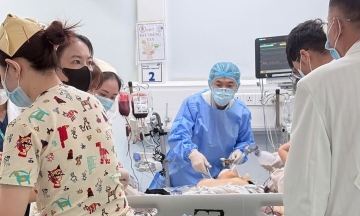
The epidemic is most severe in the South. In TP HCM alone, last week saw an additional 1,347 children contract hand, foot, and mouth disease, a 64% increase over the average of the previous four weeks, pushing the total number of patients since the beginning of the year past 10,000. The surge in hospital admissions has prompted the city's terminal pediatric hospitals to activate high-level epidemic response plans and establish hundreds of additional treatment beds.
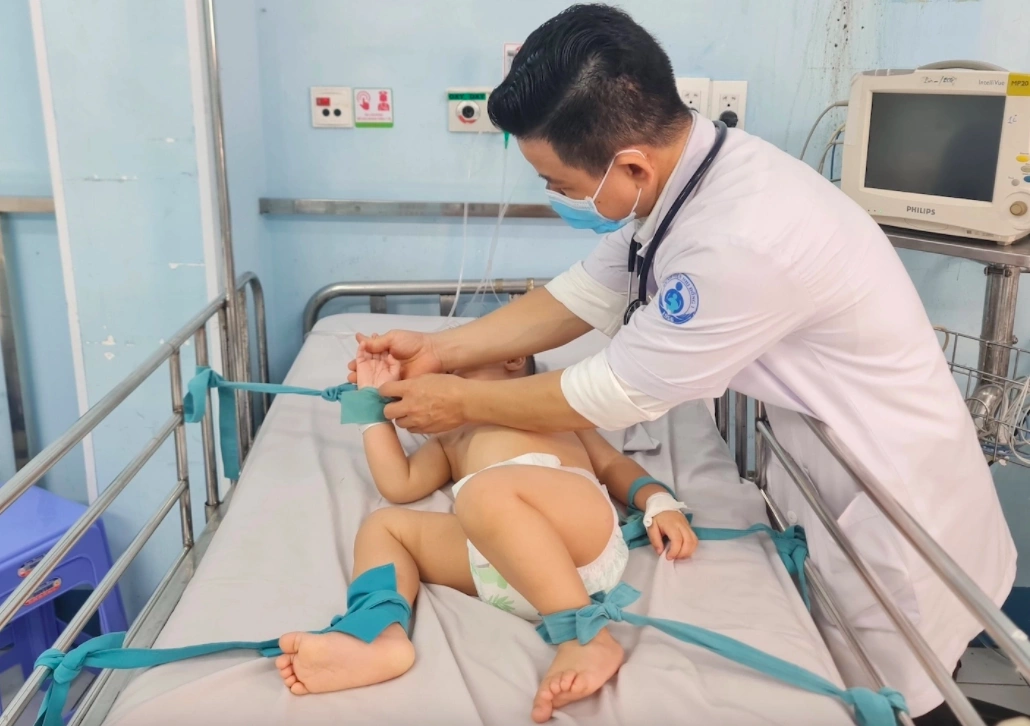 |
Children with severe hand, foot, and mouth disease undergoing treatment at Children's Hospital one, with limbs restrained to prevent agitation. *Le Phuong*
The hot, humid climate and crowded classroom environments create favorable conditions for pathogens to spread. The health sector is collaborating with the education sector to enhance surveillance from hospitals to the community. Mr. Son emphasized that schools and parents need to recognize symptoms early and ensure children stay home from school promptly to curb the risk of outbreak.
Meanwhile, dengue fever has also emerged earlier than its typical rainy season pattern. Mr. Son attributes this to climate change, erratic rainfall, and high population density in urban areas, which accelerate mosquito breeding. Many people still mistakenly believe that Aedes mosquitoes only lay eggs in dirty puddles, when they thrive in clean water containers around homes, such as: flower vases, water trays, and old tires. The community cannot rely solely on chemical spraying, as this method lacks sustainability.
Facing the risk of overlapping epidemics, the health sector stresses the community's vital role in disease prevention. Each household must immediately and weekly implement measures such as: removing stagnant water containers around the house, tightly covering water storage devices, and regularly changing and scrubbing containers. Individuals should also sleep under mosquito nets, wear long-sleeved clothing to prevent mosquito bites, and cooperate with authorities when managing outbreaks.
For hand, foot, and mouth disease, the crucial principles are early detection, timely isolation, and maintaining personal and environmental hygiene. "Small actions, if performed regularly and in sync, will determine the effectiveness of epidemic prevention," Mr. Son said.
Le Nga