Mr. Can, 73, was diagnosed with mild aortic valve stenosis and regurgitation several years ago. He had been receiving medical treatment and regular check-ups. For the past six months, he experienced shortness of breath and chest tightness, prompting him to visit Tam Anh General Hospital, Ho Chi Minh City, for examination.
Professor Doctor Vo Thanh Nhan, Director of the Interventional Cardiology Center, diagnosed Mr. Can with progressive aortic valve stenosis, complicated by heart failure with preserved ejection fraction, a thickened and enlarged left ventricle, and two enlarged atria. The patient was elderly, frail, and had multiple underlying conditions, including hypertension, dyslipidemia, aortic valve regurgitation, and stage three kidney failure.
According to Professor Nhan, this case presented a high risk of hypotension, arrhythmia, severe kidney failure, or even sudden death during surgery. The medical team decided to perform transcatheter aortic valve implantation (TAVI), a minimally invasive valve replacement technique.
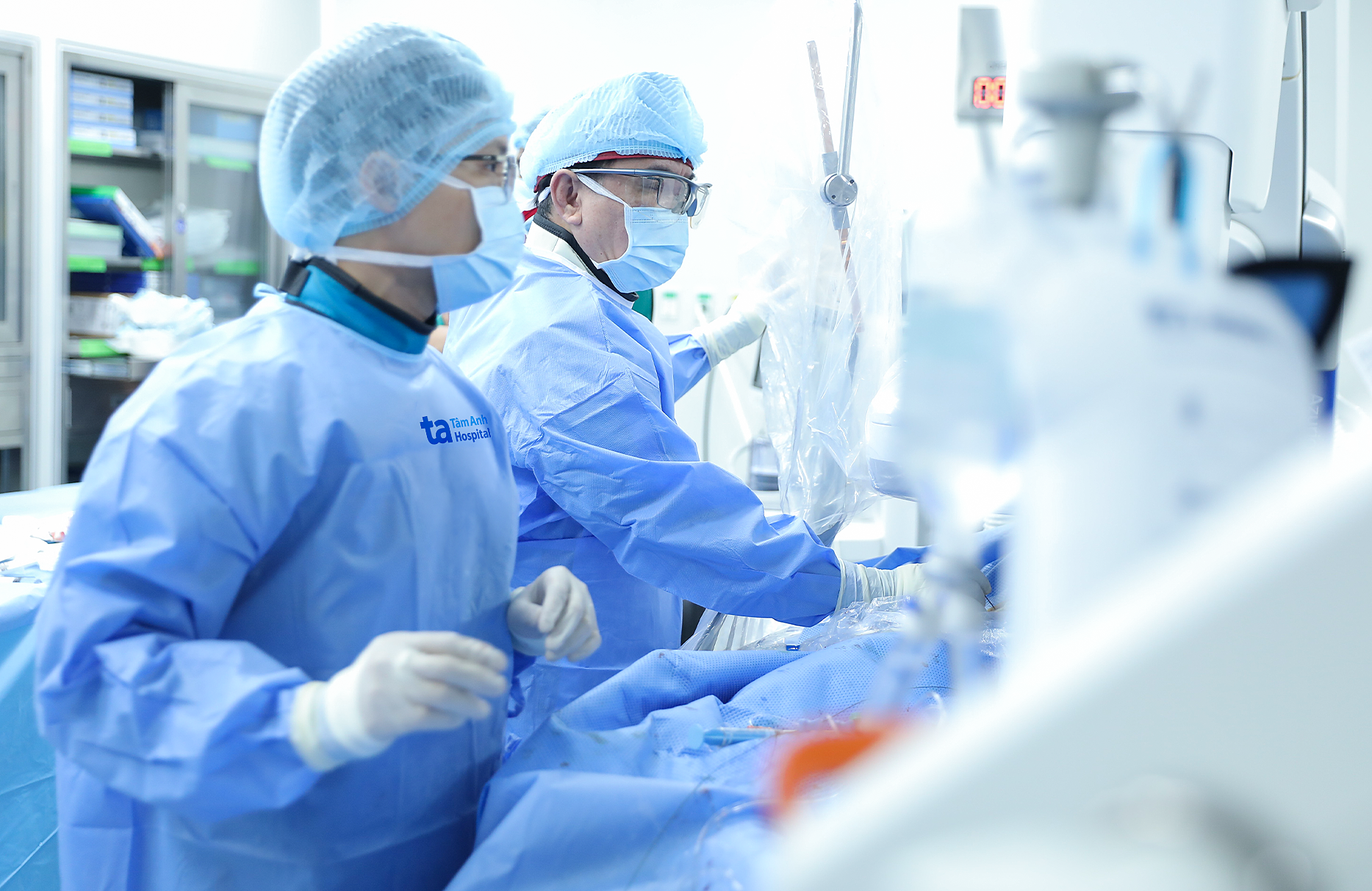 |
Professor Nhan (right) and his team performed transcatheter aortic valve replacement for the patient. *Photo: Tam Anh General Hospital*
Mr. Can received local anesthesia and remained conscious and pain-free throughout the procedure. Doctors selected a Sapien 3 valve, which utilizes balloon-expandable technology and a flexible catheter that can easily navigate the aortic arch, ensuring precise valve placement.
Mr. Can's kidney function was impaired, with a glomerular filtration rate of only 35 ml/minute. This posed a high risk of severe kidney damage if a large amount of contrast agent was used. By carefully timing its application, the team used only about 50 ml of contrast agent, approximately one-third of the amount typically used in standard procedures, thereby preserving the patient's kidney function.
The new valve was accurately positioned, leading to an improvement in myocardial contractility and enhanced blood circulation throughout the body. Two days after the intervention, the patient experienced significant relief from shortness of breath, felt less fatigued, and was discharged.
Aortic valve stenosis is a common heart valve disease in older adults. When the valve is severely narrowed, the heart must work excessively to pump blood to the body, eventually leading to heart failure, arrhythmia, stroke, or sudden death if not treated promptly.
According to Professor Nhan, open heart surgery for aortic valve replacement was previously the sole treatment for symptomatic aortic valve stenosis. However, about one-third of patients could not undergo surgery due to multiple comorbidities such as heart failure, kidney failure, chronic obstructive pulmonary disease (COPD), or diabetes. TAVI is a minimally invasive technique that requires only a 6-8 mm incision in the femoral artery, avoiding a sternotomy. This results in less pain, minimal blood loss, and faster recovery, making it suitable for elderly patients with multiple underlying conditions or those not healthy enough for traditional surgery.
In addition to medication and regular follow-up appointments as advised by their doctor, patients who undergo TAVI need to maintain a healthy lifestyle, a balanced diet, regular exercise, adequate sleep, and manage underlying conditions to prevent restenosis.
Thu Ha
* Patient's name has been changed
| Readers can submit questions about cardiovascular diseases here for doctors to answer |