Ho Chi Minh City is developing its healthcare system towards a "multi-polar" model, aiming to establish a "wall-less hospital" network across the city. This initiative, explained by Associate Professor, Doctor Tang Chi Thuong, Director of the Ho Chi Minh City Department of Health, seeks to distribute medical examination and treatment capabilities evenly. The primary goal is to ensure that residents in any area can access high-quality healthcare services within a reasonable distance.
For many years, Ho Chi Minh City concentrated resources on major hospitals in its inner districts. While this model was effective when the urban area was smaller, fostering several leading medical centers nationwide, it has become unsustainable. As the city expanded, patients faced long commutes to access specialized services, leading to increased traffic congestion, hospital overcrowding, and higher social costs.
To address these challenges, the city is shifting its strategy from concentrating resources in one area to developing robust medical hubs at its gateways and new growth zones, according to Dr. Thuong.
"This does not mean every locality will build identical hospitals or equally divide doctors and equipment," explained the city's top health official. "Instead, each area must be capable of meeting the majority of its residents' common medical needs."
Under this new direction, regional hospitals will be equipped with foundational specialties, including emergency care, intensive care, internal medicine, surgery, obstetrics, pediatrics, diagnostic imaging, and laboratory services. This ensures that residents receive timely treatment locally for most conditions. Building on this foundation, each medical hub will further develop specialized areas tailored to its strengths, such as cardiology, oncology, ophthalmology, rehabilitation, or traditional medicine.
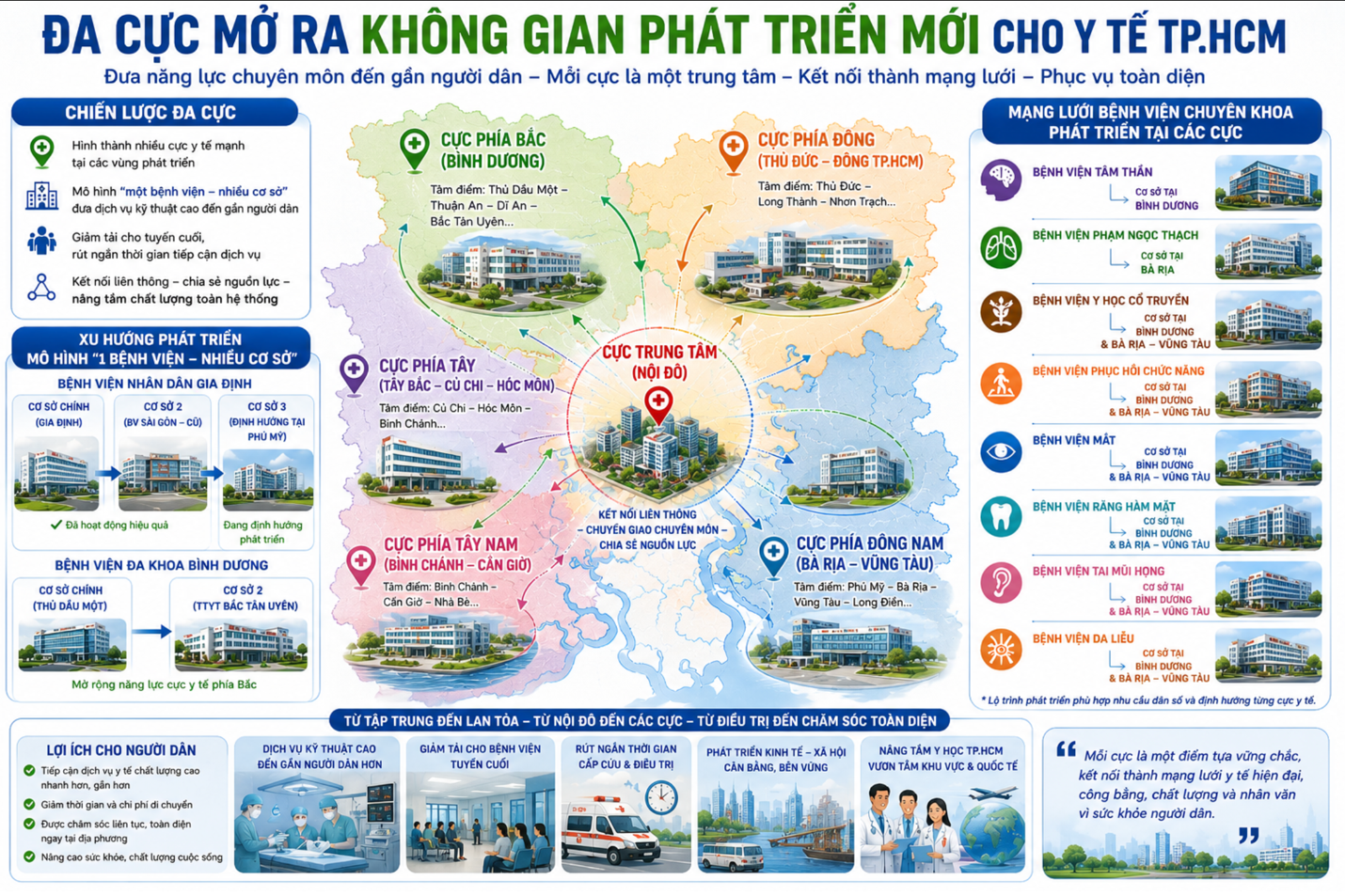 |
The strategic model for developing Ho Chi Minh City's multi-polar healthcare system. Photo: Ho Chi Minh City Department of Health |
Dr. Thuong emphasized that each developing hub will encompass not just one large hospital, but a comprehensive ecosystem. This includes health stations, community healthcare teams, pre-hospital emergency systems, regional general hospitals, specialized departments, and support from tertiary hospitals. This integrated approach allows residents to manage their health from within their community, receive treatment at appropriate facilities, and obtain swift referrals for advanced procedures when necessary.
Hospitals will operate not as isolated entities but as a unified network. Tertiary hospitals will serve as specialized cores, facilitating knowledge transfer, training, doctor rotations, and remote consultations for regional hospitals.
With electronic health records, electronic medical records, and linked patient data, individuals can receive initial consultations at health stations, undergo treatment at regional hospitals, and then be referred to specialized hospitals, all while their complete medical information is seamlessly transferred. This continuity prevents doctors from having to start anew, thereby shortening diagnosis times, reducing duplicate tests, and enhancing treatment effectiveness.
"This connectivity allows the healthcare system to operate as a 'wall-less hospital' across the entire city," Dr. Thuong stated.
Initial steps towards this model are already underway. Many gateway hospitals, such as the regional general hospitals in Thu Duc, Cu Chi, and Hoc Mon, along with regional hospitals in Binh Duong, Ba Ria, and Vung Tau, are receiving specialized support from tertiary hospitals to enhance their treatment capabilities.
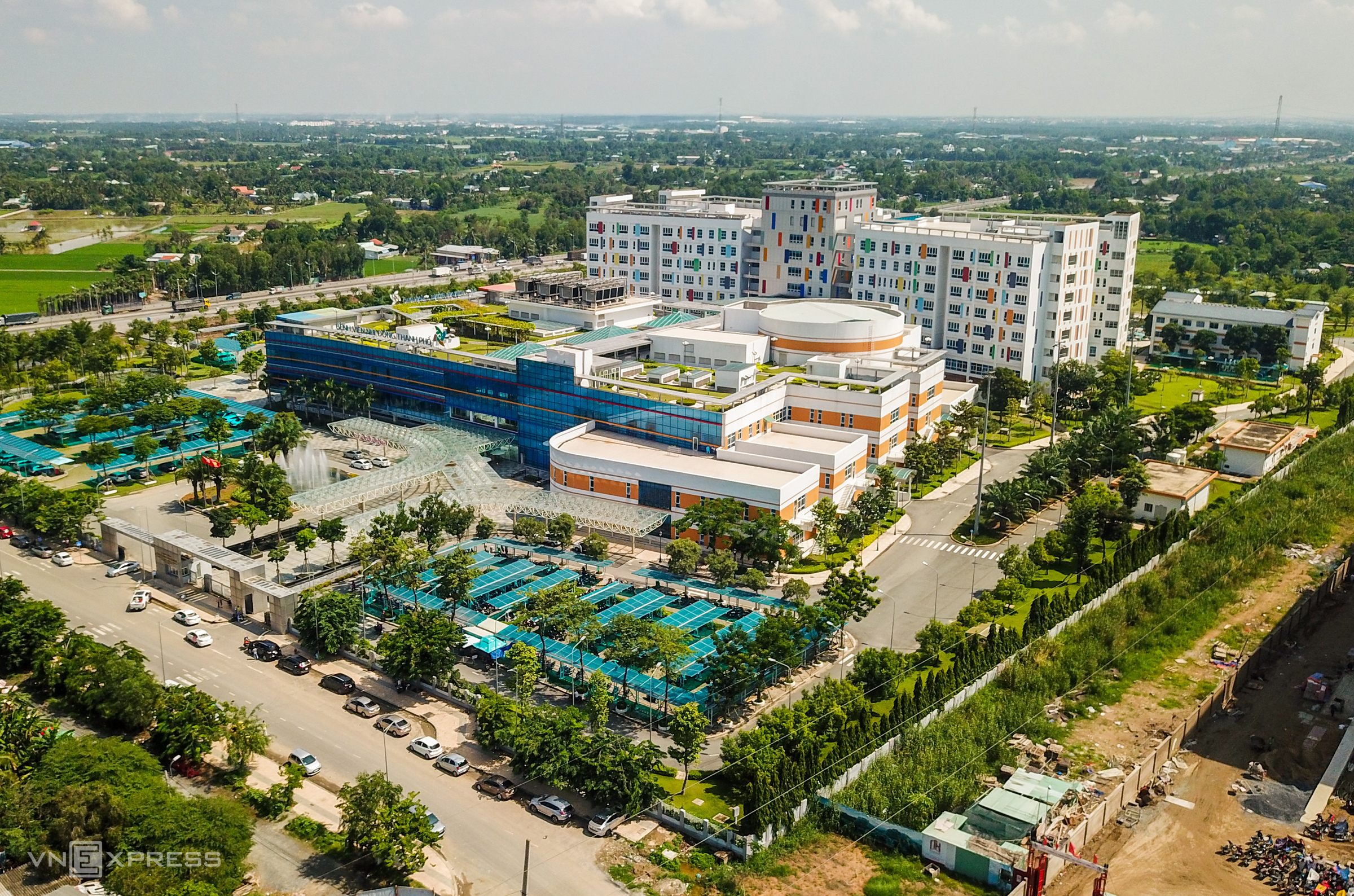 |
Children's Hospital of Ho Chi Minh City is located at the western gateway of Ho Chi Minh City. Photo: Quynh Tran |
Concurrently, tertiary hospitals are also expanding under a "one hospital - multiple facilities" model. Following the operation of Facility 2 of Nhan Dan Gia Dinh Hospital at the former Sai Gon Hospital, the unit plans to build Facility 3 in the Phu My area. Binh Duong General Hospital is also developing Facility 2 at Bac Tan Uyen Medical Center. Many specialized hospitals, including those for mental health, tuberculosis and lung diseases (Pham Ngoc Thach), ophthalmology, odonto-maxillofacial, otolaryngology, and dermatology, also have plans to open facilities in newly developing areas.
Dr. Thuong anticipates that in the long term, residents will no longer need to travel tens of kilometers to access specialized care in central areas. Instead, high-tech services will gradually become available closer to their homes, allowing tertiary hospitals to focus on treating the most complex cases.
Le Phuong