Dr. Nguyen Van Vinh Chau, Deputy Director of the Ho Chi Minh City Department of Health, announced a large-scale mobile screening campaign scheduled from March to September. This initiative includes 100 days of mobile X-ray screening, set to commence in late March across wards such as Tan Nhon Phu, Long Truong, and Linh Xuan. The screening protocol focuses on two key strategies: proactive community screening to identify infection sources and treatment for latent tuberculosis.
Individuals identified as high-risk, including those with a prolonged cough, underlying health conditions, or contact with a tuberculosis patient, will undergo lung X-rays. These will be conducted using new-generation handheld devices featuring integrated artificial intelligence, providing immediate results on-site. If a suspicious finding occurs, sputum samples will be collected for Xpert molecular biological testing to confirm the presence of tuberculosis bacteria and assess for drug resistance. Furthermore, participants will also receive blood pressure measurements and rapid blood sugar tests.
Upon detection of a positive case, healthcare professionals will conduct an investigation of close family contacts. Even if these contacts show normal X-ray and sputum results, they will still undergo blood tests to identify incubating tuberculosis bacteria. Should these tests yield a positive result, individuals will receive treatment for latent tuberculosis to interrupt the chain of transmission.
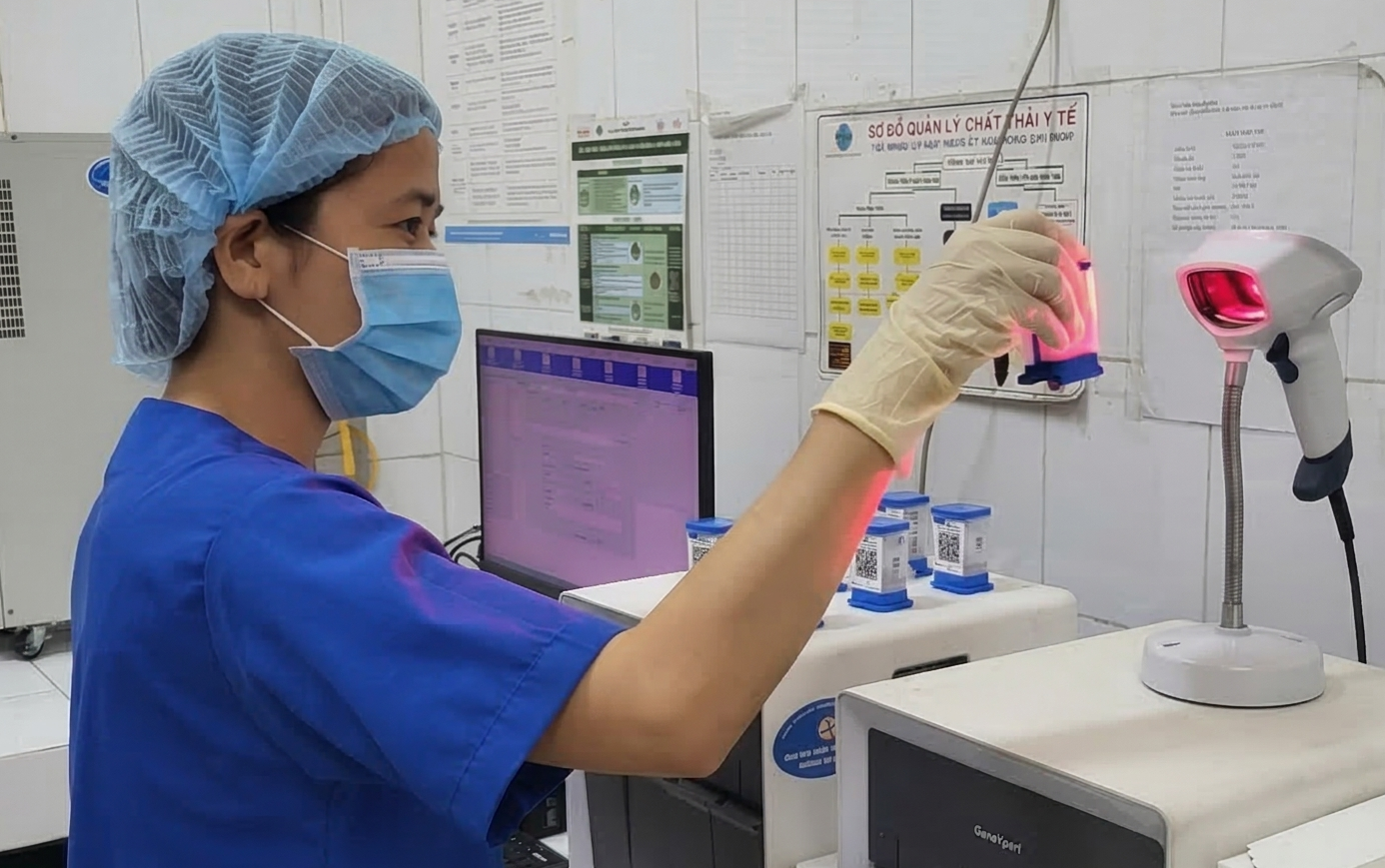 |
Tuberculosis testing. Photo: Ho Chi Minh City Center for Disease Control |
This program is spearheaded by Pham Ngoc Thach Hospital, in collaboration with the Ho Chi Minh City Center for Disease Control, Pham Huu Chi Lung Hospital, and local health stations. Support for the initiative comes from the US Centers for Disease Control and Prevention (CDC). The campaign's launch addresses the Ho Chi Minh City health sector's estimate of tens of thousands of tuberculosis cases remaining undetected within the community.
Tuberculosis continues to pose a significant public health burden in Vietnam. The current detection rate for new and relapsed cases stands at approximately 105,4 cases per 100,000 residents. This contrasts with national estimates of around 184,000 new cases annually, which equates to 182 cases per 100,000 population.
According to Dr. Chau, this substantial gap in detection arises from the often-vague clinical symptoms in the early stages of the disease. Relying solely on passive screening, where individuals self-present to healthcare facilities, would result in numerous infectious cases remaining undetected within the community. Therefore, expanding proactive screening is essential for early identification, prompt treatment, and ultimately reducing sources of infection.
Tuberculosis is an airborne disease that is fully curable with early detection and adherence to proper treatment protocols. While tuberculosis bacteria predominantly target the respiratory system, they can also affect various other organs, potentially leading to severe complications. Vietnam reports approximately 182,000 new tuberculosis cases each year, including 9,900 cases of drug-resistant tuberculosis and about 11,000 deaths. This mortality rate is more than double the number of fatalities from traffic accidents.
The Ho Chi Minh City Department of Health urges residents to actively participate in screening and to seek medical attention promptly if they experience suspicious symptoms such as a prolonged cough, unexplained weight loss, low-grade fever in the afternoon, or night sweats. This coordinated effort is anticipated to facilitate the early detection of hundreds of cases, making a significant contribution to the city's goal of eradicating tuberculosis by 2035.
Le Phuong