First-time mothers often find it difficult to distinguish between Braxton Hicks contractions and true labor contractions. As labor approaches, uterine contractions become regular, occurring every 5-10 minutes and lasting 30-60 seconds each. During this phase, the mother's cervix begins to dilate, and the mucous plug detaches and is expelled. This discharge can be clear or slightly cloudy, sometimes containing a small amount of blood, or it may appear as pink or light red spotting.
In addition to these signs, the pregnant woman's water may break, either gushing or trickling. Amniotic fluid can be clear or cloudy; however, if it turns green, yellow, or has an odor, the expectant mother should go to the hospital immediately.
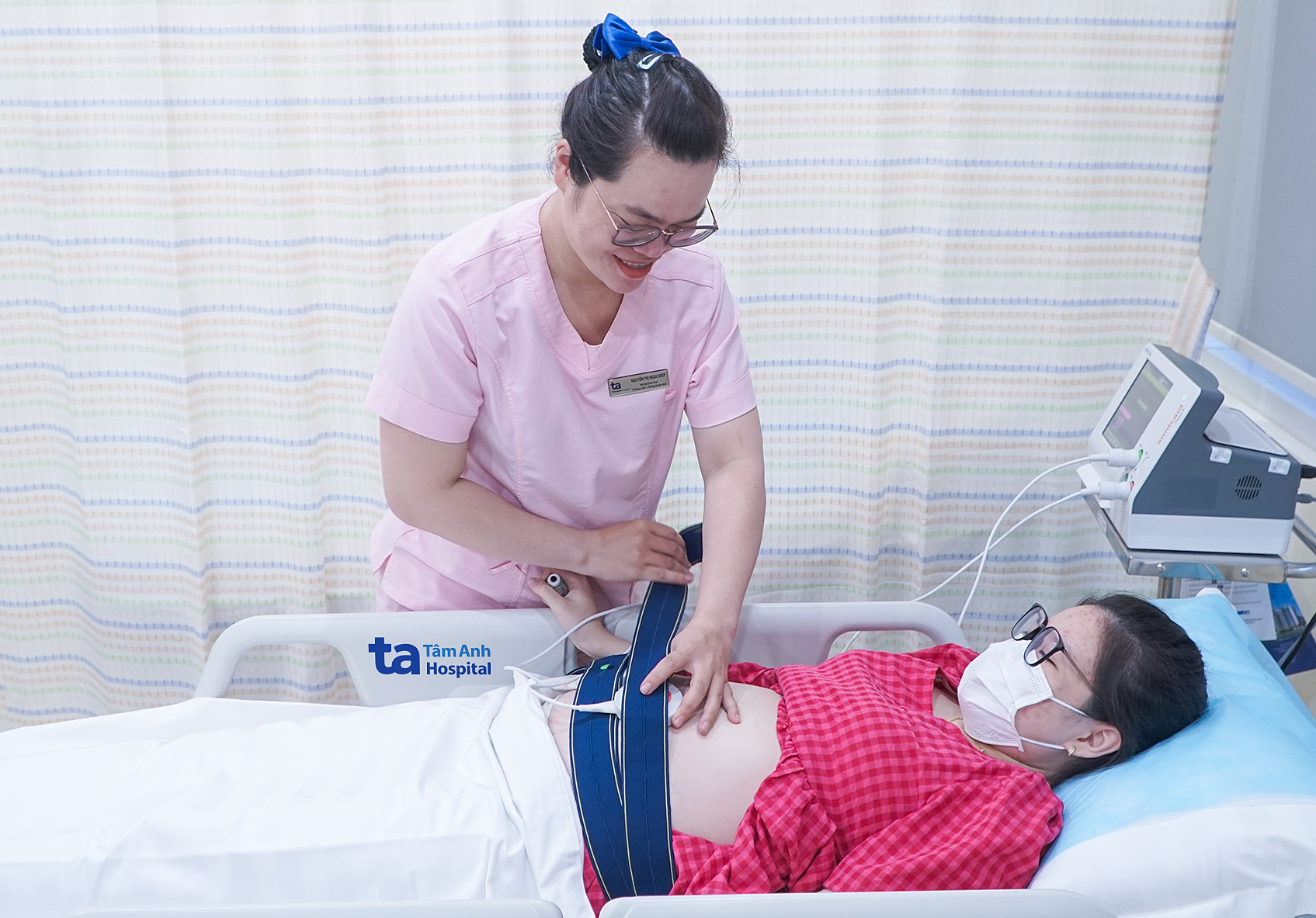 |
A pregnant woman's contractions are monitored at Tam Anh General Clinic District 7. Photo: Minh Tam. |
Pregnant women may experience lower back or lower abdominal pain, which accompanies contractions and radiates from the back to the front of the abdomen. As the fetus descends into the pelvis, the mother's abdomen drops, increasing pelvic pressure. She may feel an urge to push or frequent urination due to bladder compression; some may also experience nausea or diarrhea. If contractions recur regularly every 5-10 minutes, water breaks, bleeding occurs, fetal movement decreases, or abdominal pain intensifies, the pregnant woman should go to the hospital.
Currently, your pregnancy is at 37 weeks; you should attend your scheduled appointments, monitor any bodily changes, and prepare your hospital bag. Upon experiencing signs of labor, you should go to the hospital immediately for timely support.
Dr. Nguyen Thi Minh Phuong
Obstetrics and Gynecology Center
Tam Anh General Hospital System, TP HCM