Rising air pollution poses numerous health risks, particularly for the eyes, which are constantly exposed to the environment. According to Doctor Le Thanh Huyen, from the High-Tech Eye Center at Tam Anh General Hospital Hanoi, microscopic dust particles from traffic, construction, and industrial activities suspended in the air easily adhere to the eyeball's surface. Pollen and mold spores also become more active in poor air quality and high humidity, further increasing the risk of allergic reactions. The combination of these factors leads to various abnormal eye symptoms.
Itchy and red eyes
Fine dust particles and pollutants clinging to the eyeball's surface trigger inflammatory responses, causing itching, burning, and redness. These symptoms are often more pronounced on days with high fine dust levels or after prolonged outdoor activity.
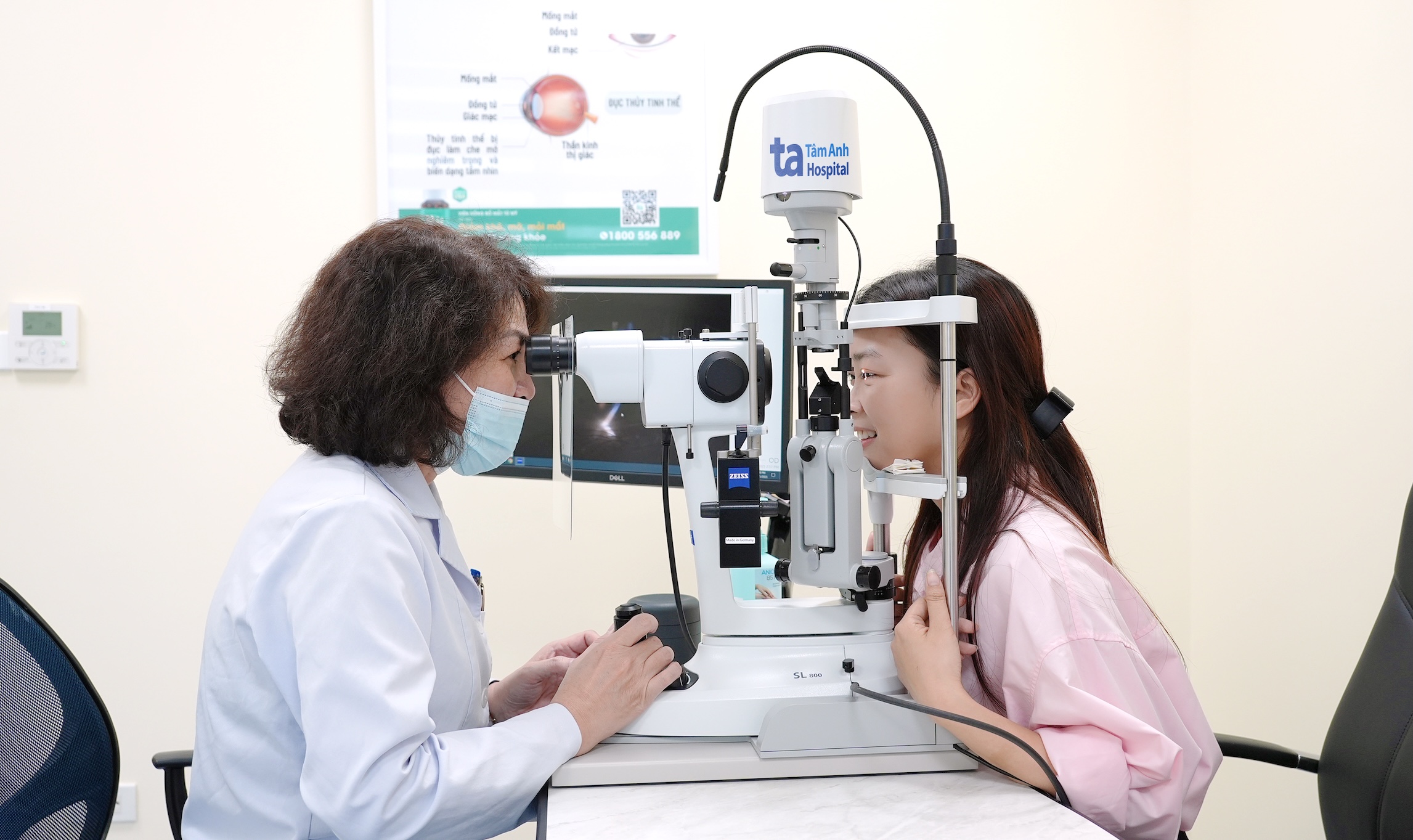 |
A doctor examines a woman's eyes. Illustrative photo: Tam Anh General Hospital. |
A doctor examines a woman's eyes. Illustrative photo: Tam Anh General Hospital.
Watery eyes
This is a natural response as the eyes attempt to wash away dust and irritants. Smoke and dust can lead to continuous tear production, causing a stinging sensation, difficulty opening the eyes, or general discomfort.
Dry eyes
Doctor Huyen explains that fine dust can directly impact the tear film, causing tears to evaporate quickly or reducing their quality. This condition results in sensations of dryness, grittiness, and burning, leading to rapid eye fatigue, especially for individuals working outdoors.
Blurred vision
Air pollution can make the corneal surface easily irritated, leading to transient blurred vision. Individuals may notice difficulty focusing and less clear images, particularly at the end of the day or after exposure to polluted environments.
To minimize the impact on eyes, individuals can adopt simple measures: wear sunglasses or dust goggles outdoors to limit UV rays and prevent fine dust particles from adhering to the eye surface. On days when pollution levels are high, it is advisable to limit outdoor activities and avoid travel during peak hours. Using indoor air purifiers and regularly changing filters helps improve indoor air quality. Maintaining a healthy lifestyle, incorporating antioxidant-rich foods, and avoiding smoking also contribute to eye protection.
Doctor Huyen advises individuals experiencing vision discomfort to undergo an eye examination to rule out damage caused by dust and smoke. For eye discomfort, artificial tears or anti-allergy medication may be used as prescribed by a doctor to soothe and wash away fine dust; self-medication should be strictly avoided.
Thu Giang
| Readers can send questions about ophthalmic diseases here for doctors to answer. |