The natural conception rate for a healthy couple during each cycle is approximately 20-25%. Thus, not conceiving within the first few months is normal. However, if the period of trying to conceive becomes prolonged, the couple should seek medical consultation to identify any underlying causes and determine a suitable treatment plan.
The optimal time for a fertility consultation primarily depends on the woman's age. Women under 35 should seek an evaluation if they have engaged in regular, unprotected intercourse for over 12 months without conceiving.
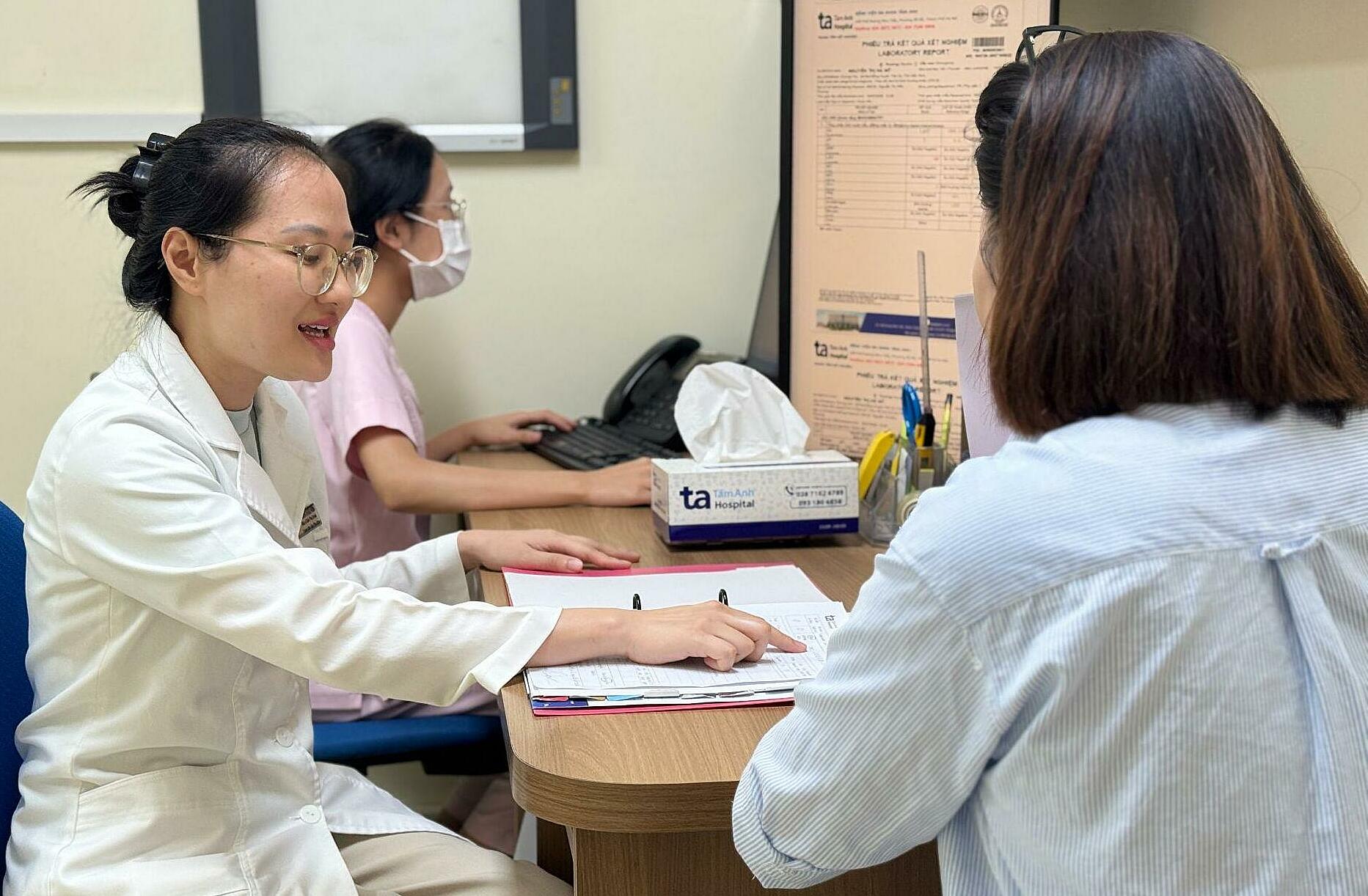 |
Doctor Phuong consults a patient. *Illustrative photo: Tam Anh General Hospital* |
For women aged 35 to under 40, consultation is advisable after six months of unprotected intercourse without conception. At this age, both the quantity and quality of eggs typically begin to decline noticeably, which can reduce the chances of natural conception.
Women aged 40 and older should seek an evaluation immediately when planning a pregnancy, rather than waiting for several months. After the age of 40, ovarian reserve and egg quality decline rapidly. Additionally, the risk of chromosomal abnormalities in embryos increases. Early consultation allows doctors to assess fertility potential and recommend appropriate options.
Certain situations necessitate early consultation, irrespective of how long a couple has been trying to conceive. A woman should undergo an early evaluation if she experiences irregular periods, amenorrhea, or has a history of conditions such as endometriosis, uterine fibroids, pelvic inflammatory disease, or previous uterine or ovarian surgery. Early assessment is also crucial for women who have experienced two or more miscarriages, or who conceived previously but have been unable to conceive again after several years.
Both partners should undergo fertility evaluation, as sperm abnormalities account for nearly 50% of infertility causes. Simultaneous examinations provide a comprehensive assessment of reproductive health, preventing overlooked factors and potentially shortening treatment duration.
For men, a semen analysis is typically ordered during the initial visit to evaluate sperm count, motility, and morphology. Men experiencing erectile dysfunction, abnormal ejaculation, testicular pain or swelling, a history of testicular injury, or underlying health conditions such as diabetes or obesity should seek early consultation.
For women, the doctor will take a medical history, conduct a gynecological examination, and perform an ultrasound of the uterus and ovaries. Depending on individual circumstances, further evaluations may include ovarian reserve assessment, ovulation tracking, fallopian tube patency tests, or hormonal, genetic, and diagnostic imaging.
To ensure accurate examination results, both partners should prepare in advance. The male partner should abstain from ejaculation for three to five days before the semen analysis. The female partner should avoid using vaginal medications or douching within 24 to 48 hours prior to the examination. Women currently using hormonal medications or contraception must inform their doctor. Both partners should also bring any previous examination and treatment records, if available.
Dr. CKI Nguyen Thi Kieu Phuong
Obstetrics and Gynecology Center
Tam Anh General Hospital Hanoi
| Readers can submit questions about obstetrics and gynecology here for a doctor's response. |