Answer:
Iron is essential for producing hemoglobin, which transports oxygen, and supports the development of the brain and nervous system. Premature babies miss the main period of iron accumulation during the last three months of pregnancy, especially weeks 36-40. This leads to lower iron reserves in their bodies, resulting in a higher iron requirement compared to full-term infants.
In the initial postpartum period, the bone marrow begins its blood-forming task but does not operate at maximum capacity. The rate of red blood cell destruction is faster than the bone marrow's production rate, causing physiological anemia in premature infants. Breast milk contains little iron and often does not meet the baby's developmental needs. Some low-birth-weight or severely ill infants who initially receive intravenous nutrition may also lack sufficient iron.
Without adequate supplementation, babies can develop iron deficiency or iron deficiency anemia, which reduces oxygen-carrying capacity and risks affecting neurological development.
For premature infants, iron supplementation is typically maintained until approximately 12 months of age. The duration of treatment and dosage depend on gestational age, birth weight, diet, and blood test results.
A doctor will regularly monitor hemoglobin and ferritin levels in the blood to assess the baby's anemia and iron reserves, especially in groups with slow weight gain or a history of blood transfusions. Parents should not arbitrarily stop medication or adjust dosages based on the amount of milk the baby drinks daily.
Specifically, a baby who is taking iron but still has anemia, like your child, needs to be re-evaluated by a doctor, rather than simply extending or self-increasing the iron dose. Anemia in premature infants is not always due to iron deficiency; it can be related to blood loss, inflammation, hematological conditions, or other causes.
After overcoming the resuscitation phase, premature babies still require regular monitoring for growth, nutrition, anemia status, and other health issues related to prematurity. Iron, vitamin, and micronutrient supplementation are adjusted according to weight, feeding regimen, and test results at different times.
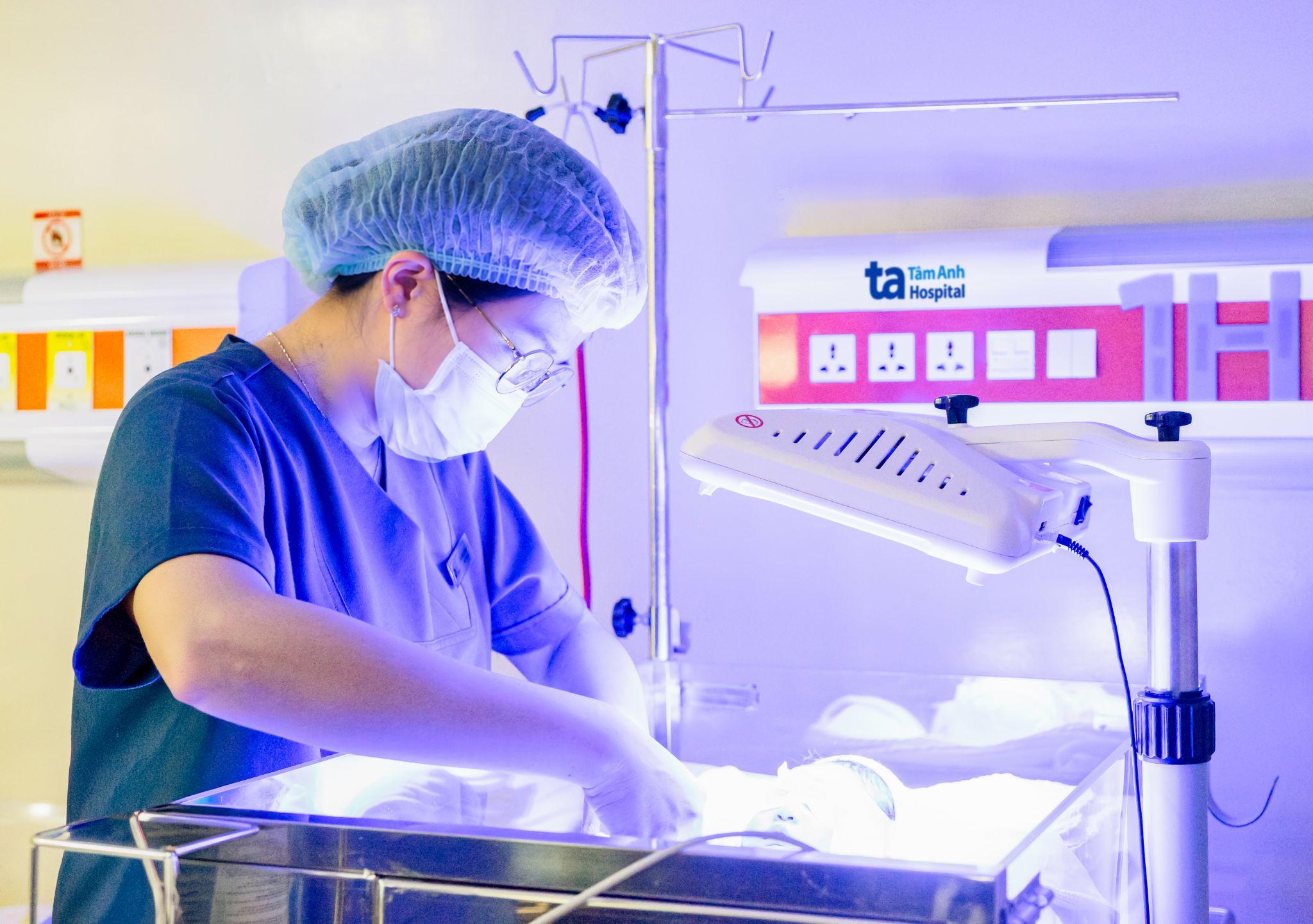 |
Premature babies receive phototherapy for jaundice and anemia at the Neonatal Intensive Care Unit (NICU). Illustration: Tam Anh General Hospital |
You should give your baby iron on an empty stomach (30-60 minutes before feeding) or between two feedings. Do not give iron immediately with milk, as calcium in milk reduces iron absorption. When a baby takes iron, their stool may turn dark green or dark gray, which is a normal and not concerning reaction. Parents should bring their child for follow-up appointments as scheduled so the doctor can perform blood tests and adjust the iron dose to match the baby's weight gain.
While iron deficiency impairs oxygen transport and affects the nervous system, iron excess also poses serious risks, such as gastrointestinal damage, acute iron poisoning, increased risk of infection, or interference with the absorption of other minerals. Therefore, the dosage and duration of iron use must be prescribed by a doctor specifically for each child. Parents should not self-increase the dose if the child is still anemic or stop the medication themselves when test results improve.
For your baby, born prematurely at 34 weeks, one month old, and still anemic, you should take him to a neonatologist for a re-assessment to determine the extent and cause of the anemia, and to review his nutritional regimen, weight gain rate, and current iron dosage. If your baby exhibits symptoms such as lethargy, refusing to feed, continuous vomiting, rapid breathing or chest retractions, pale skin, reduced urination, diarrhea, or blood in stools, you need to take him to the hospital immediately.
Doctor of first-degree specialization Nguyen Thi Kim Hoc
Neonatal Center
Tam Anh General Hospital, TP HCM
| Readers can submit questions about children's health here for doctor's answers. |