Dr. Duong Pham Van Thanh, from the Emergency Department at Tam Anh General Hospital, TP HCM, reported that the patient experienced shortness of breath, a sharp pain in the right side of his chest, and profuse sweating. Phi had no prior history of heart disease or risk factors such as diabetes or dyslipidemia. However, he smoked half a pack of cigarettes daily for over four years.
An electrocardiogram revealed signs of myocardial damage and myocardial ischemia. A cardiac ultrasound showed severely reduced heart contractile function, with an ejection fraction (EF) of 25% (normal is 50% or higher). His left heart chamber was dilated, and he exhibited arrhythmias. Doctors diagnosed the patient with acute myocardial infarction.
The medical team activated the acute myocardial infarction emergency protocol (STEMI/NSTEMI code). After consulting with specialists from the Interventional Cardiology Center, an emergency coronary angiogram was ordered to assess and locate the site of the damage.
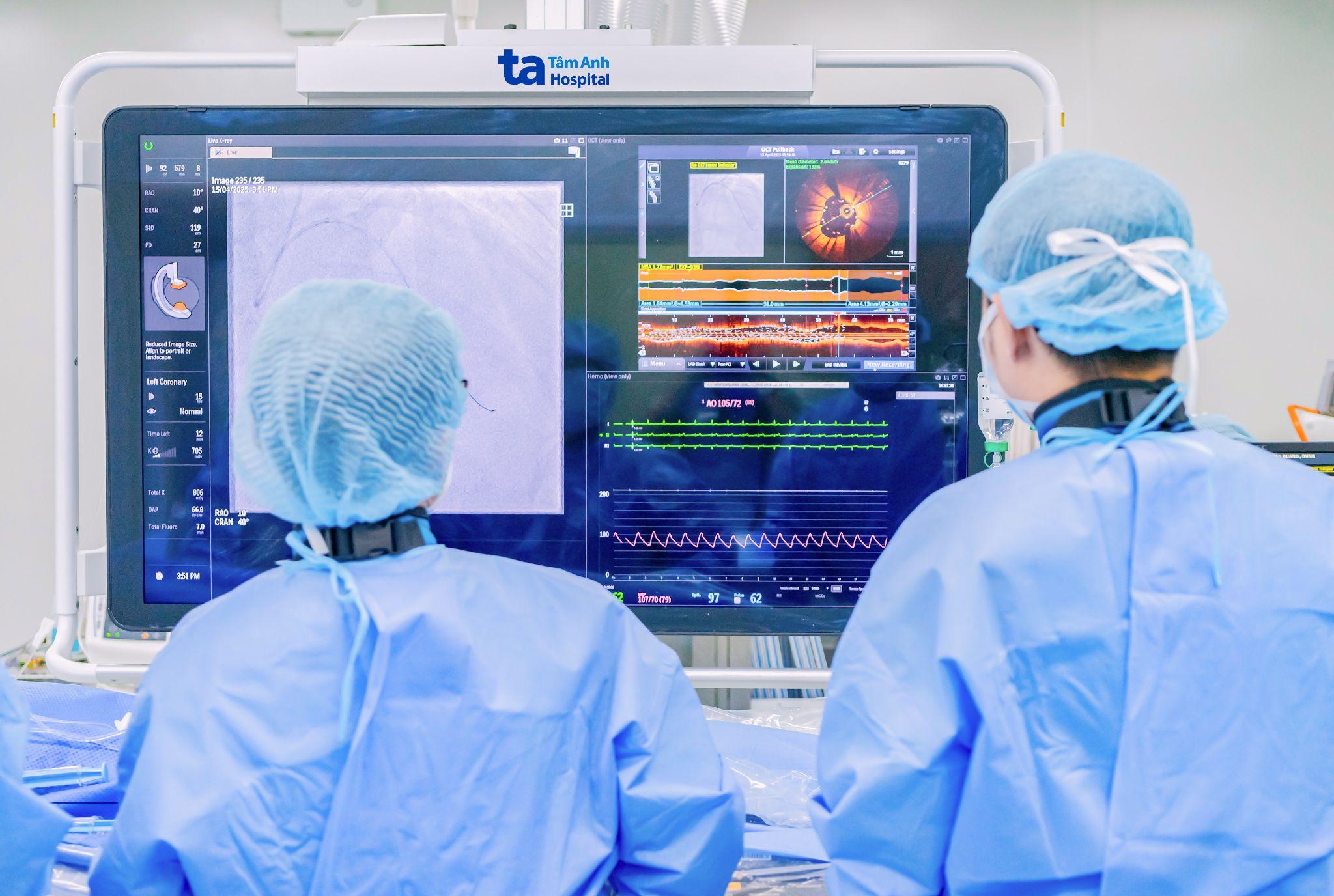 |
Doctors implanted stents to widen the heart's blood vessels for the patient, supported by optical coherence tomography (OCT). *Tam Anh General Hospital* |
Dr. Tran Trung Kien from the Interventional Cardiology Center stated that the coronary angiogram revealed a complete blockage in the patient's circumflex artery and a 90% narrowing in the proximal segment of the left anterior descending artery. This severe blockage caused critical myocardial ischemia. Without prompt revascularization, most of the damaged heart muscle would not recover, leading to progressive heart failure, arrhythmias, or even sudden cardiac death.
Within 30 minutes of admission, Phi underwent stent placement to re-open the circumflex artery and widen the left anterior descending branch. With the aid of high-resolution optical coherence tomography (OCT), which magnifies blood vessel images 10 times more than conventional techniques, doctors could clearly visualize atherosclerotic plaques. This allowed them to select appropriate guidewires, balloons, and stents for the patient.
Two stents were sequentially placed in the blocked segments, maximally expanded, and successfully restored blood flow to the patient's heart. Post-procedure OCT imaging confirmed that the stents were well-expanded, firmly against the vessel walls, and showed no dissection at either end.
Following the procedure, Phi no longer experienced chest pain or shortness of breath. He could walk and resume normal activities, and was discharged after three days.
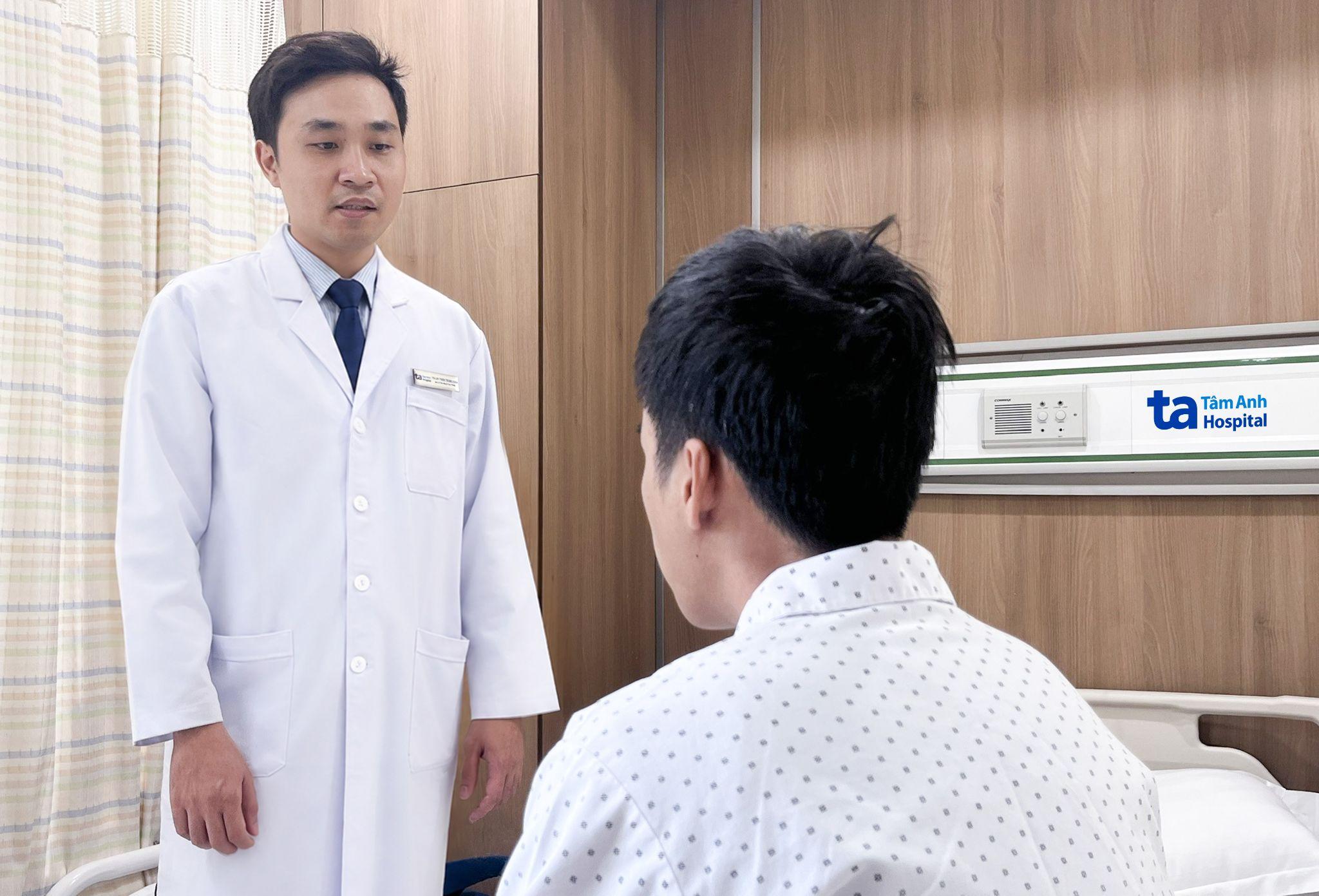 |
Dr. Kien advised the patient on a healthy lifestyle to prevent recurrent myocardial infarction. *Tam Anh General Hospital* |
Dr. Kien noted that myocardial infarction can occur in individuals aged 20-30, even without prior diagnoses of risk factors such as hypertension, diabetes, or other cardiovascular diseases. Smoking, including e-cigarettes, is a leading risk factor. Nicotine and other toxins in tobacco smoke can damage the vascular endothelium, promoting atherosclerosis, vasoconstriction, and thrombus formation. This significantly increases the risk of sudden coronary artery occlusion, leading to acute myocardial infarction.
Doctors advise young people not to be complacent about chest pain or shortness of breath during exertion, especially if symptoms recur, worsen, or appear at rest. Individuals who regularly consume alcohol, smoke, have underlying conditions (dyslipidemia, diabetes, hypertension), experience prolonged stress, are physically inactive, or consume diets high in saturated fats should undergo regular cardiovascular check-ups and maintain a healthy lifestyle.
Thu Ha - Nhu Ngoc
* Patient's name has been changed
| Readers can submit questions about cardiovascular disease here for doctors to answer |