Answer:
Radiation therapy is a method that uses ionizing radiation to target tumors, aiming to destroy cancer cells or slow their growth. The radiation damages DNA within cancer cells, preventing them from repairing themselves, halting division, and ultimately leading to their natural elimination by the body.
Doctors may prescribe radiation therapy alone or in combination with other methods, such as chemotherapy, surgery, targeted drugs, or immunotherapy, to enhance treatment effectiveness and alleviate symptoms. Cancer radiation therapy is broadly categorized into three forms: external beam radiation therapy, internal radiation therapy, and brachytherapy.
External beam radiation therapy is currently the most common form. It uses a machine to deliver high-energy X-ray beams. These radiation beams only affect cells within the patient's body while the machine is active. The principle of radiation emission in external beam therapy is similar to that of an X-ray. When the machine is turned off, the radiation stops, much like turning off a light.
After external beam radiation therapy, patients can interact, live, and share space with family members, including children and pregnant women, without the need for isolation.
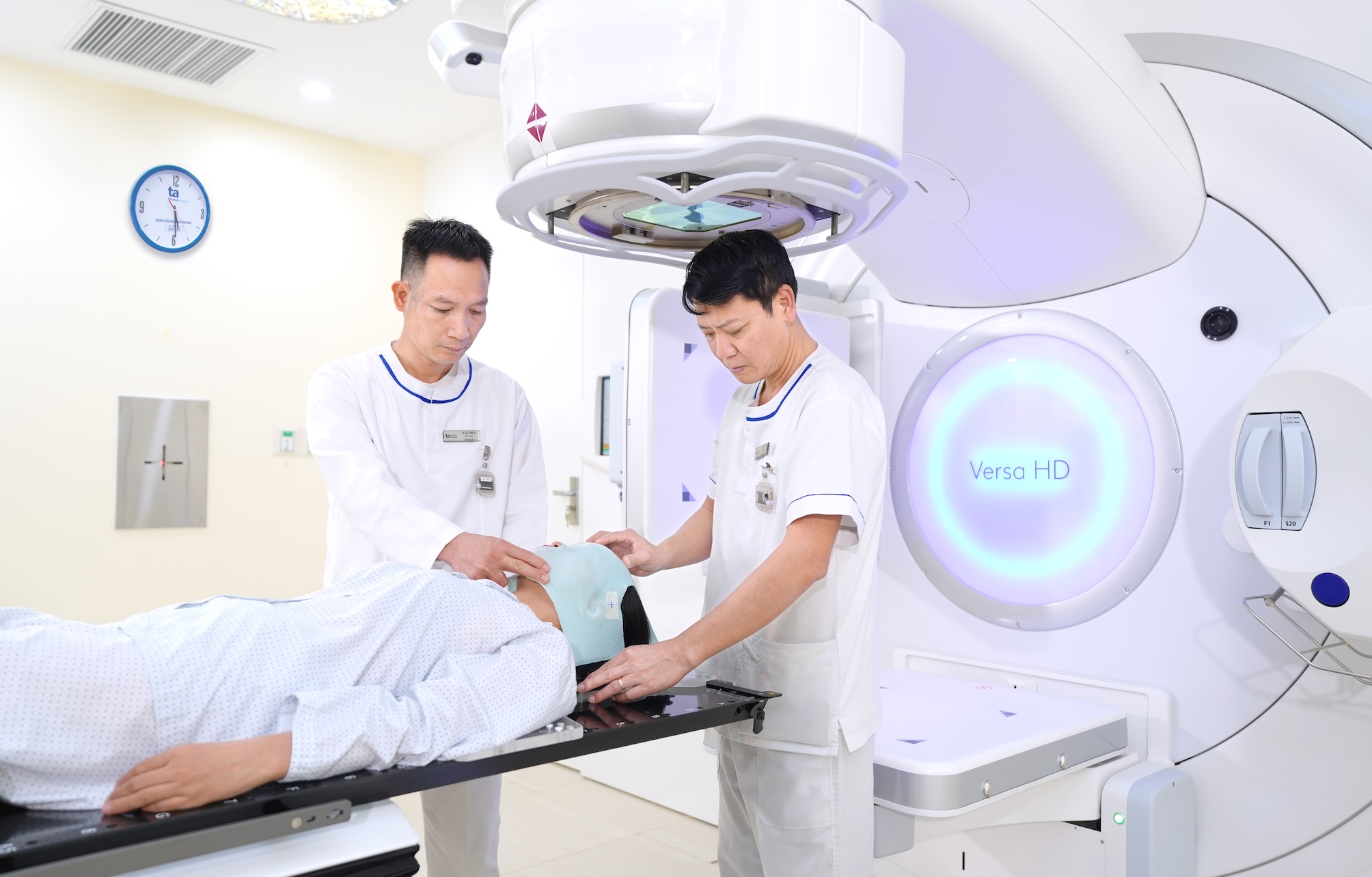 |
A technician removes a fixation mask from a patient immediately after external beam radiation therapy. Photo: Tam Anh General Hospital |
A technician removes a fixation mask from a patient immediately after external beam radiation therapy. Photo: Tam Anh General Hospital
In contrast to external beam radiation therapy, internal radiation therapy involves administering radioactive drugs via injection, infusion, or oral intake into the body. An example is radioactive iodine I-131, used to treat thyroid cancer. These radioactive substances travel throughout the body, locating and destroying cancer cells before being excreted through bodily fluids such as urine, sweat, and saliva. Because patients undergoing internal radiation therapy carry radioactive material within their bodies, hospital isolation is necessary, as directed by a doctor, to prevent exposure to others through close contact or bodily secretions.
Brachytherapy is a radiation therapy method where radioactive sources are placed directly within or very close to the tumor. This delivers a high, concentrated radiation dose to the treatment area, minimizing impact on surrounding healthy tissues. The closer the radioactive source is placed to the lesion and cancer cells, the higher the local radiation dose to the cancer, while nearby healthy tissues receive a much lower dose. Brachytherapy can be applied to body sites where current techniques allow the radioactive source to reach the lesion. Depending on the type of brachytherapy, doctors provide patients with appropriate instructions regarding daily activities and isolation.
Master, Doctor Vuong Ngoc Duong
Deputy Head of Radiation Therapy Department
Tam Anh General Hospital, Hanoi
| Readers can submit questions about cancer here for doctors to answer |