Answer:
Strabismus occurs when the eyes are misaligned, causing their visual axes to deviate. Doctors recommend strabismus surgery when conservative treatments, such as glasses or eye patching, are ineffective. During the procedure, the surgeon adjusts the tension or looseness of the extraocular muscles to bring the eyes into a balanced position, promoting better coordination between them.
Following strabismus surgery, patients typically need several days for their body to recover, depending on their individual constitution and condition. Initially after the operation, the eyes may appear red, with a feeling of mild pain or a foreign body sensation. These are normal occurrences and gradually subside after two to three weeks.
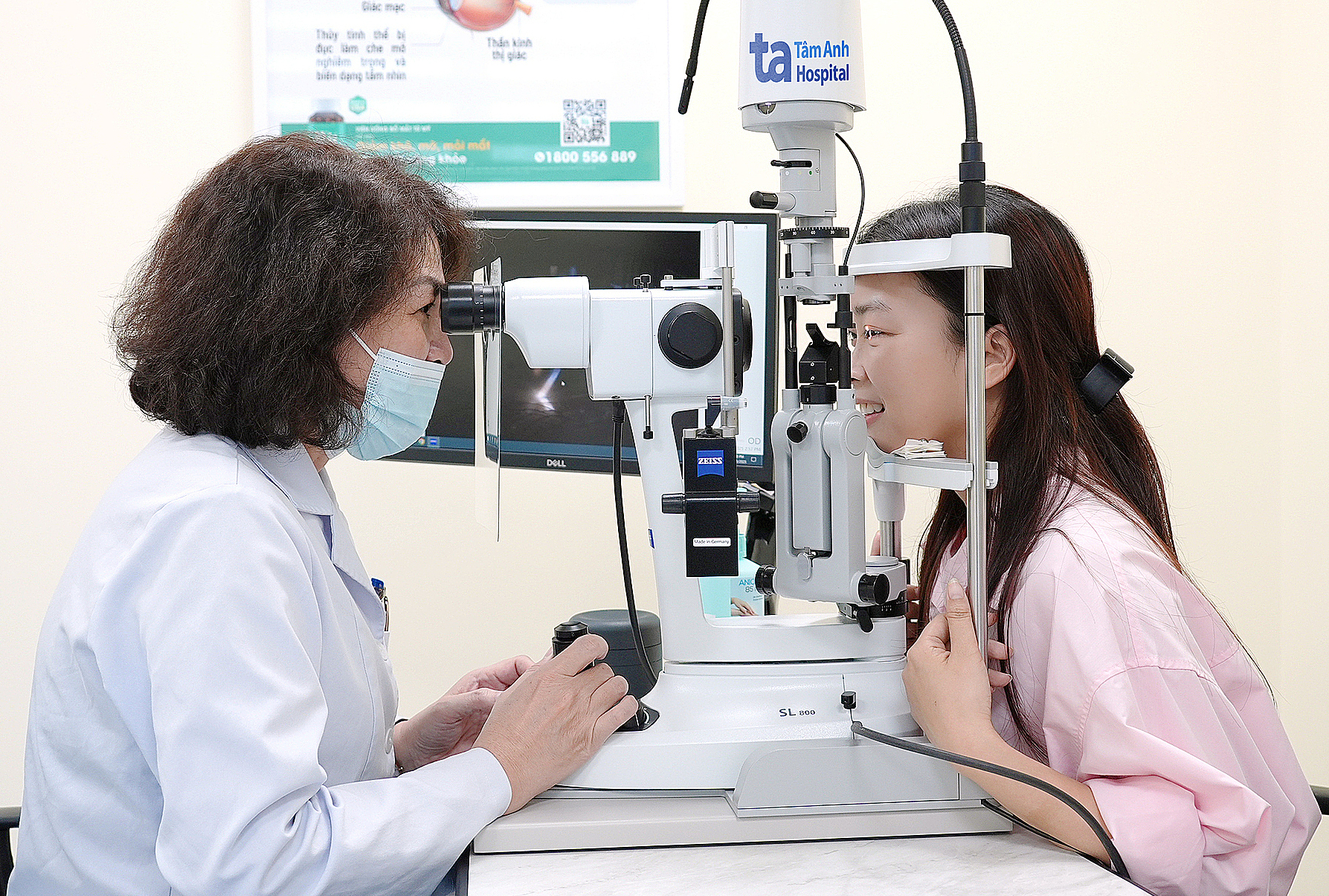 |
A doctor examines a patient's eyes. Illustration: Tam Anh General Hospital
To ensure optimal eye recovery after surgery, patients should rest and limit activities that strain the eyes, such as reading, watching television, or using phones and computers, for the first few days. Getting enough sleep in a quiet environment with soft lighting helps reduce discomfort and supports healing. When outdoors, wear sunglasses to protect the eyes from sun, wind, and dust. Avoid eye makeup for at least two to three weeks to minimize the risk of irritation or infection.
Patients should also avoid saunas, steam rooms, hot baths, and swimming for about two weeks, as high temperatures, bacteria, and chemicals can increase the risk of inflammation. Do not drive until vision is stable and approved by your doctor. Maintain a healthy diet, limiting spicy foods, alcohol, seafood, and processed foods. Instead, increase your intake of green vegetables and fruits rich in vitamins A, C, and E to aid eye recovery.
During the postoperative period, patients must strictly follow their doctor's instructions to prevent complications and accelerate eye recovery. Do not underestimate any changes in your eyes. Attend follow-up appointments as scheduled so your doctor can assess the surgery's effectiveness and consider additional measures if necessary.
Master of Science, Doctor Luong Thi Anh Thu
Center for High-Tech Ophthalmology
Tam Anh General Hospital
| Readers can submit ophthalmology questions here for a doctor's response |